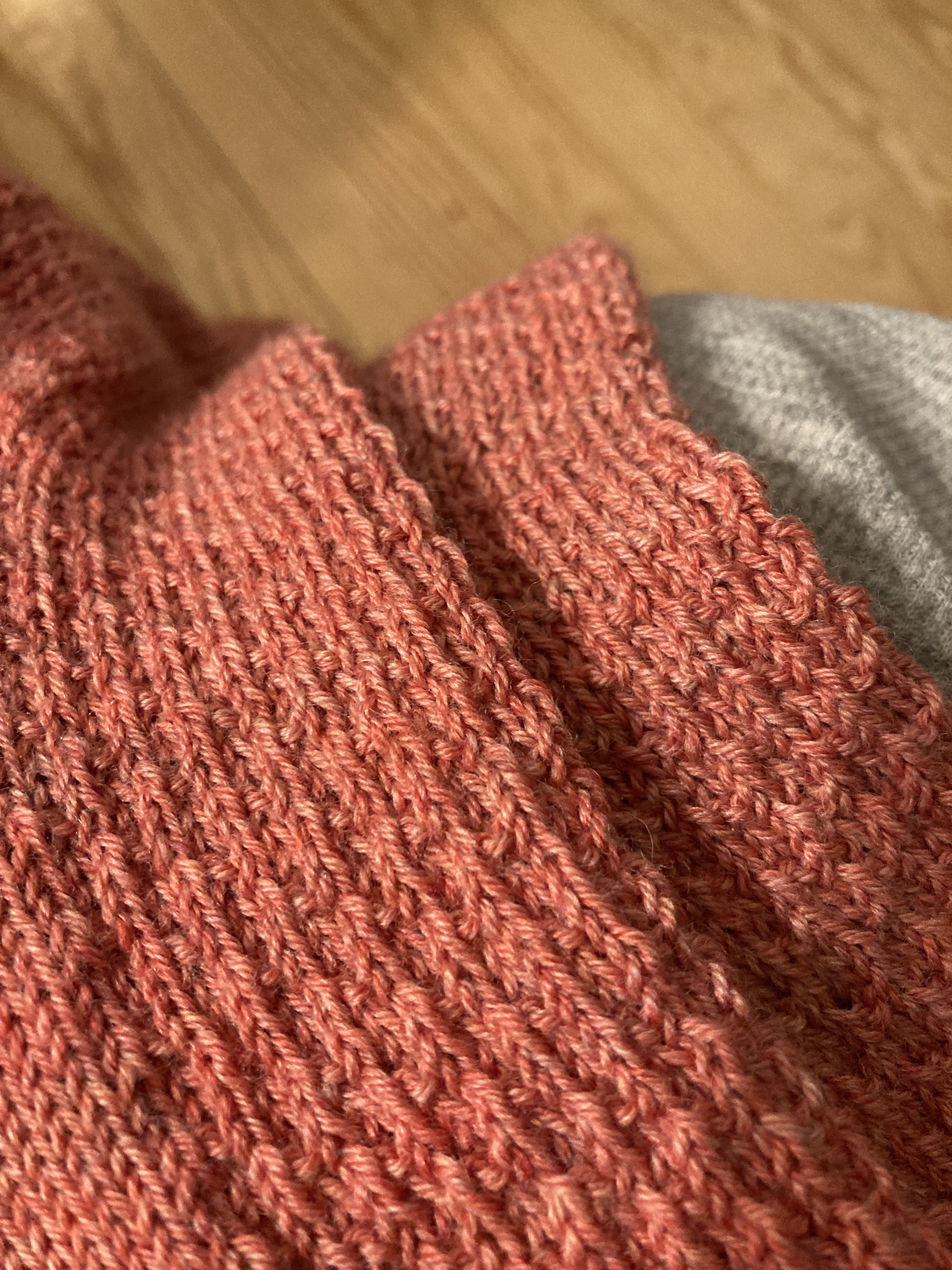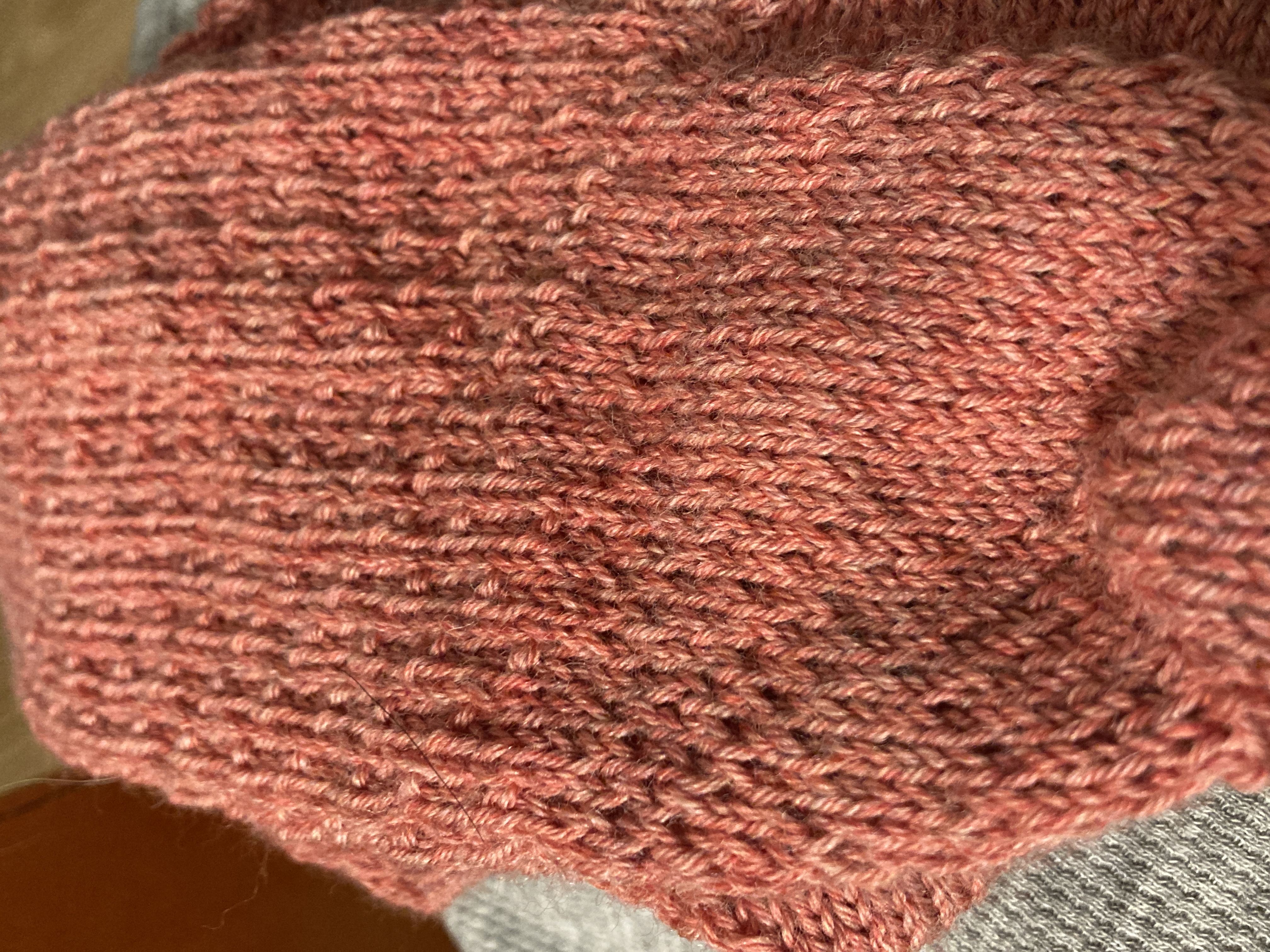
Musselburgh in Pink and Charcoal

Sunday, January 4, 2026

This is the first time I’ve “written” 2026! Happy New Year! I’ve ushered the New Year in with a cold kindly gifted to me by my hubby. I’ve been feeling pretty zapped energetically and haven’t done much other than knit. (Is that a good thing or a bad thing?)

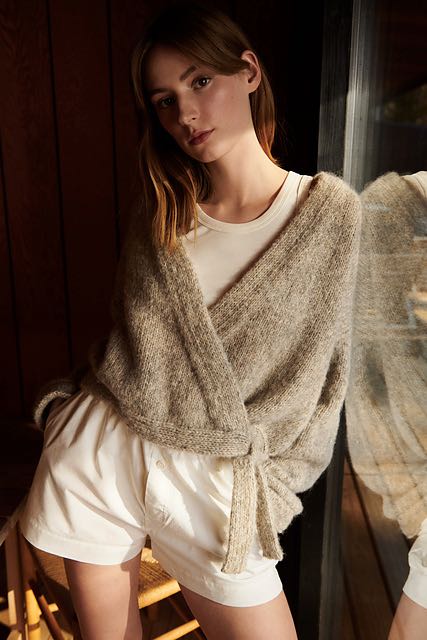
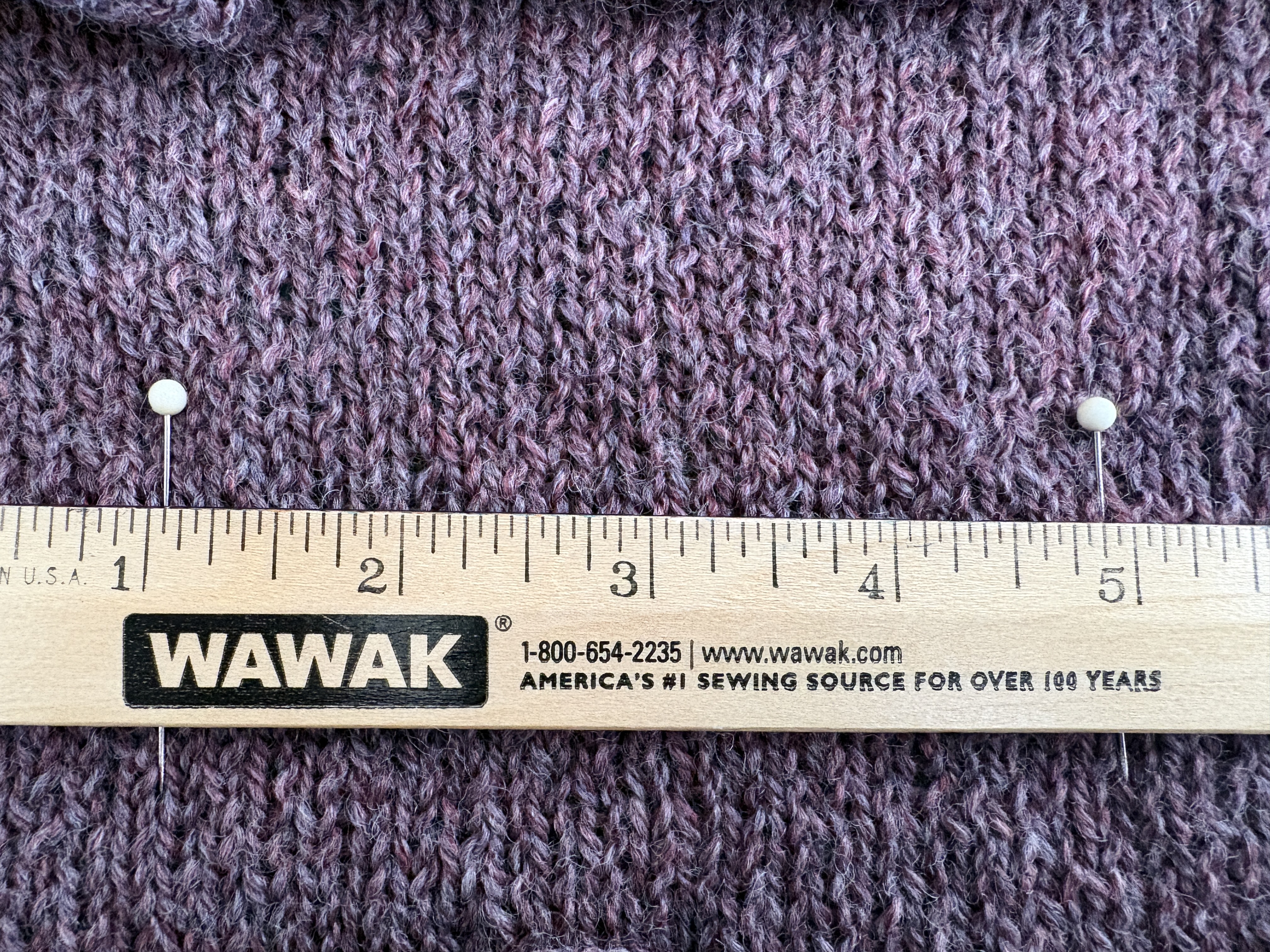
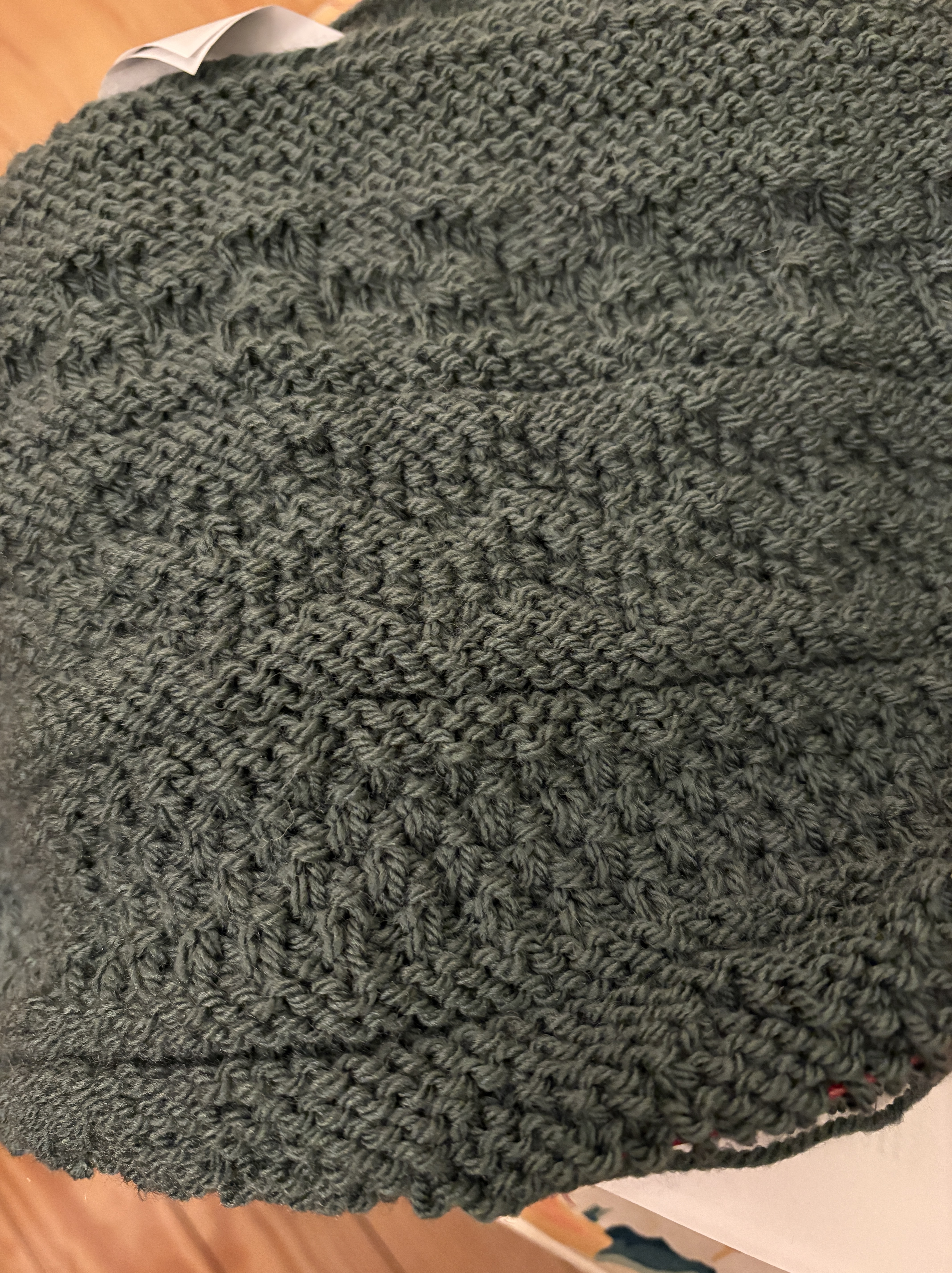
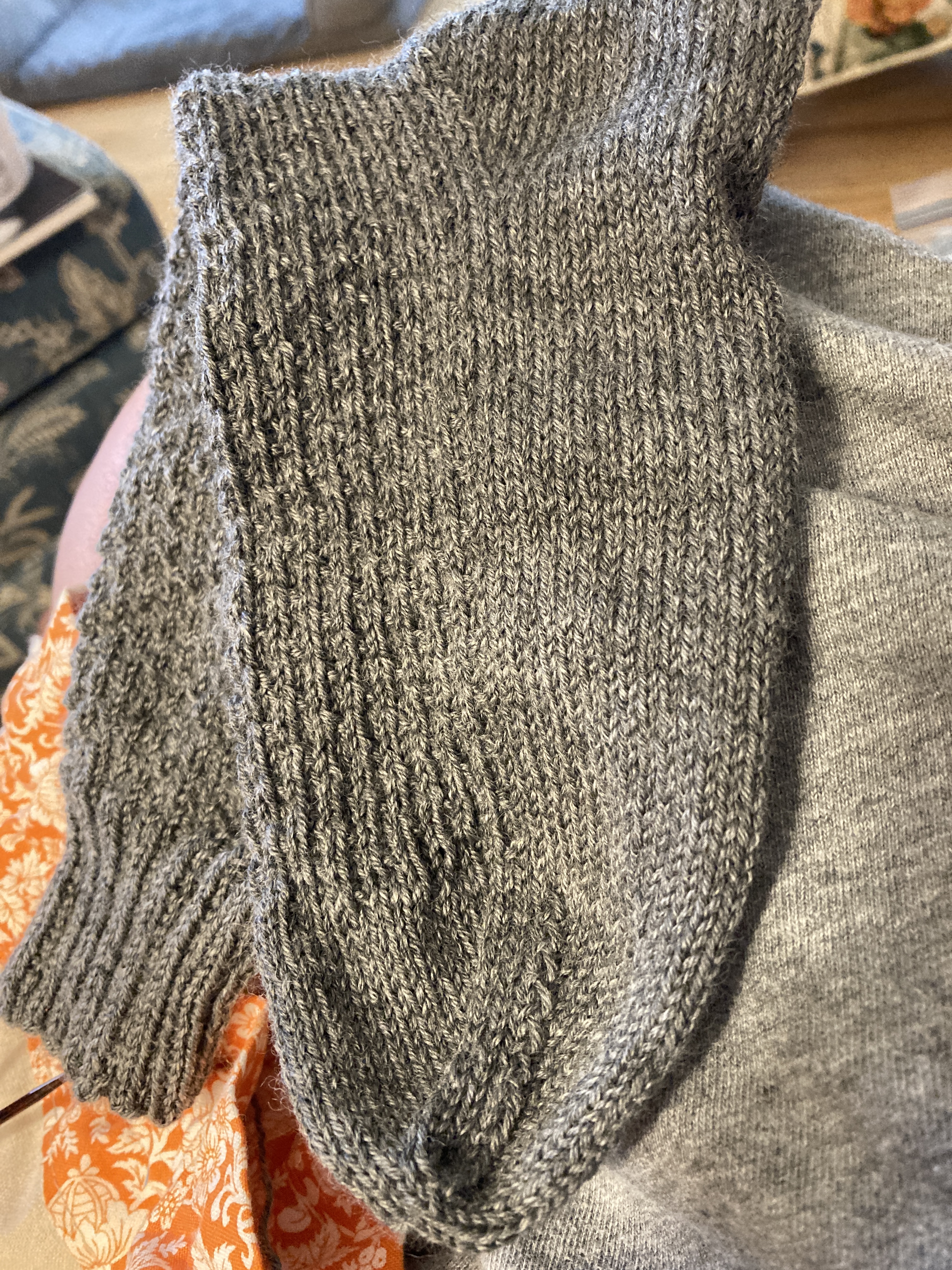
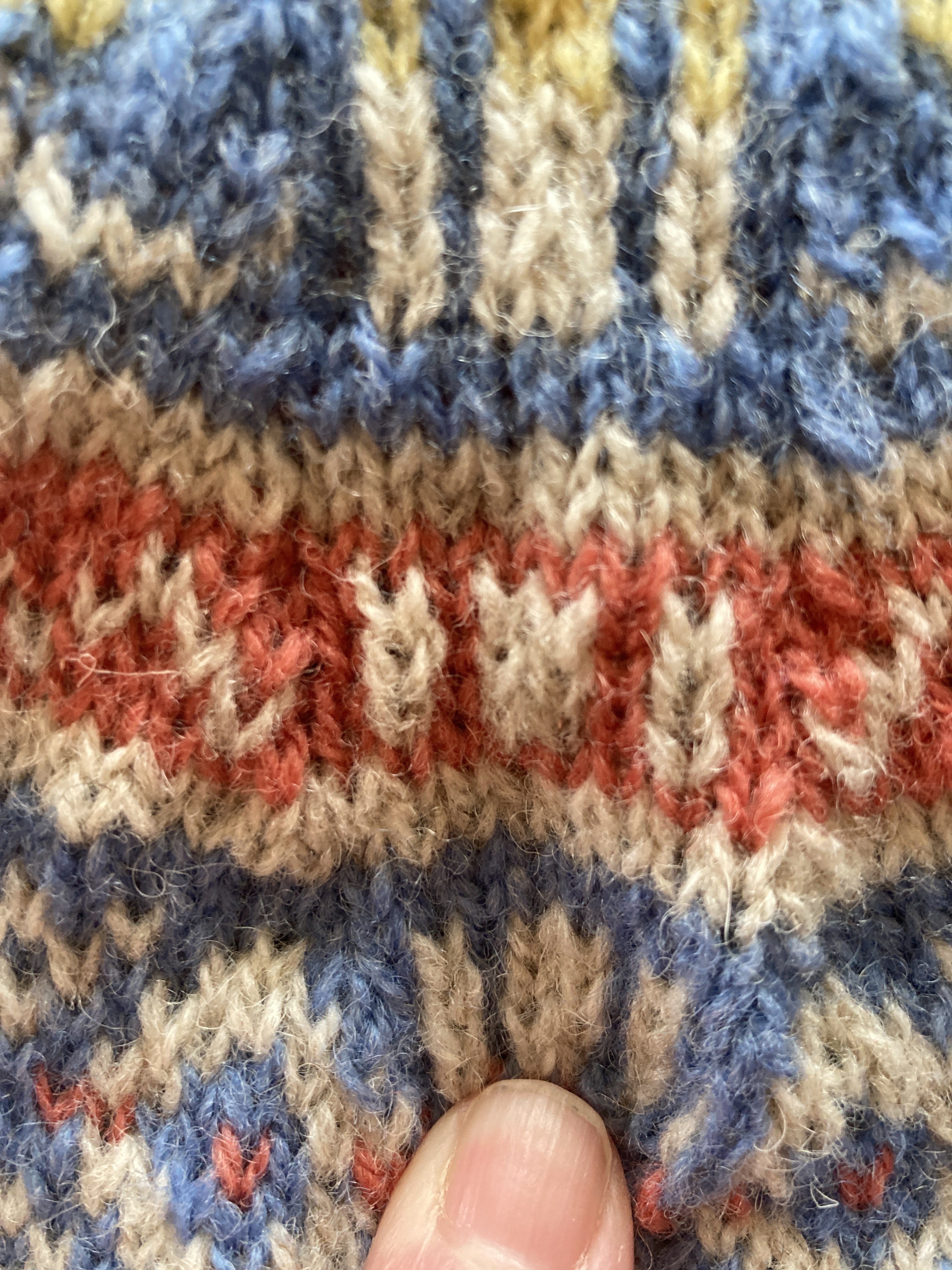
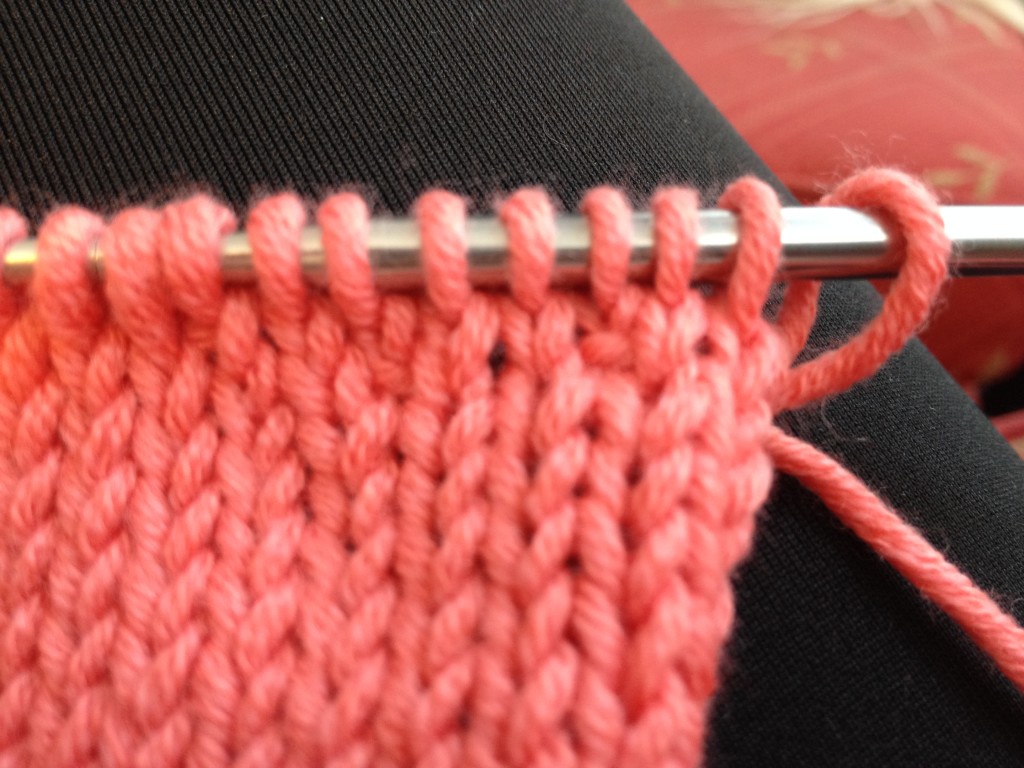
I’ve been working on three WIPs and specifically wanted to write about my Musselburgh which has been a yarn challenge. I started off with a pink yarn, Hu Made Twist fingering weight in the Sakura Petals colorway that I bought in New York City last winter. I matched it with a strand of Berroco Aerial silk mohair in the Strawberry colorway. It’s a wonderful blend. BUT despite thinking I’d make the entire hat in the pink, I ran a bit short and had to figure out a second color to finish the hat. I went to my stash and chose a charcoal gray alpaca blend and started to knit. About an inch or two in, I thought I should have added a strand of mohair to this as well … but I didn’t have any dark gray or black … at least I didn’t find any for a bit. So I worked on my Gansey Afghan.

Gansey Afghan in Hayfield Bonus Aran

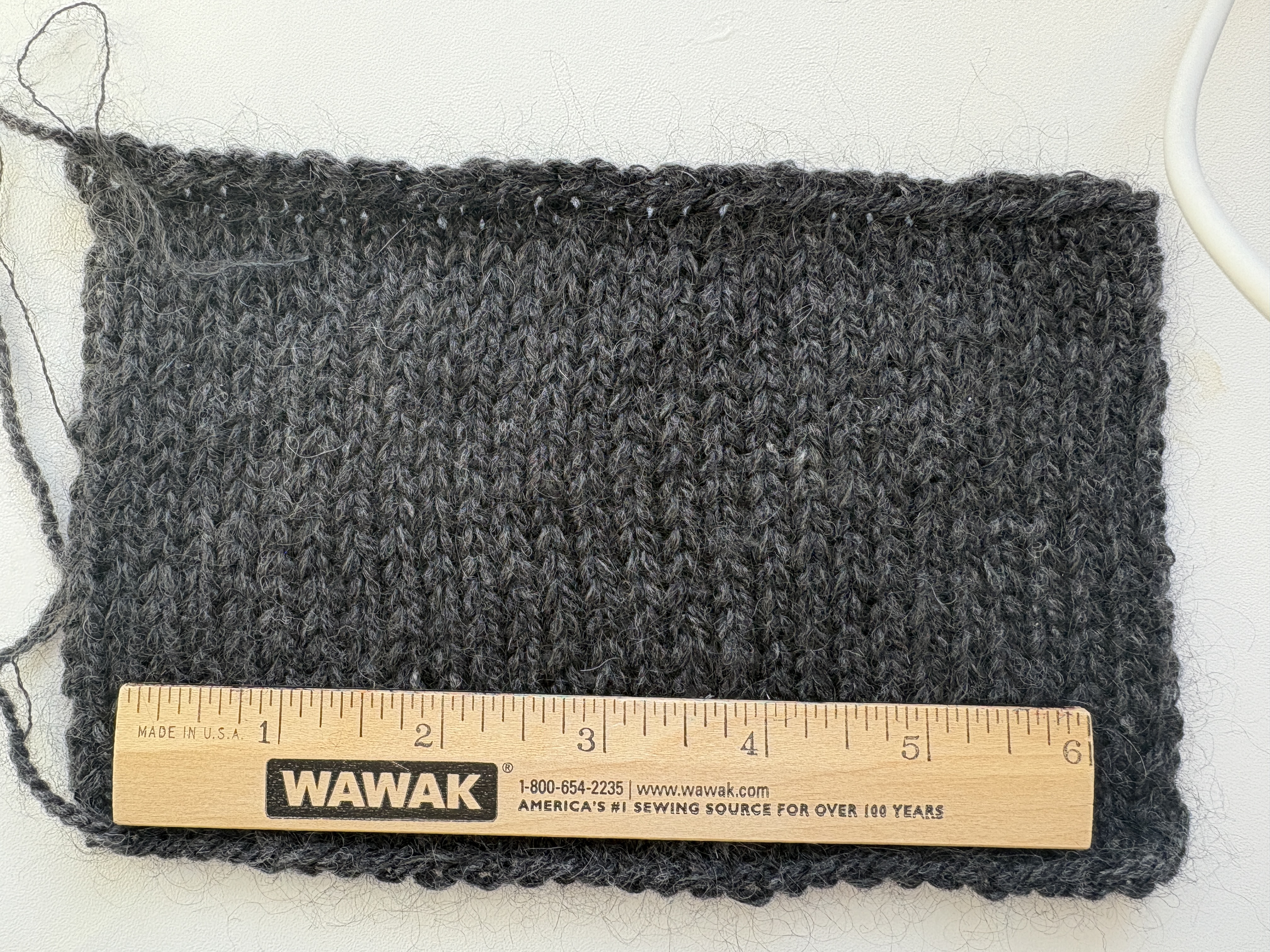
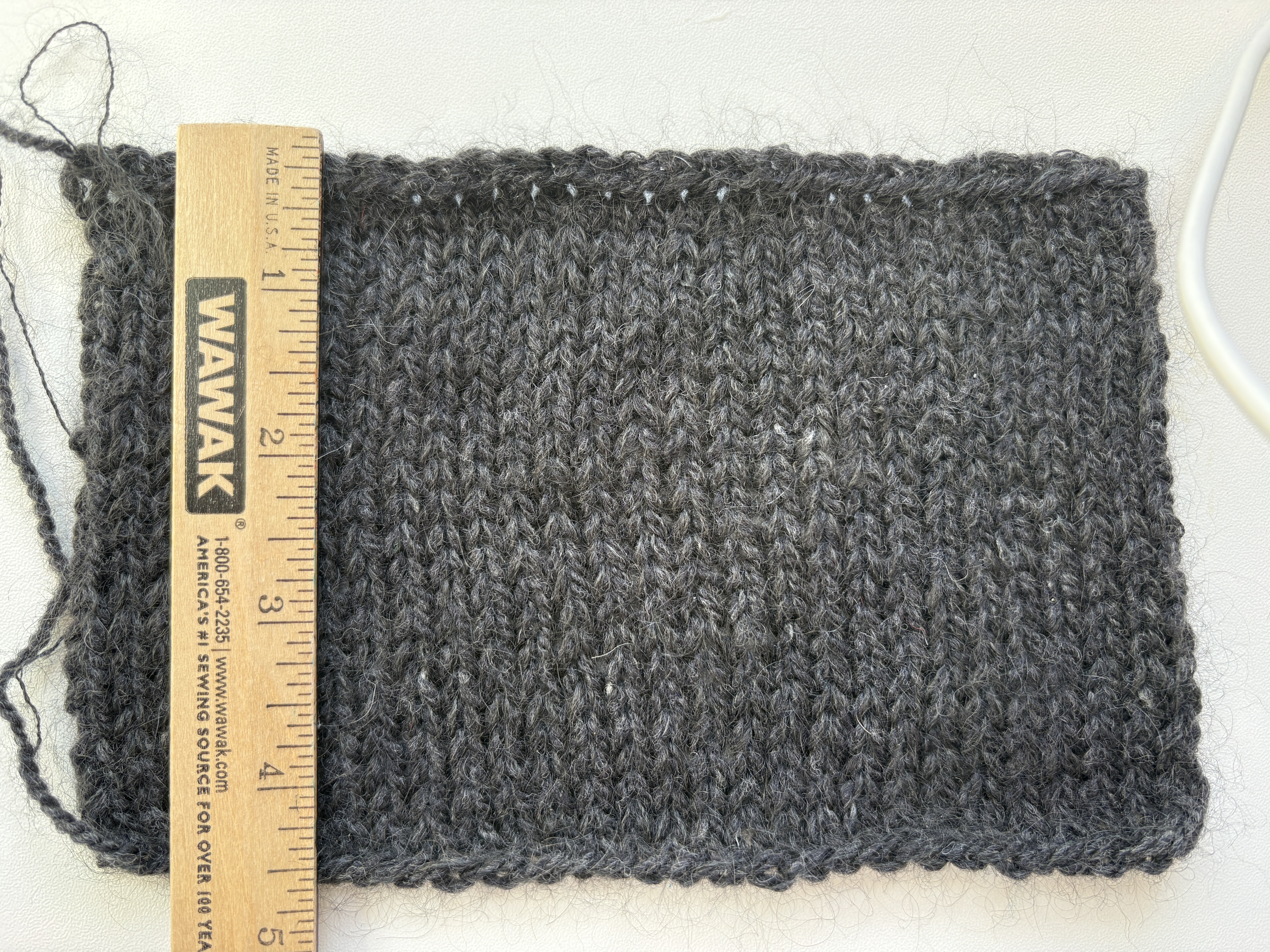
AND then I found some black mohair when I was cleaning up a little bit. It was left over from my sparkly City Lights Hat and hidden away under my needles. So, I added the mohair in and started knitting again. I had about two inches of charcoal alone and a line where the black mohair began but I was ok with that. The hat is for me AND the brim of the hat will be folded over hiding the gray. But last night I ran out of black mohair. Now I have some choices to make. I either buy a new ball of black mohair and continue knitting OR I knit a bit with what’s left of the pink and then finish with gray alone (or buy mohair and knit with 2 strands at the end.) I’m bummed because I really wanted to get this hat finished this weekend and should be able to if I had the right yarns in my stash. This is where knitters get in trouble.

My other choice is to frog back and take the black mohair OUT of the hat and reknit in the gray only. I’m thinking this is what I am leaning toward. One of my goals is to move yarn OUT of my stash and not add to it this year. Little bits and bobs are not what I want hanging around in my atelier. The lazy me wants to just keep knitting but the knitter me is not happy with the piecemeal method of making this hat work. And, frankly, it’s not really working. And, more honesty, I am also not happy with the gray at all. I’d rather be working with a brown or rusty brown yarn because that’s what the flecks in the pink yarn are. So, I think my first job today will be to frog the gray – at least back to the beginning of the black mohair – and see what happens.

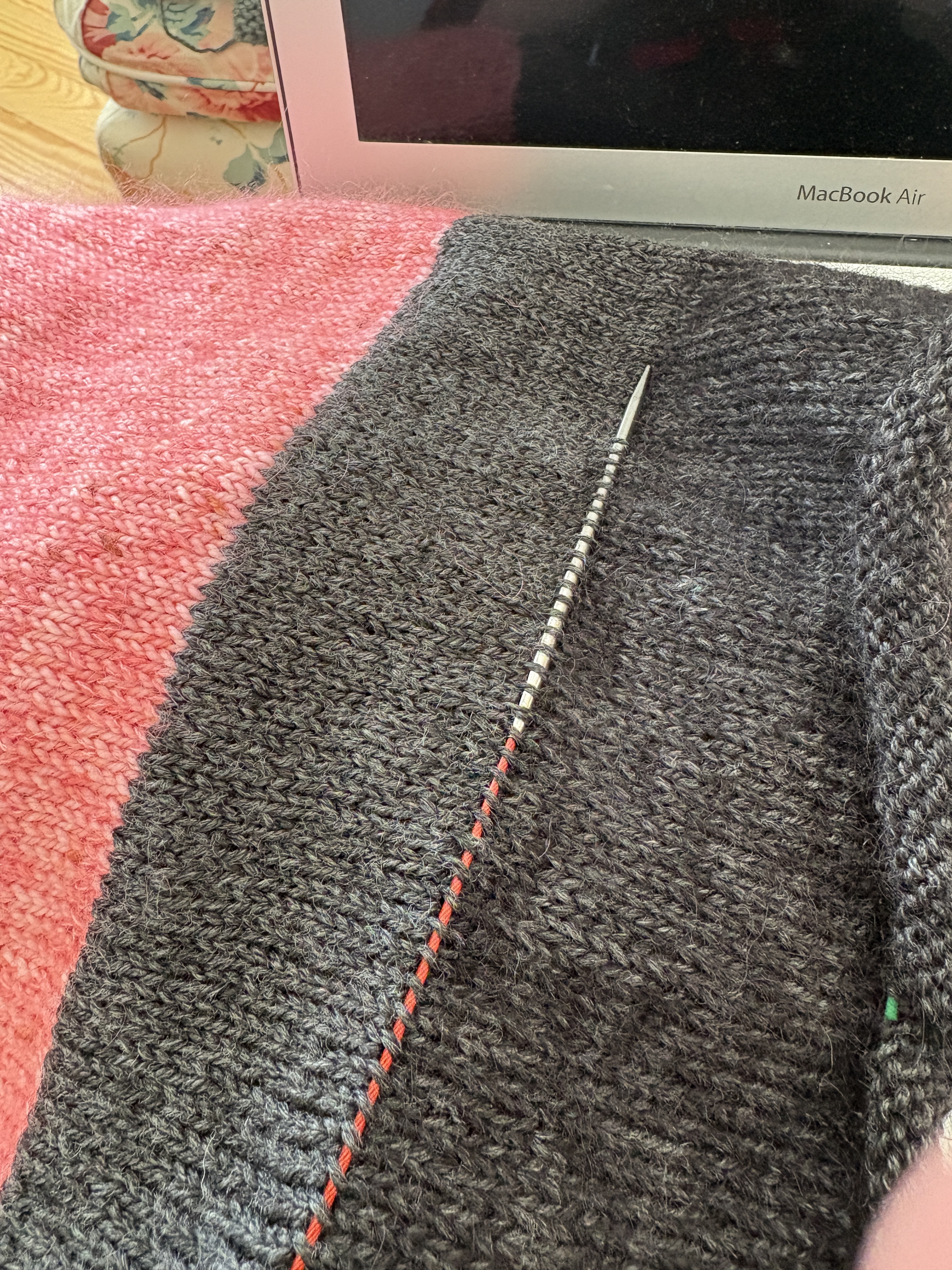
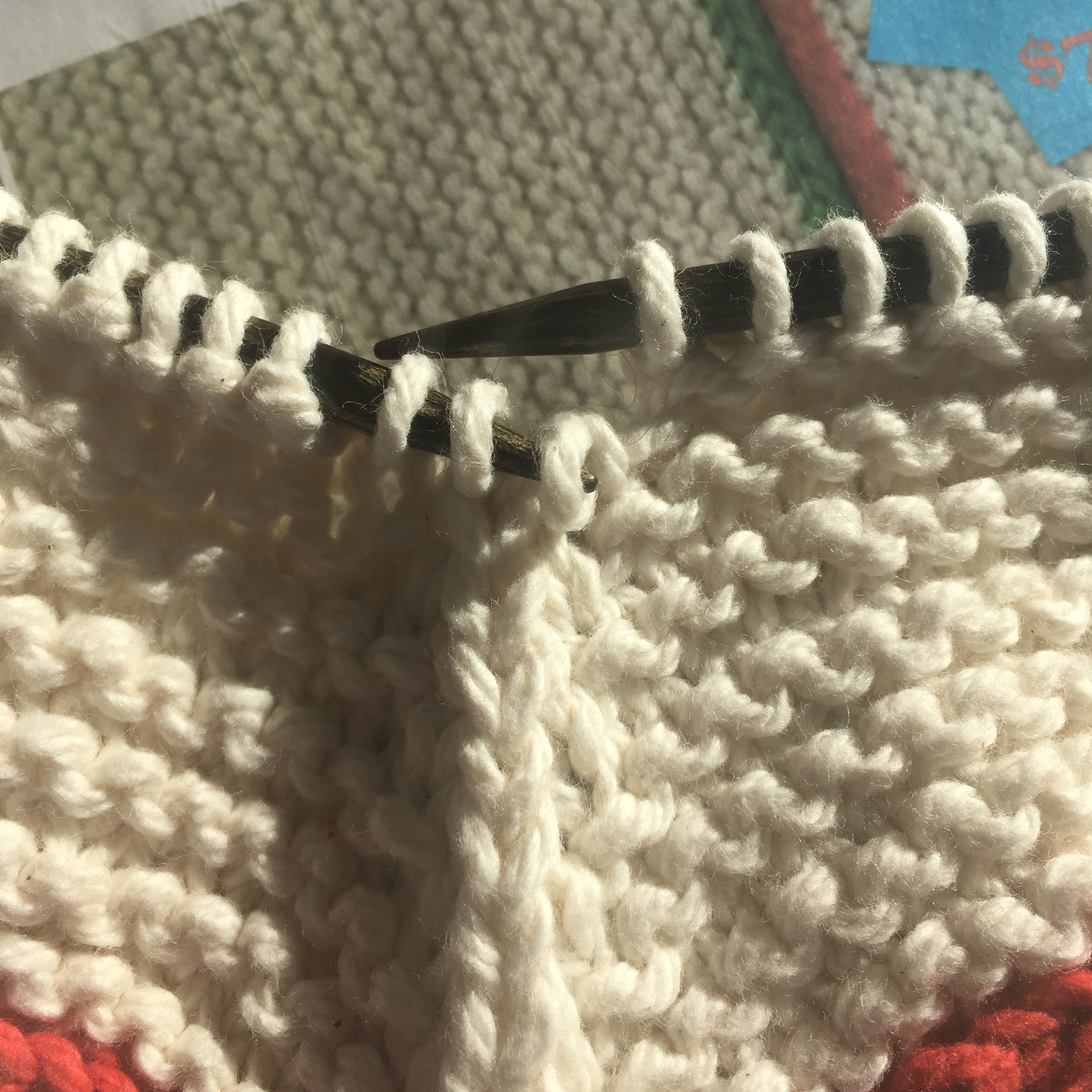
I put all of my stitches on a barber cord and used my needle to pick up the right leg of every stitch all the way around just a row or two above the “line” where the black mohair meets the gray alpaca and then frog all the stitches back. and Ta! Da! I’m back at the spot that I THINK I want to knit from again … that is if I decide to keep knitting in gray.

And just so you know, I’ve finished the first of my hubby’s Christmas socks and it fits! That’s always a very good thing. Today the plan is to cast on the second sock today. So, for now I’m going. to set the hat aside and work on the sock … or the afghan. I’m trying really really hard NOT to cast on something new until I finish just one thing. I need a first FO for 2026!

Gone knitting.

French Macaroon by Caroline Hewger for the Noble Thread

Sunday, June 23, 2024

It was gray and hazy when we woke up this morning and we’ve since had a really good rain storm. Think rain boots and full-length yellow raincoats with a hood pulled up rain storm. The plants will thank us for it, I’m sure. I had intended to start the day with a trip to Target to return some stuff I bought last week that didn’t fit as intended but I went up to my atelier instead.

AND I’m happy to report that I’ve finished the first French Macaroon sweater. This was a simple/boring knit until the finishing part. The garter stitch body starts with the main color and then you cast on the stitches for the sleeves on each side of the body in a contrasting color resulting in a little “T” shaped boxy form. The second side is pretty much the same except for a button hole at the middle of the back. Then it’s a three needle bind off at the shoulders/sleeves and seam the sides and underarms are you’re good to go. BUT I realized a little too late this time that the sleeves are meant to be folded back so the next time I make this sweater I’ll weave in well past the normal distance.

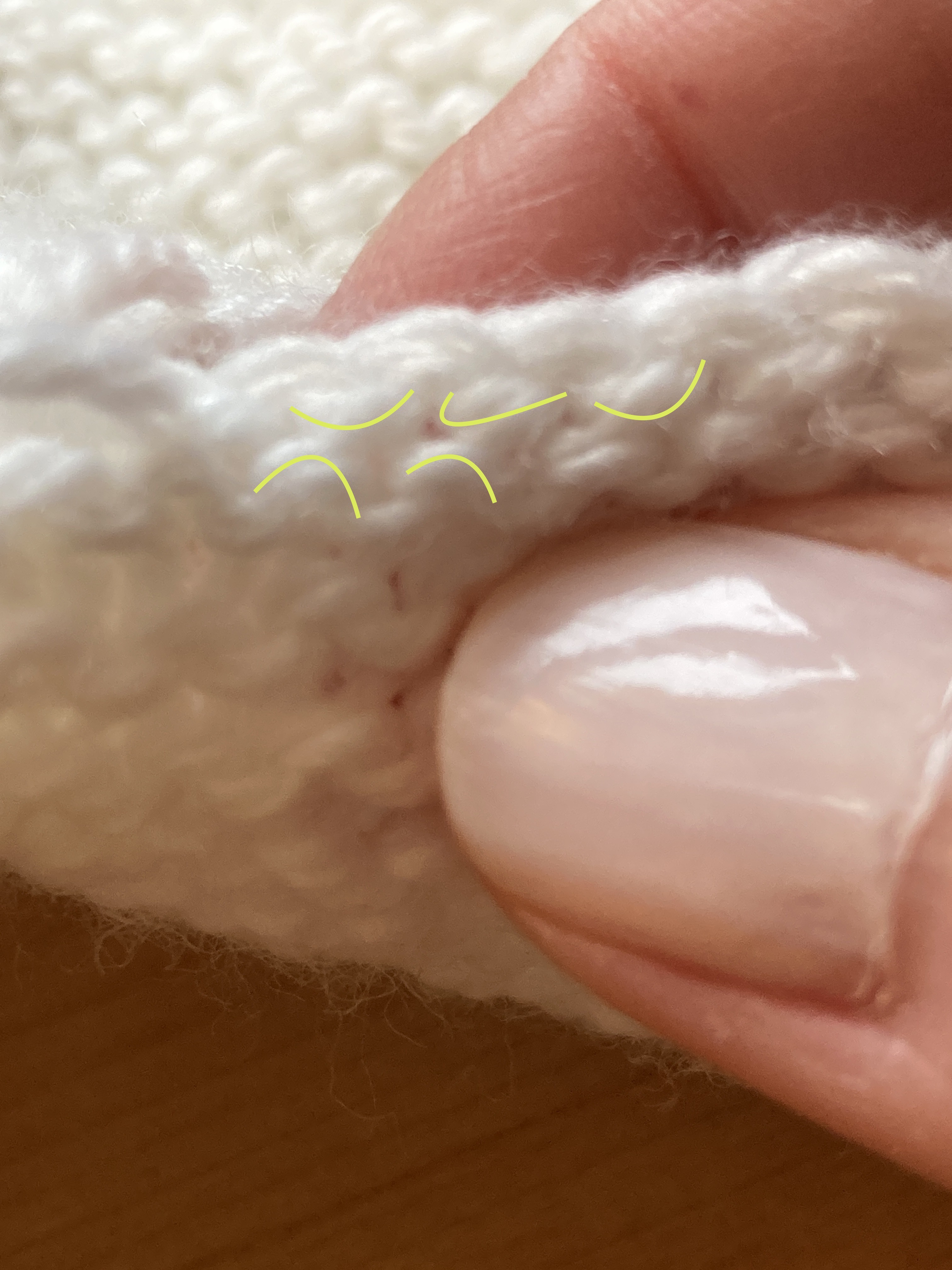
I left the cast on tail extra long at the very beginning so I could use it to seam the body in the main color and I cut off a length of the left-over contrast color to seam the underarms. Seaming Garter Stitch is pretty simple if you look at what you’re doing and know how to read your knitting. On the sides, you grab the bars behind the smiles or frowns (look at your knitting and you’ll see what I mean!) on one side and then go to the other side and do the same. On little garments I tend to use every stitch rather than two at a time which I sometimes do for adult garments.

Under the sleeves it’s a bit different but still simple enough if you read your knitting. I took a few in-process photos to show you what I mean.

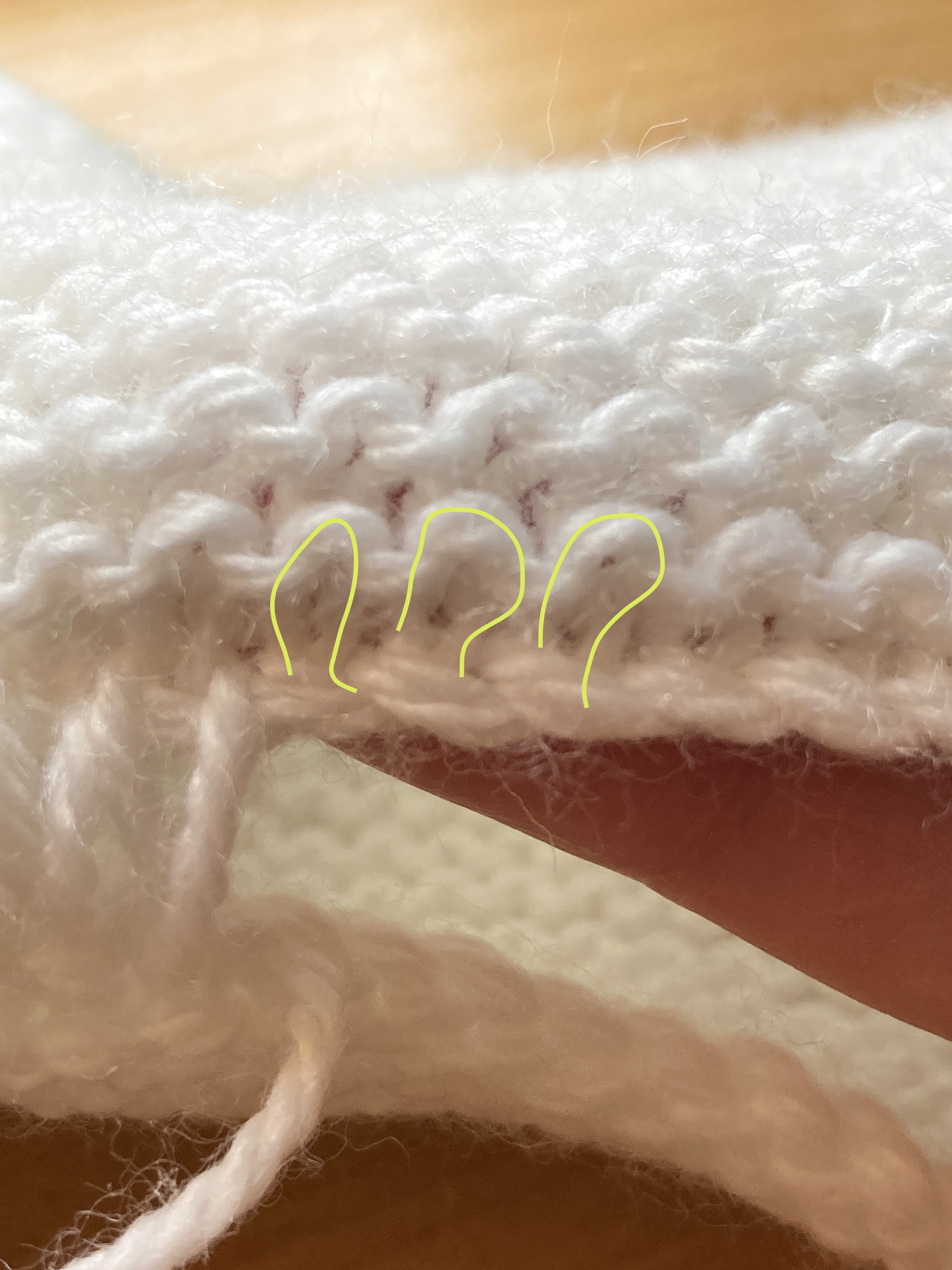
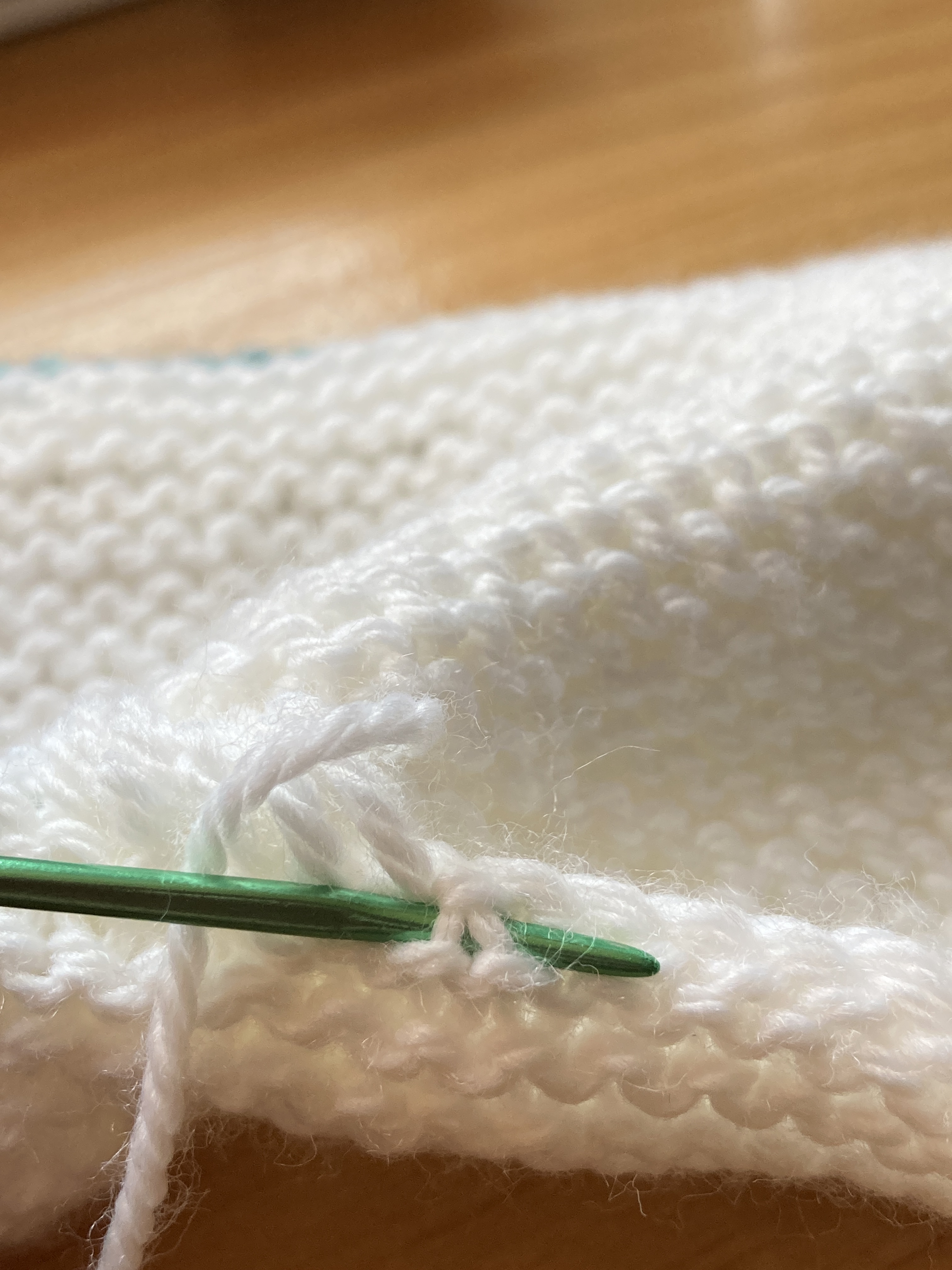
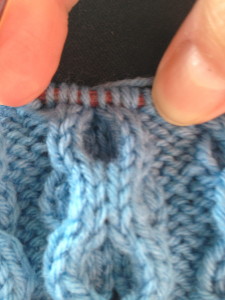
I marked my stitches on the top of the underarm with grellow “loops” and I use the bottoms of the loops where the “v” is to insert my needle. Can you see the lower “v” that’s in front of my needle? (There’s another loop with a “v” stacked on top of where my needle is. I am careful to catch the two legs of the bottom “v” (the stitch) when I am seaming.

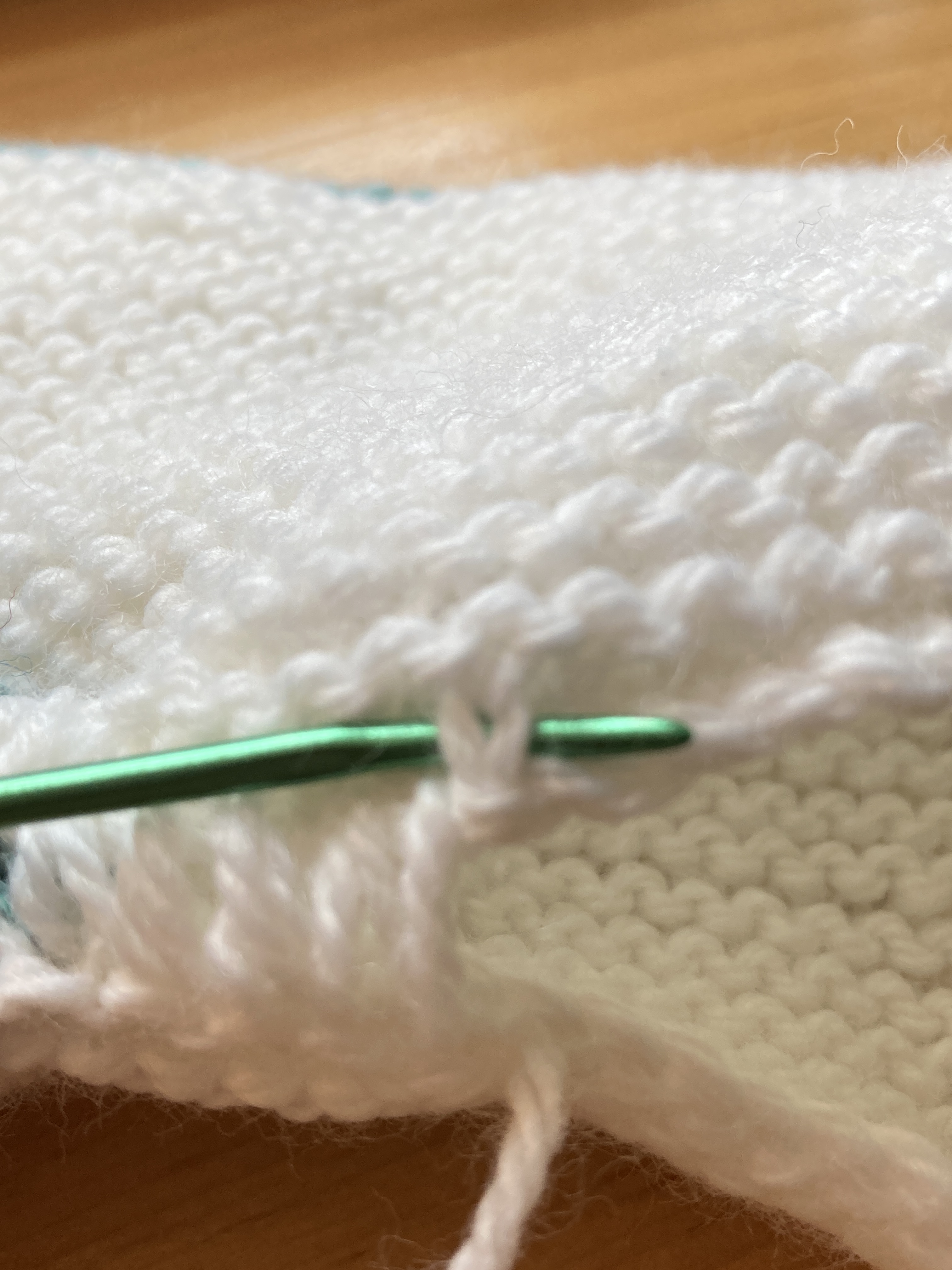
This is half of the seaming … seaming requires two sides. In this case I’m holding my sleeve horizontally so I have a top and a bottom that I am sewing together. Here’s the bottom.

The photo on the left shows the little smiles and frowns that are on the bottom row of the sleeve seam. I am going to go under the smile in this case and grab both legs of the stitch and in this case, they’re an upside down “v” (an “A”?). You’ll notice that the smiles are above and between two frowns.

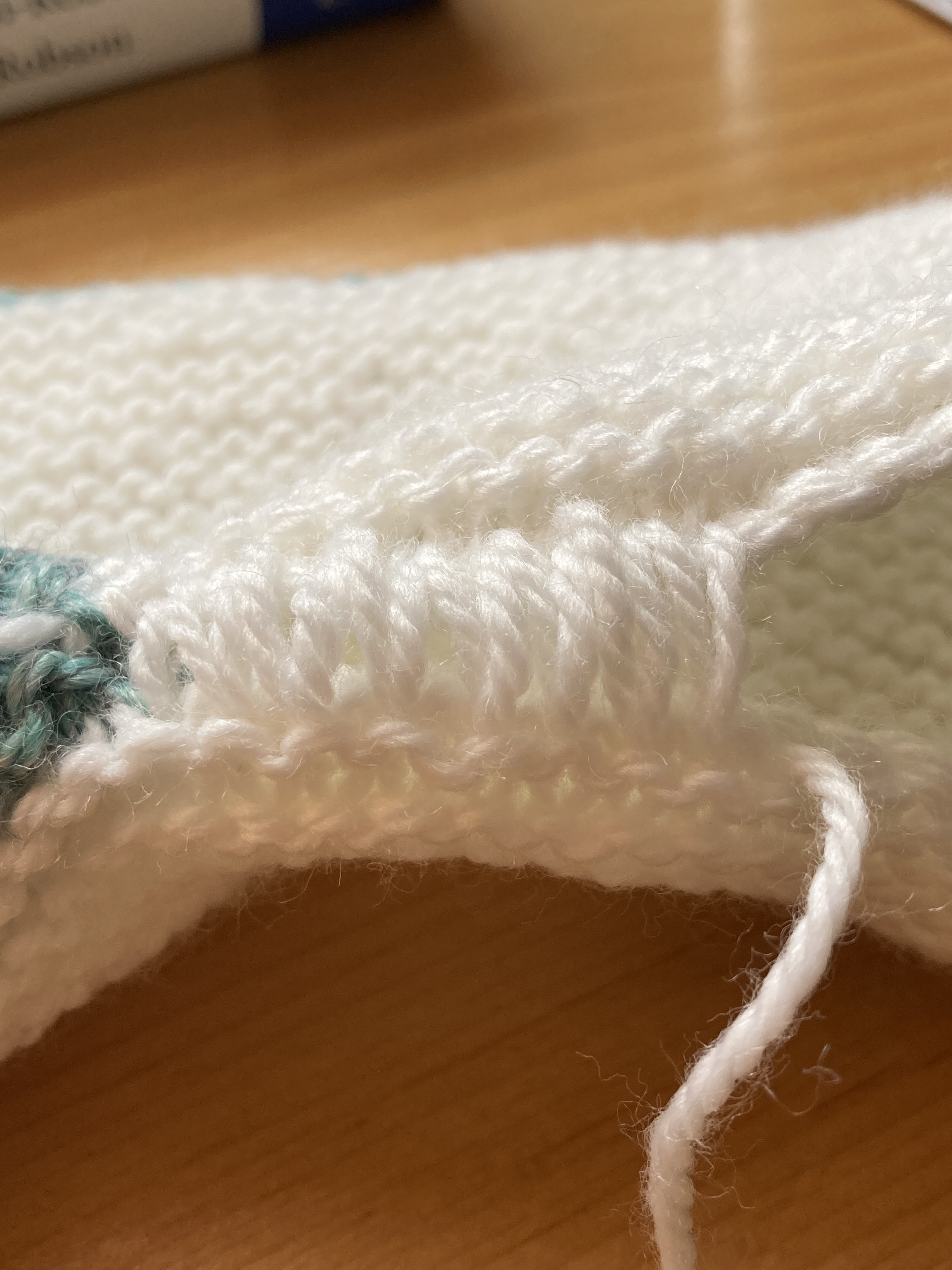
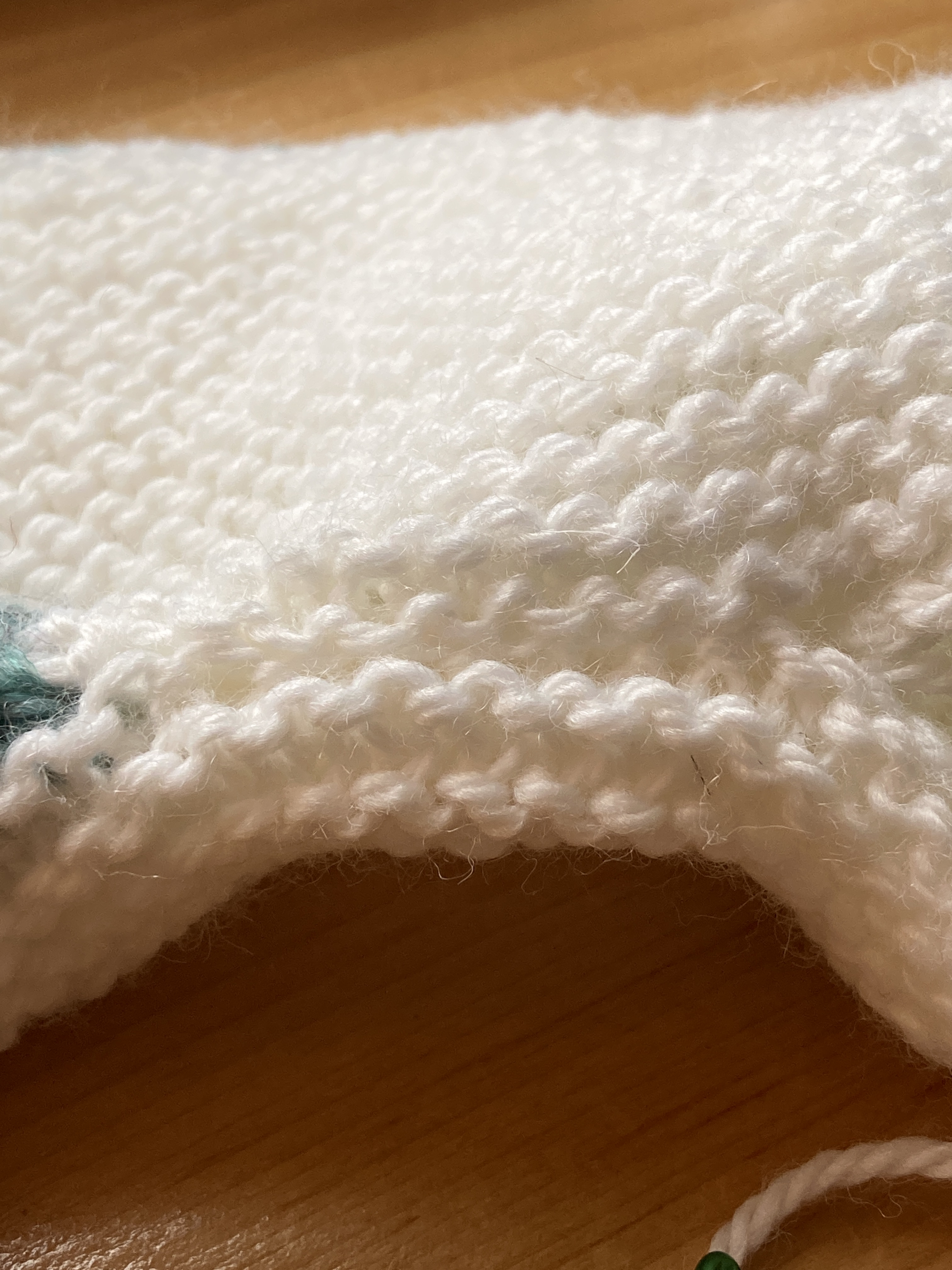
Now you’re going to loosely sew between the top and the bottom of the sleeve leaving the stitches loose for about an inch or two and it will look like the first photo below. I’ll take hold of the tail of the yarn and pull the working end/ where the needle is … gently! until all of the stitches are zipped up tightly. I pull once more from each end of the working yarn to ensure that the seam is taught and will lie straight. Continue across the underarm a couple of inches at a time until all the stitches are used up.

Ta! Da! You’re done! I find seaming really satisfying when you (finally) learn how to handle the different types of seaming that you’re asked to do in knitting. After 40-ish years, I am finally settling in to being comfortable with seaming and don’t dread it like I used to. I knitted seamless garments for years because I was so intimidated by seams but as I started to learn more techniques for finishing and seaming, I got more comfortable. Kind of like everything in life, right? Thus the statement, “The more you know” (remember the PSAs on NBC?)

I knitted this little Macaroon sweater in Berroco Vintage DK rather than the intended cotton yarn. I don’t love knitting with cotton and Vintage has a bit more stretch and it’s soft and washable. This one is going to live with a friend’s baby who is bi-coastal and he should be able to wear it in the fall. The fact that the sleeves can be rolled back is a good thing because it’ll give him a few months more wear because they grow almost fast enough that you can see them grow out of clothes from day to day.

I have two more of these sweet sweaters to knit for other babies in my life. I think I’ll take one of them with me on my next travel excursion and in the mean time, I’m working on a pair of Hermione’s Everyday socks for my sister and I cast on a tank top for me last night.

Hermione’s Everyday Socks is a free pattern on Ravelry by the Crazy Sock Lady. I have written about it before and I love this pattern. These are knitted with Coop Yarn’s Socks Yeah! fingering weight superwash wool with nylon. I love this yarn! I had gotten several hanks of it when I joined A Year of Techniques with Jen Arnall-Culliford back in the day and chose not to make the projects in the class. Years later, I made a pair of orangey-pink socks for myself and I want to send a great pair like this to my sweet sister. I like this pattern with variegated and solid yarns and it’s easy to memorize. I’ve started the second sock and they’re almost always with me just in case I have a few minutes to knit.

Last night I cast on the Staple Linen Top by Joji Locatelli in Muse, a merino/linen blend yarn that I bought when I attended Knit City Montreal. I’m eager to see how the yarn knits up. This pattern was one of the shop models at Sonder Yarn Company’s booth and I thought it would be a good summer garment and I hope it will fit well and look a little dressier than a t-shirt. I loved the pale pink Grand Ballet colorway. Crossing my fingers. Ha! Ha!

I’ve gone on too long. The rain has stopped and I can go get dressed and head to Target for my returns. Gone knitting.

Steek! Cutting my Oorik Tank Top

Thursday, April 4, 2024

What a difference a day makes! We are currently experiencing a surprise Nor’easter here in Belgrade, Maine. It started snowing overnight and has already dropped a couple of inches of the white stuff in our dooryard. We woke up to near-white out conditions and it’s still snowing. Our brave and hearty neighbor is already out snow blowing. My dear hubby is not inclined to snow blow more than once and we don’t think it’s over quite yet.

Yesterday was another mostly sunny and quite pretty day for the most part. I got out early in the morning to fill up my gas tank and pick up some groceries and then my friend and colleague, Glenda, came over for a steek party. We gathered at my dining room table (note to self: we really need a chandelier!) with out Oorik Tank Tops and said a not-so-silent prayer to the almighty knitting goddess Mary Jane Mucklestone and set to work.

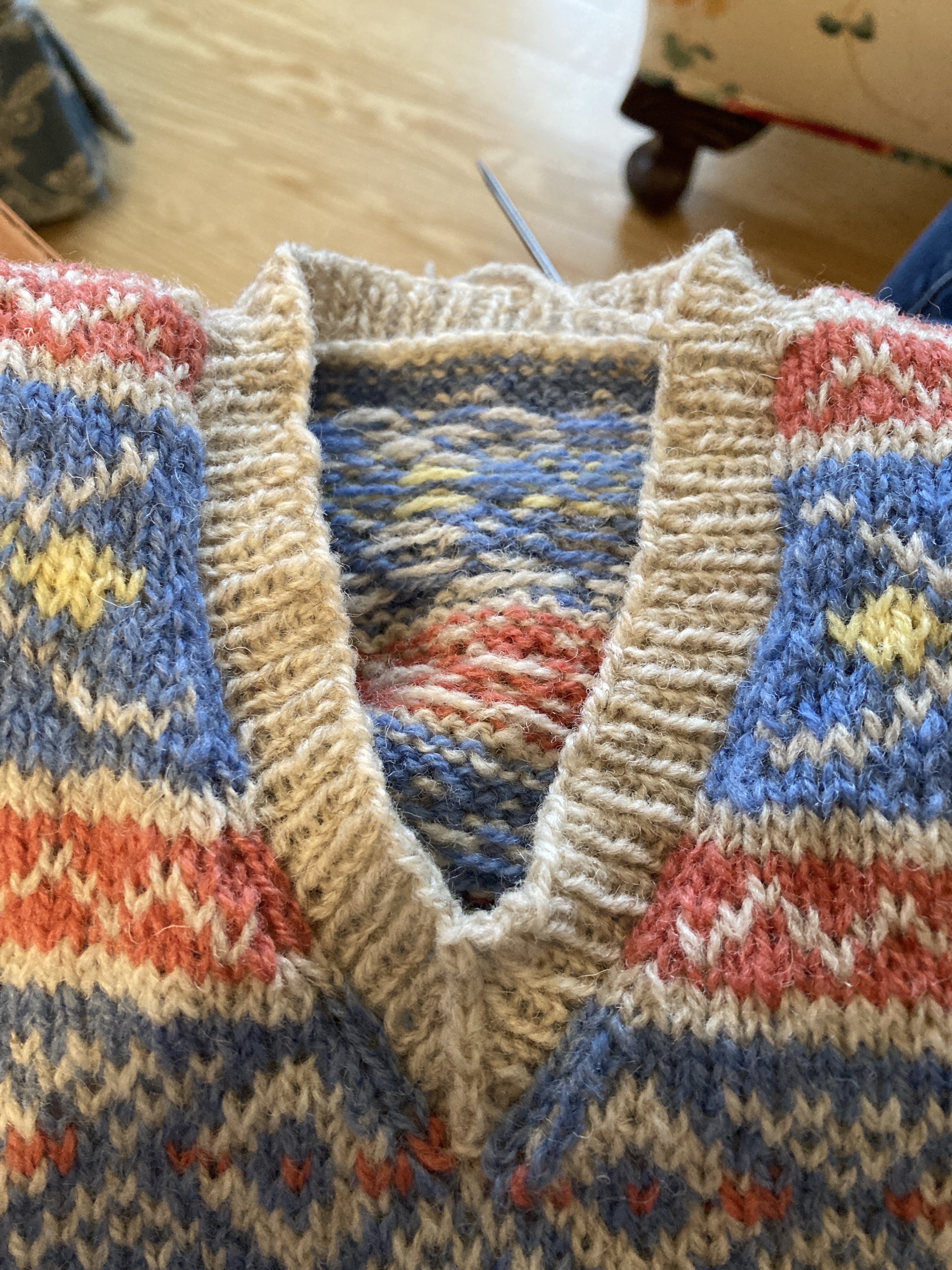
As a preface to steeking, we had knitted the Oorik tank in Jamieson & Smith 2-ply jumper weight yarn which is a rustic wool, perfect for colorwork. It blooms when it’s blocked and the fibers naturally “stick” to each other and the stitches, even when cut, don’t come apart. The vest looks a bit like an awkward burrito before you make the cuts. The arm holes and neck and back have been knitted circularly with a collection of, in this case, six stitches added with the plan of being cut to make an opening.

The first picture is of the Oorik with all the knitting done. If you zoom in, you can see the steek stitches added at each arm hole and at the neck. This is planned by the designer so that you can cut up the middle to open the burrito. The second photo is the center of the front, the neck, a closeup of the steek stitches. You can see there are six stitches, in a specific pattern, from the orange marker at the bottom to the top where the stitches are bound off.

The third photo is even closer up. I’m identifying the center of the steek stitches as I am starting the process. The first step is to identify the middle two stitches and then to reinforce those stitches in preparation of cutting them right up the middle.

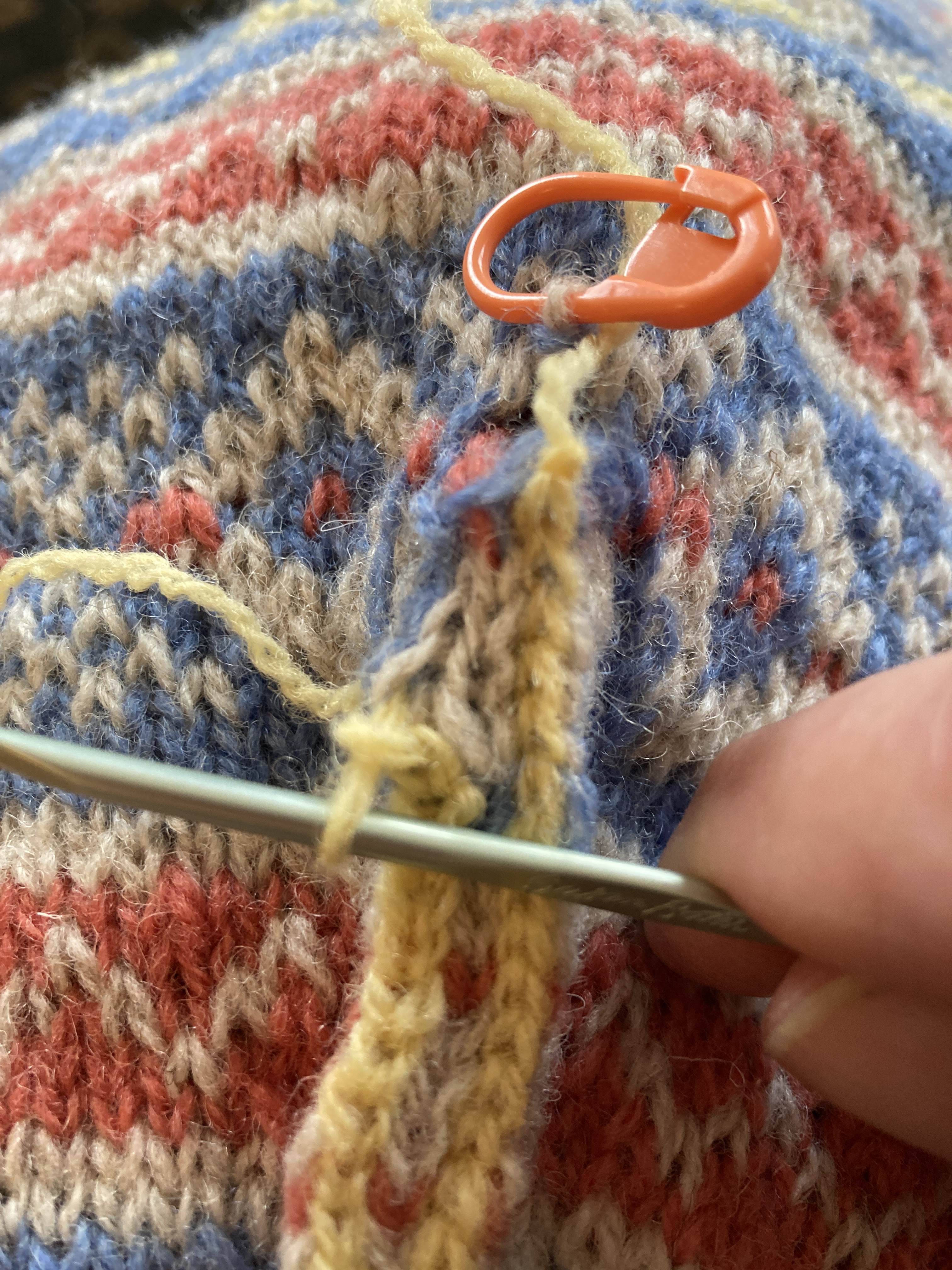
And now, the reinforcement. As a leftie, it’s always my inclination to crochet with my left hand. BUT with my crochet hook (US D) and some leftover yarn from my project, I am crocheting a slip stitch around the leftmost leg of the center-left stitch and the right leg of the stitch next to it. You can see this best in the middle photo. The idea is to crochet a chain up from the bottom to the top creating a tight hug of these legs so that everything to their right stays put. You then turn the vest 180 degrees and crochet a chain down the other side, hugging the same two stitches (but on the other side now that you’ve turned the garment). Ultimately, you have two crochet chains on either side of what now looks like one single stitch …

Two columns of crochet chain and ONE stitch in between

Can you see the two legs of the stitch between the yellow crochet columns? The single stitch looks like a stack of Vs. The easiest ones to see are the wheat/natural colored stitches in the center of the photograph. I am going to CUT my stitches right up the center of the two legs of the stitch stack … with small, sharp scissors!

And, ta! da! The photograph on the left is what it looks like after it’s cut. The arm holes were exactly the same and there was also a little “flap” at the back of the neck that opens that area up, too. Now all the parts that are needed to put a little vest on a little person are cut and it looks like a real vest. Now it’s time to pick up the stitches around those openings and stitch the ribbing.

I got the neck ribbing done last night and today I’ll (perhaps) do the sleeves. I’m tempted, though, to cast on something new and fun since this is a snow day and I have the day off from work – it’s a bonus day of knitting!

It’s windy and snowy outside so I think I’ll crank up the heat, throw on a sweatshirt and make myself a cup of tea and spend the day in my atelier knitting and catch up on TV and podcasts.

I married a good man!

Gone knitting.

PS – There’s a great podcast that I listen to called “I Thought I Knew How”. Anne Frost is based in Connecticut, USA and in this particular episode, #113, she goes down a rabbit hole on .. wait for it .. the etymology of the word STEEK! Check it out!

Hermione’s Everyday Socks and a Full Moon

Sunday, 2/25/2024

I’m hoping that now that the full moon has passed that I can sleep a little better and a little longer. Living close to the land, we seem to go to bed and wake up with the sun. We don’t have a lot of curtains and blinds and those that we do have aren’t usually closed. So … the sunrise is at around 6:30am and we are almost always up before that. The moon last night and tonight was absolutely gorgeous, though.

I have another FO! I finished my Hermione’s Everyday Socks tonight. I stayed up late (it’s after 9pm, all!) I loved this pattern. I loved knitting a different sock pattern (but I do still adore the Yankee Knitter pattern) and I loved knitting a different heel pattern. I did make a little mistake on the first heel – I lost my rhythm for a few rows but I let it go – but the second sock has a perfect heel. I think I’m going to have to wear these socks tomorrow and see how my feet like the texture of the socks.

The first picture is the textured leg. This is a simple four round pattern that you can memorize without any issues. I promise. The heel is a slip stitch heel but the slipped stitches aren’t stacked and so there’s some extra thickness where you need it BUT it’s not as visible as the more traditional slip stitch heel flap.

A year or so ago, I realized that I had filled my sock drawer with hand knit socks. But most of my socks were patterned and there were no plain ones. (Ha! Ha! Plain! There’s nothing plain about even a solid color pair of hand knit socks.) I have now made three pairs of solid color socks for myself and two of them are in this yarn. I really like the CoopKnits Sock Yeah! yarn. It’s a 75/35 merino/nylon blend in a fingering weight. I bought this yarn in a collection when I invested in learning more about knitting with A Year of Techniques. I’ve written about it here before. It was a great investment and I loved trying yarns that I wouldn’t have easy access to here in Maine. Since the yarns all came from the UK, they were different than most that we have at MY LYS.

These socks will be a good addition to my sock drawer and I hope that I love them as much as I love the vanilla socks that I made in the light gray colorway. I’m going to cast on another pair of socks tomorrow to take with us on our travels to my nephew’s wedding this week. They’re so easy to travel with. I just have to decide which pattern I am going to try. Maybe the Crazy Sock Lady’s pattern? Not sure which one … yet!

It’s late so I’m signing off but no more knitting tonight!

Beginnings #wovember

November 1, 2023

Today is the first of November! Yikes! That makes us 5/6ths of the way through the year 2023. It was a clear cold morning here on the lake and the sky was beautiful. Looking out our bedroom window is always a treat.

I’m going to participate (or at least try) in Wovember which begins today. The month belongs to recognizing wool as a premium textile that comes directly from sheep (and does not harm the sheep to have it removed.) I love wool and choose to knit with a natural wool when possible or practical.

Today I cast on a new project because I’ve got a few that are smaller projects and I need a big one to be accomplished this month. (I’ll be reaching out to a friend to ask her thoughts on how to finish the sleeve on my Favorite genser, too. I’d love to have that off my list and I’m so close!) I’m knitting Nancy’s Vest by Carol Sunday (a paid pattern on Ravelry.) I’ve been wanting a more traditional button-down vest and I think this one will be a perfect one.

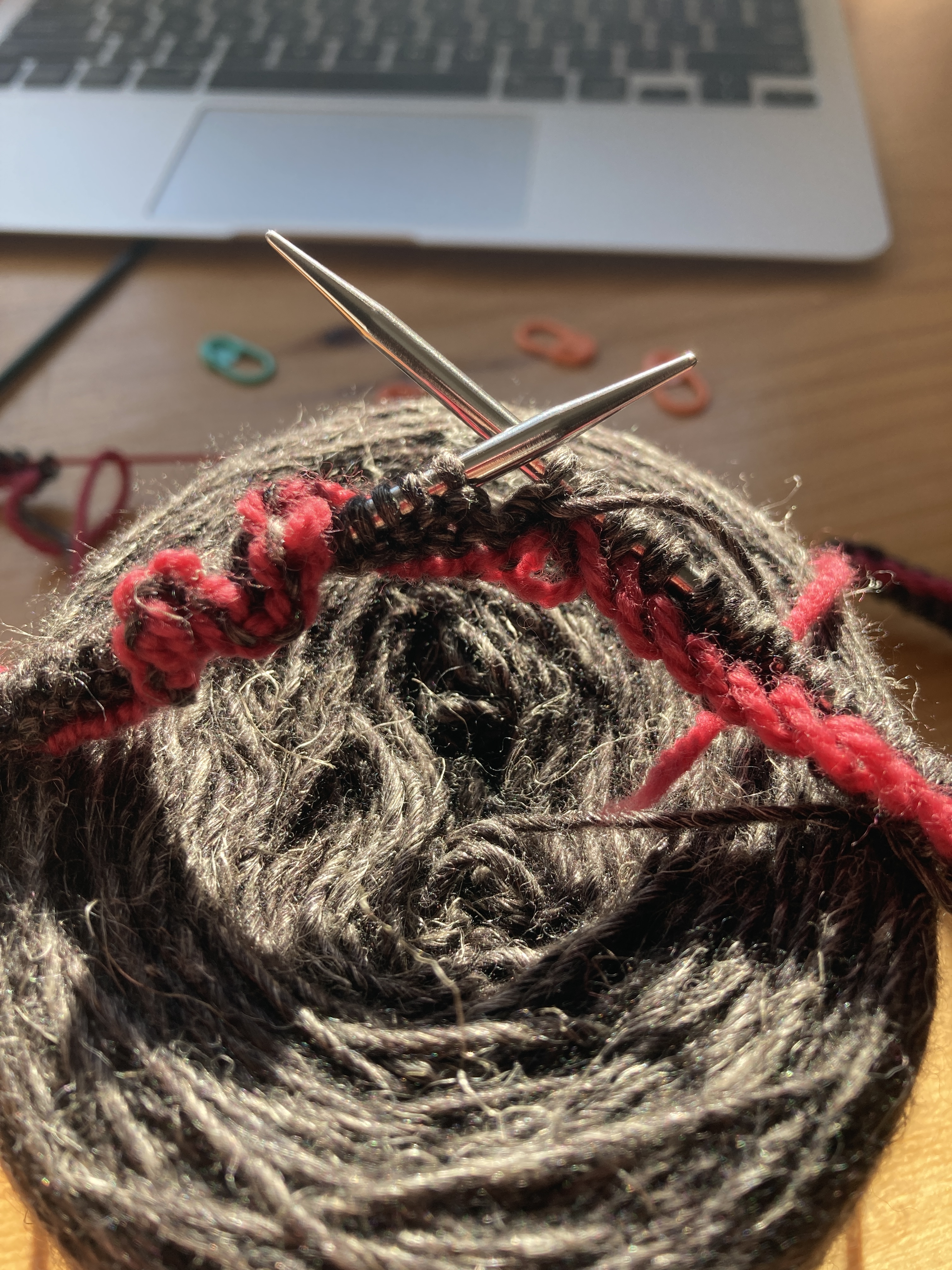
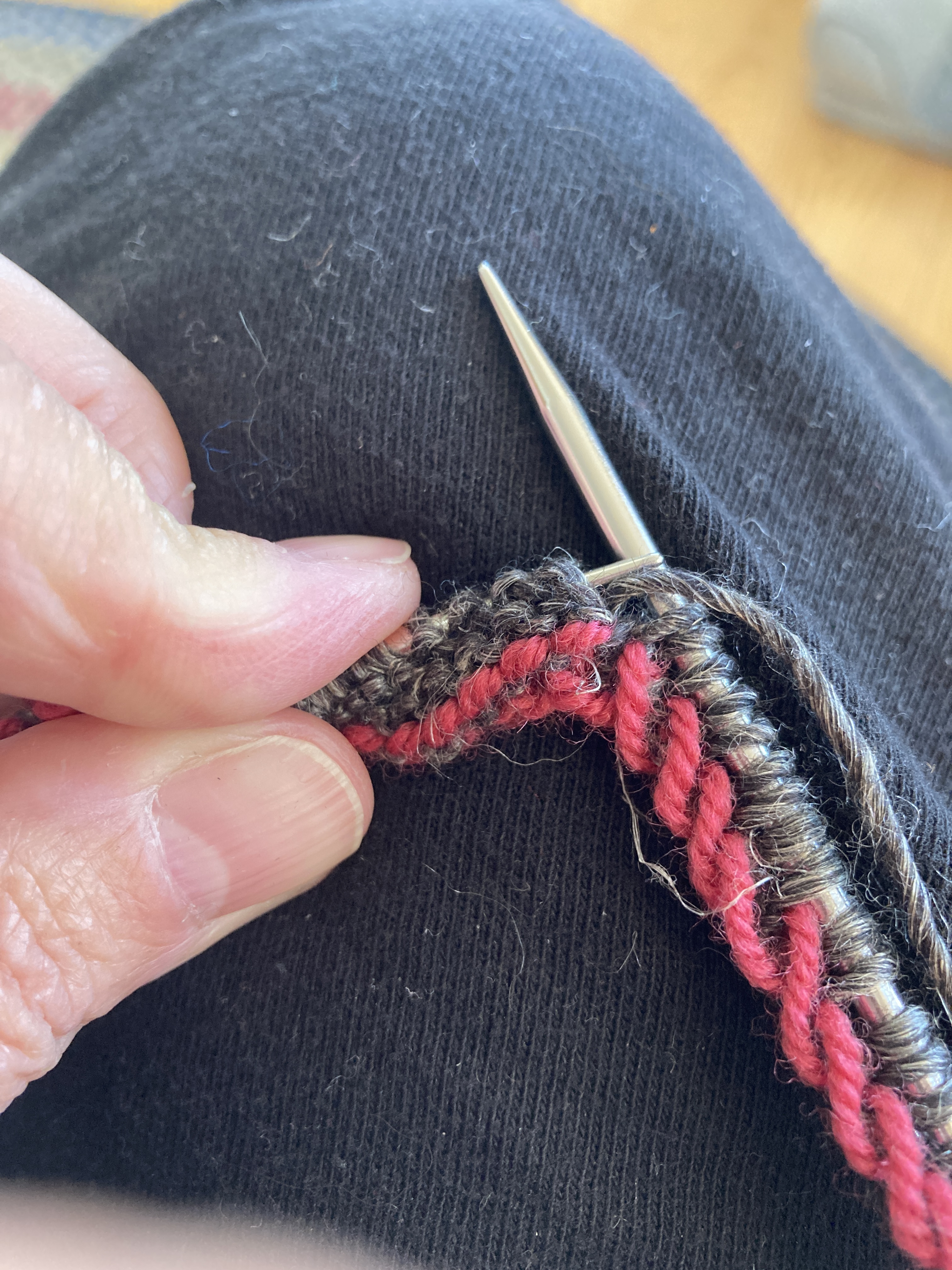
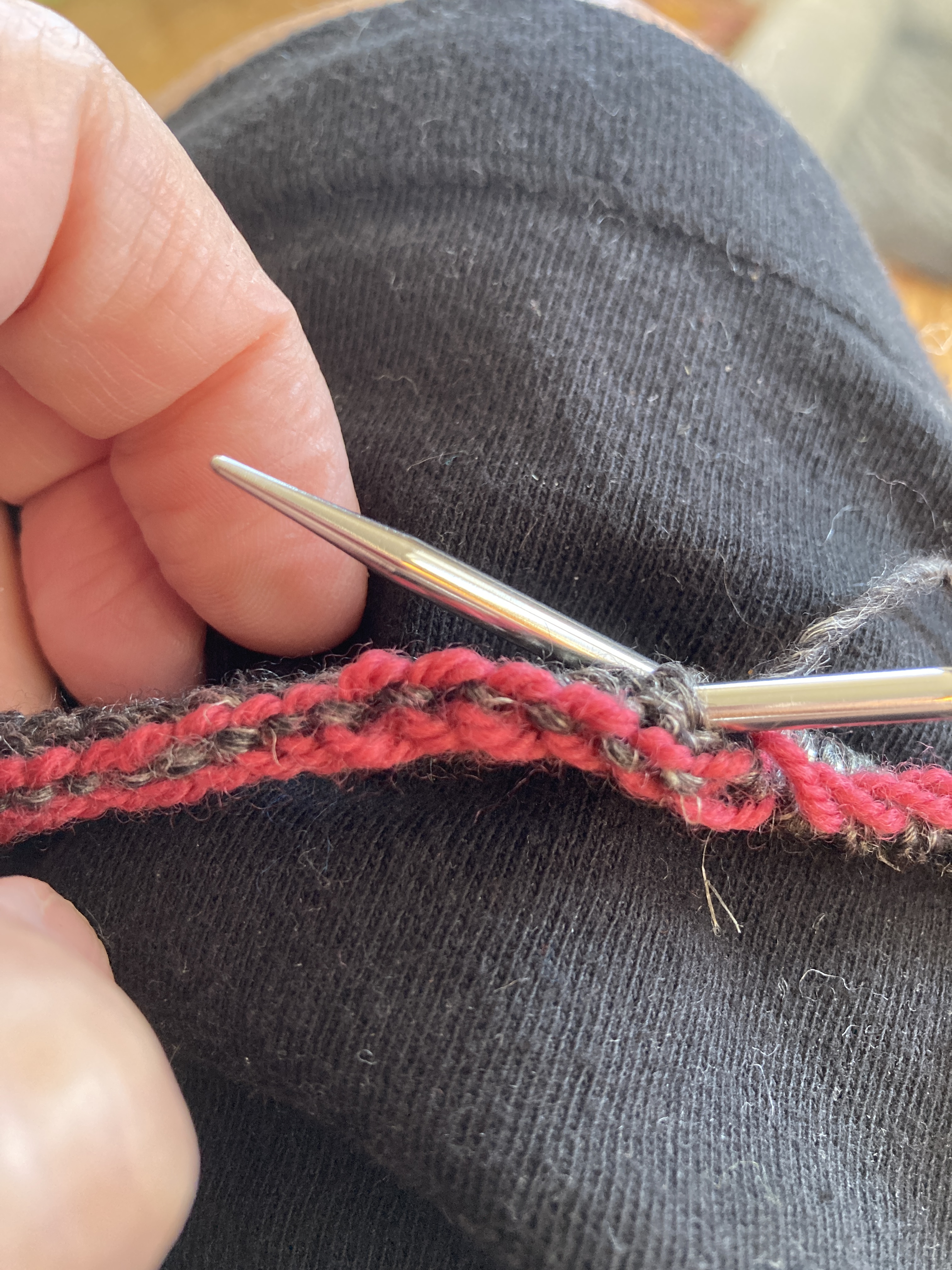
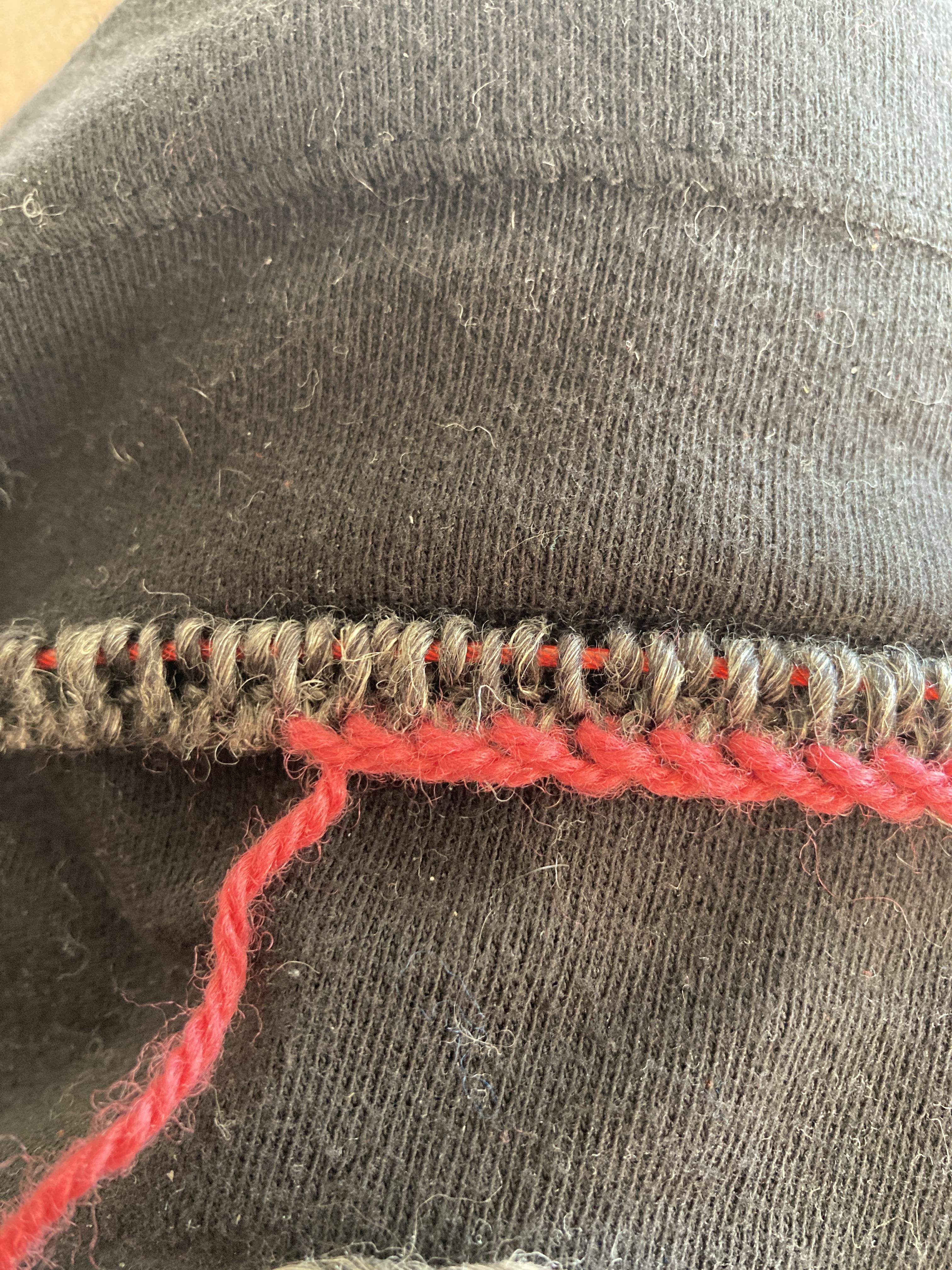
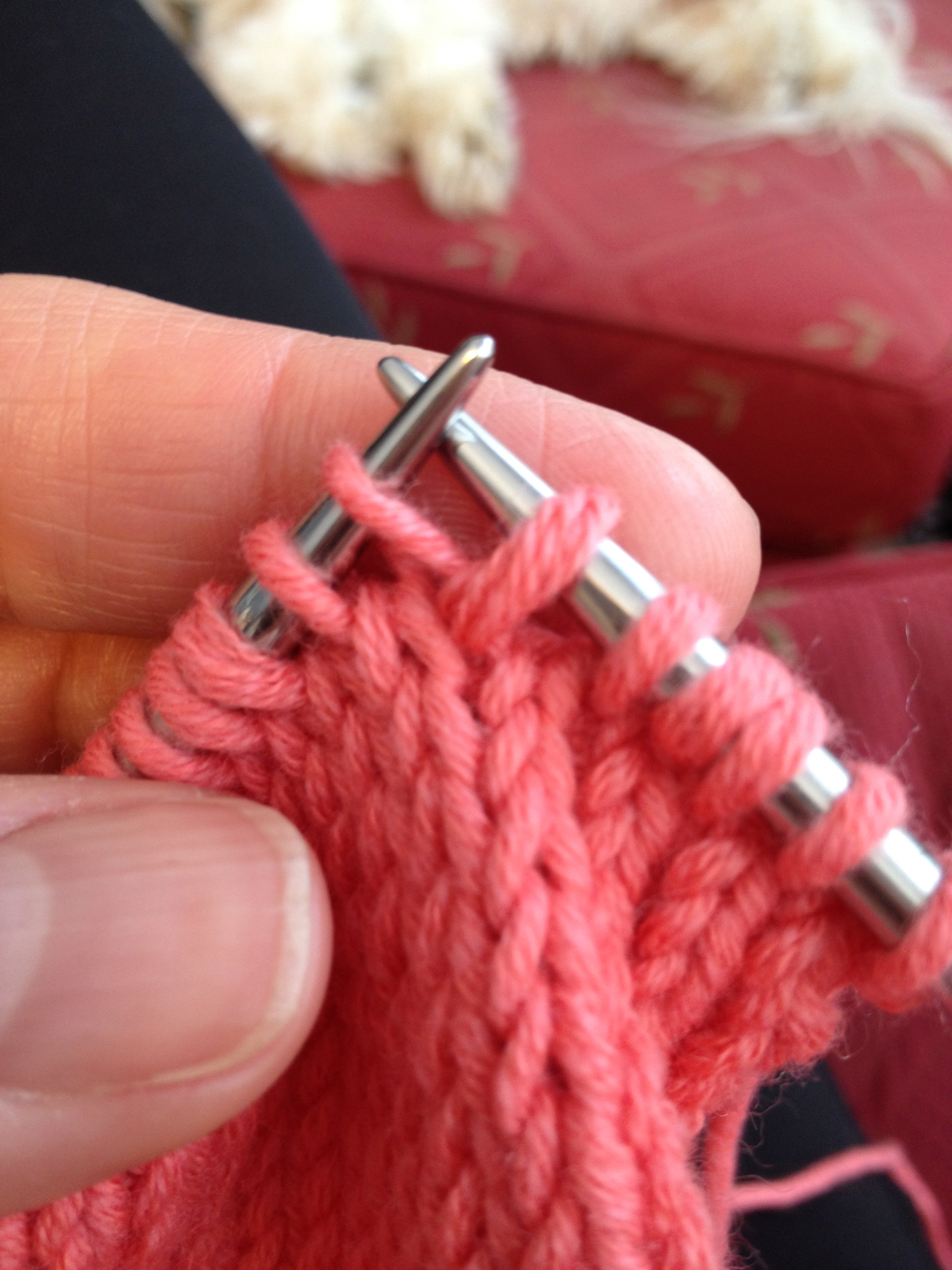
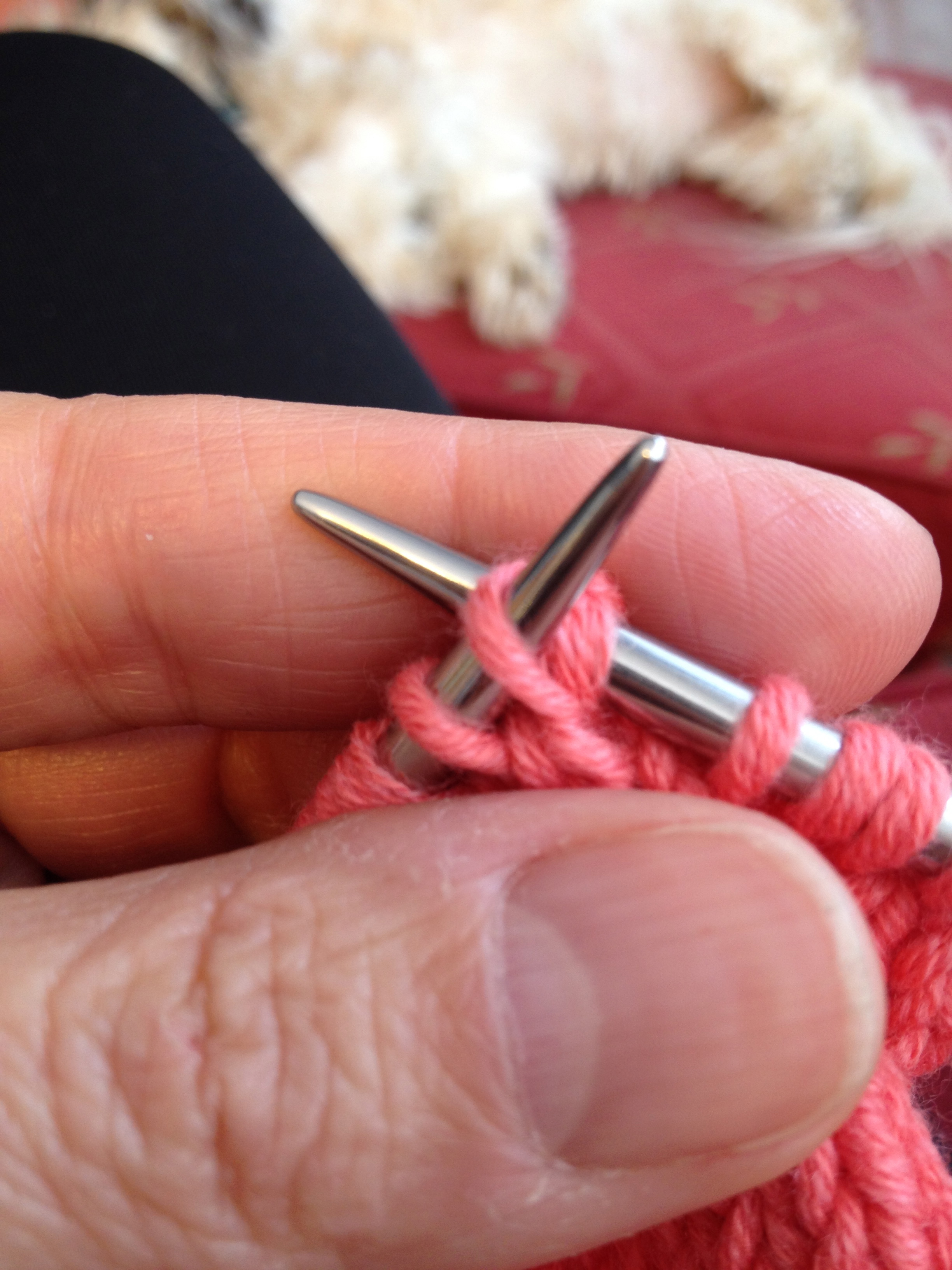
This is the second cast on (and the proper one!) I followed Carol’s tutorial for a Tubular Cast On which tells me to cast on half the number of stitches that I need with a backward loop cast on (way easier than a long-tail cast on when you’re casting on 351 stitches) using a contrasting color of yarn. Since I need an odd number, I will round UP to 176 (pink yarn). I want a stretchy cast on because it’s the bottom of my vest and so I started by knitting the right side and continuing in stockinette stitch for two rows. On the fourth row, wrong side, I purl 1 and then bring the yarn forward to knit into the back of the purl bump in the first row knitted with my working yarn (gray). I’ve taken some photos and I hope they help …

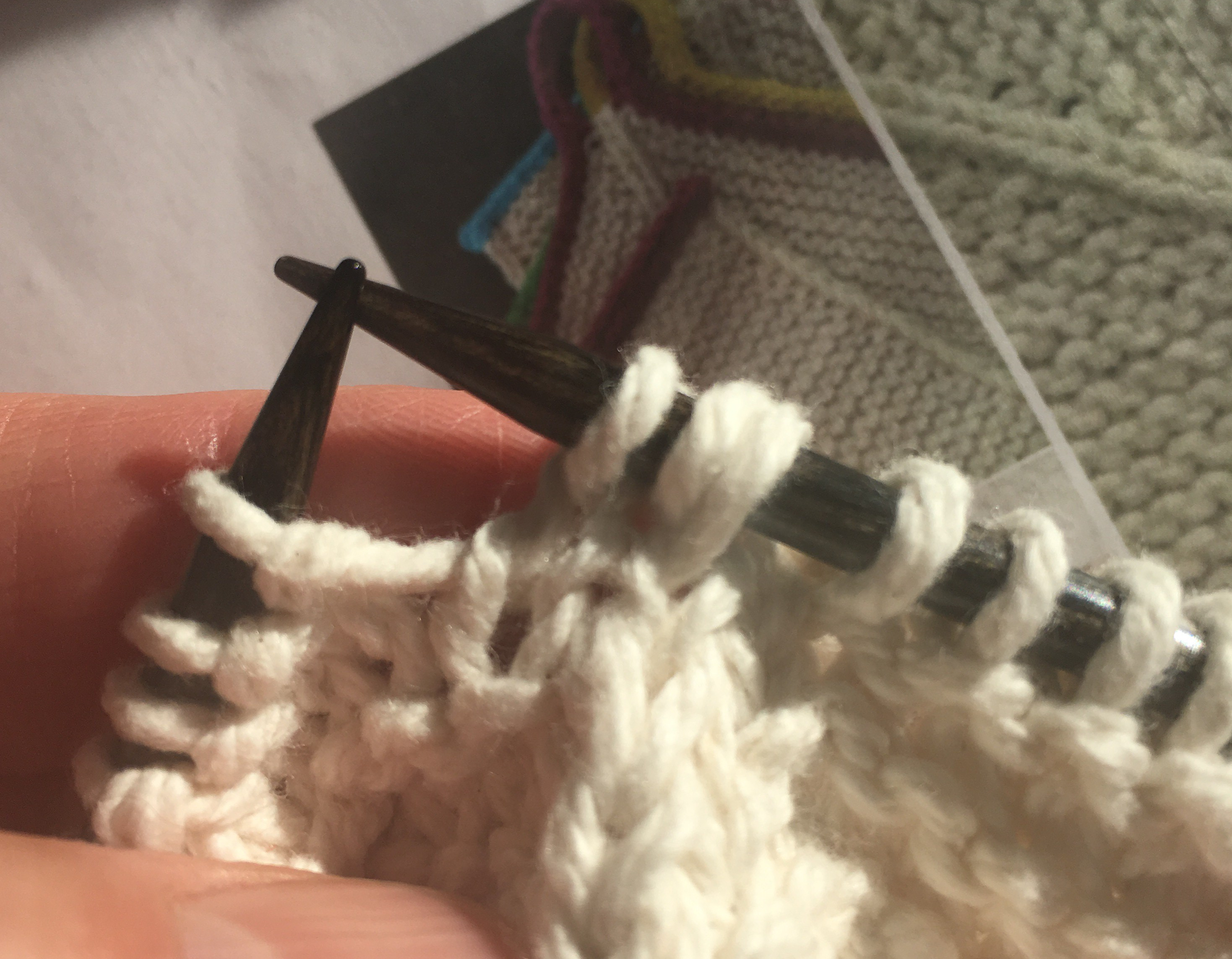
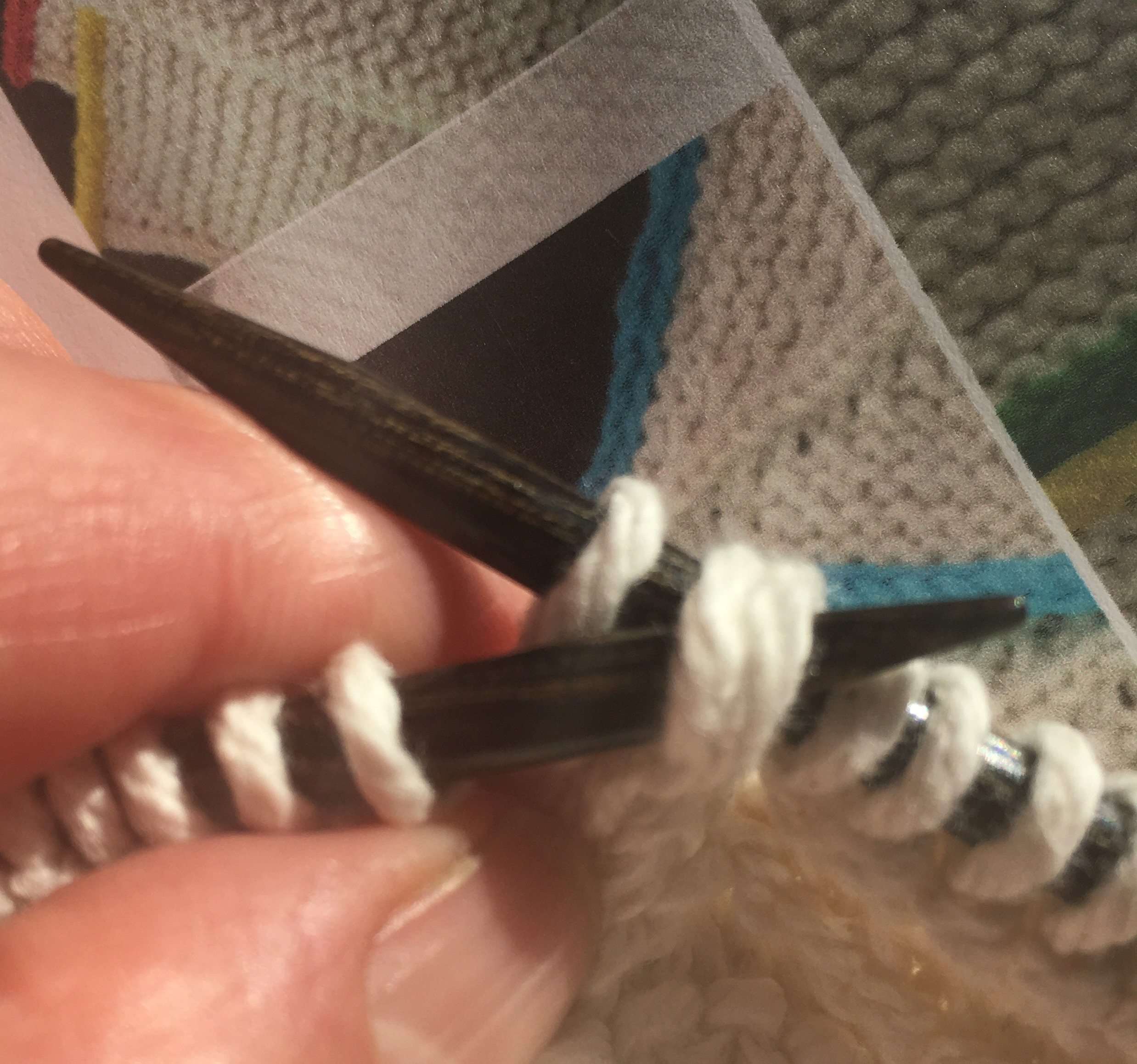
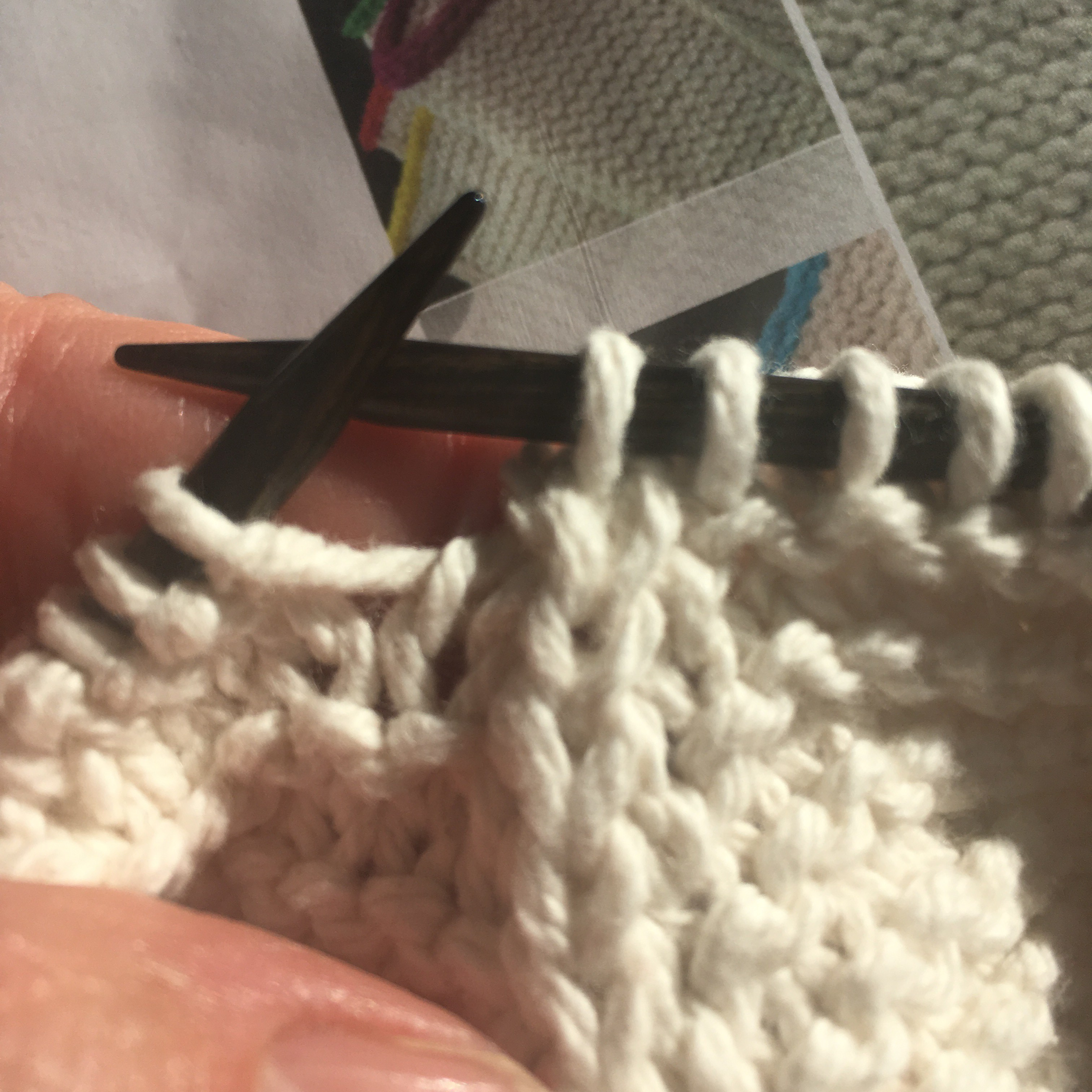
Photo 1 – the first stitch on the left hand needle will be purled … the normal way … and then bring the yarn to the back. The stitches on the right needle have already been worked and I can see the purl bumps from the first knitted row in grey between the pink “lines”.

Photo 2 – We are going to knit into the back of the stitch that is the first round of gray stitches. We will pick it up on the left needle going through the stitch from top to bottom. The gray stitch we are after is found “between” the pink lines, so to speak.

Photo 3 – Picking up the gray stitch from the top to bottom on the left-hand needle and knit it through the back loop. Bring the yarn to the front.

Photo 4 – I’ve knit through the back loop of the picked up stitch. You can see the stitches we’re after (between the pink yarn “rows” really well here. They’re not difficult to pick up but it is a little fiddly.

Photo 5 – Once you work across the row as described above, you remove the pink yarn. I used my blunt tipped sewing needle to grab the pink stitches from the left side to the right side one by one. Another fiddly step but it’s not difficult. Slow and steady wins the race. Note: this is the wrong side of the work.

Now I just have to knit a couple of inches of 1×1 ribbing before I get to the body of the vest.

I’ll post more photos of the finished ribbing when I have a little bit to photograph. The bottom of the ribbing, though, looks like it just started out of nowhere. Lovely!

I’m knitting this vest in Manos del Uruguay’s Milo (65% merino wool, 35% linen). It comes in a 100g hank with 380 yards making it a sport weight. I’m using a US4 needle for the ribbing. Check out my progress on my Ravelry project page. I’m Lindar on Ravelry.

Gone knitting.

CDD

IMG_2327

The pattern … see why I was attracted to it?

In the last twenty-four hours I’ve chosen two patterns that called for a CDD. I’m not sure that I’ve ever encountered a CDD before. No, really. It’s the truth.

That said, I do know what a CDD is! It’s a centered double decrease. Essentially, what it does is decreases one stitch on either side of the center stitch in a pattern. And they’re very pretty if used properly!

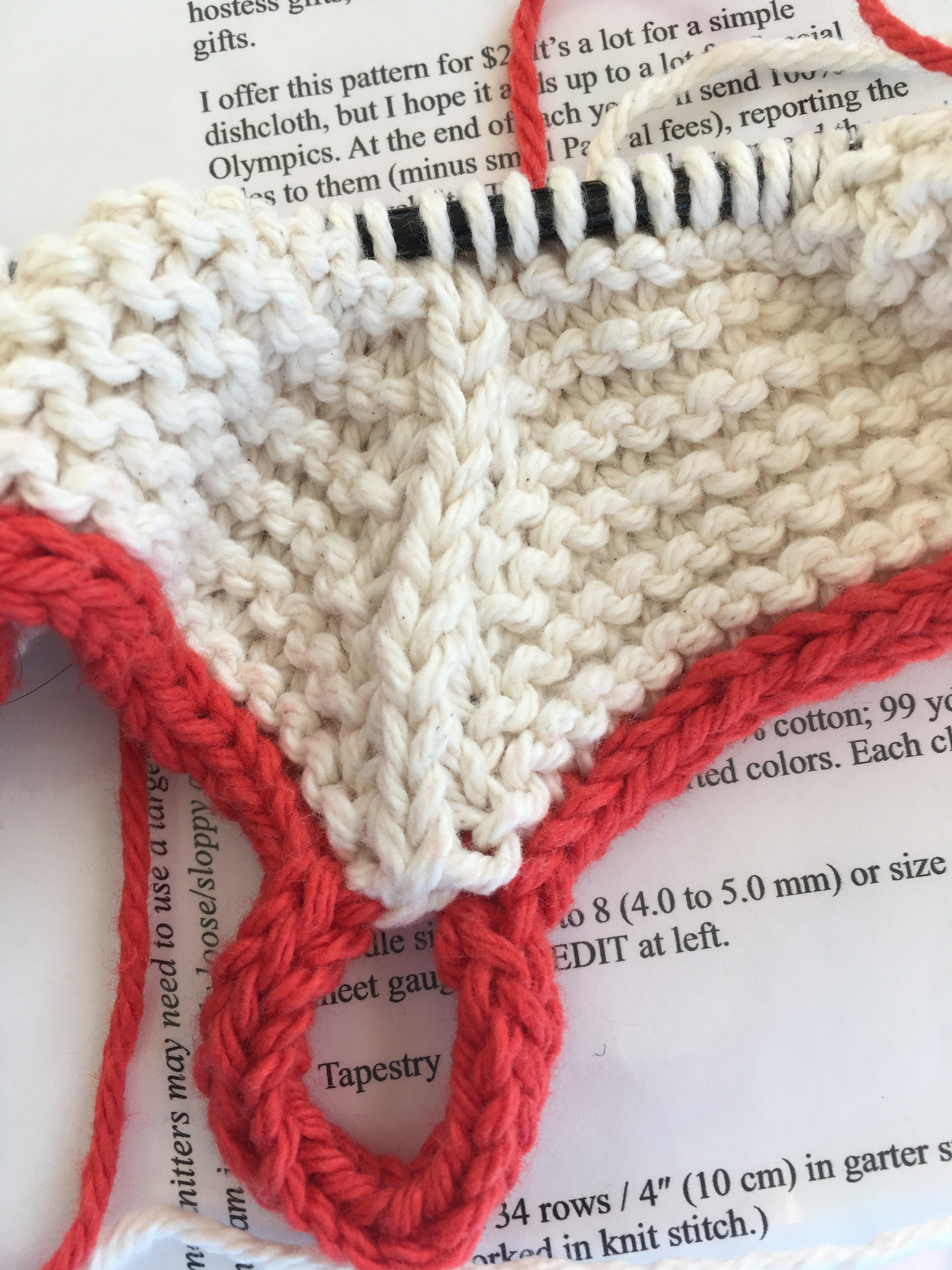
First up, a dishcloth pattern that I bought a couple of years ago to support the Special Olympics and it’s called Sinkmates by Lorilee Beltman ($2 on Ravelry). I had unrealistic expectations around this dishcloth pattern, having assumed that it was a mitered square. Wrong. It was a CDD! It’s fun to knit and the first thing I’d do next time is to make the i-cord on a larger needle than the rest of the project. Mine came out somewhat lop-sided. But it’s a dishcloth. Enough said.

Next, Hartland Slipper Socks from Berroco Folio, Vol. 4. by Amy Christoffers. I loved these at first glance and knew I had to make them. Thankfully, they’ve got short cuffs and are knitted in worsted weight Berroco Ultra Wool which makes them knit up quickly. And since I had a whole weekend off this weekend, I have spent a lot of time in my studio. I love them and will be making more! There is a CDD in the “flower” design at the ankle. I’m going to show you my sequence of stitches on the dishcloth because it’s on almost-white cotton and you’ll be able to see the stitches really well!

So, here is my photo tutorial on how to do a CDD if you don’t know already …

IMG_2326

The CDD on Sinkmates Dishcloth … rows of CDD straight up the middle!

Knit over to the stitch before the center stitch (the CDD “line”) … see photo below!

Remember, worked stitches are on the right-hand needle, stitches to be worked are on the left needle.

IMG_2328

Knit up to one stitch before the center

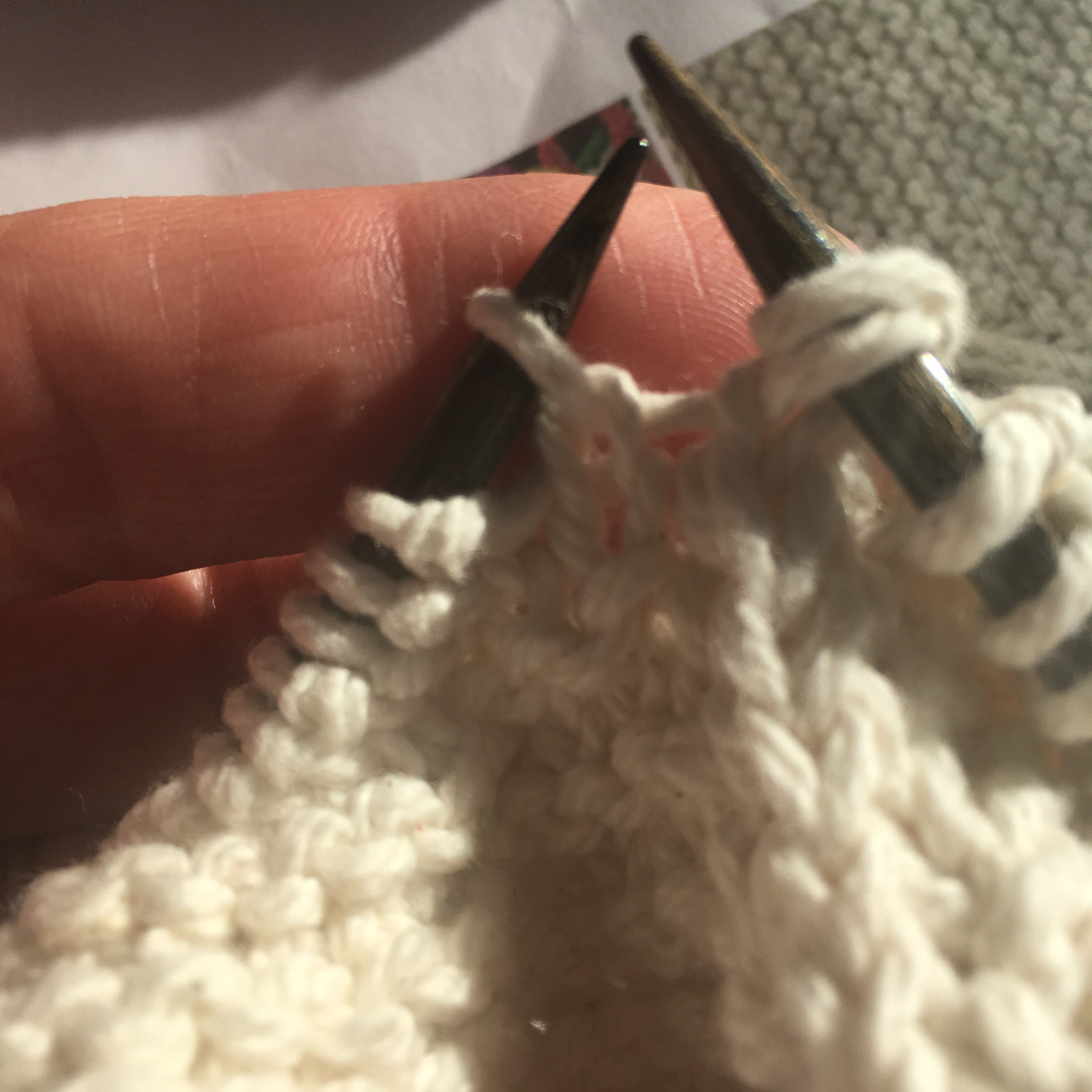
You are going to work the stitch before and the center stitch together as if to knit two together (K2tog). (Insert the right needle knitwise into the two stitches at the same time from left to right as if you’re going to knit them together. Don’t wrap the stitches, though … see photo below.

IMG_2329

You can see the ridges on my thumb nail. I need a manicure!

Next, complete the slip. Slip the stitches onto the right-hand needle by pulling the left needle back and out of the stitches, leaving them on the right needle. OK so far?

IMG_2330

Knit the next stitch on the left needle. In the photo below you can see the two slipped stitches and then the knitted stitch sitting on the right needle. You can see them, can’t you?

IMG_2331

Now, get ready! You’re going to slip the two slipped stitches over the knitted one. (Insert the left needle into the two slipped stitches from left to right, holding your working yarn in your right hand and keeping some tension on the working yarn, slip the two stitches over the knitted one.)

IMG_2332

When it’s all said and done, and the stitches are slipped over, this is what you’ll see.

IMG_2333

When the left needle is pulled out of the completed stitch, you will have something like this. Hopefully, it’ll be exactly like this! The CDD is in line with all of its sister stitches below and you’ll have two fewer stitches in total on your dishcloth.

IMG_2334

See how pretty it is?

Go buy the pattern and give it a try! Share pictures with me of your attempts on my Queen Bee Knits by Linda Warner Facebook page! I’m excited for you to try something new!

Follow me on Facebook (Queen Bee Knits by Linda Warner) and Instagram @QueenBeeKnits. I’m also on Ravelry (lindar).


The Right Way(s) to Yarn Over

My knitting classes have been asking about the correct way to make a yarn over. I’ve shown them the right way to do one between knit stitches but my answer falls somewhat short because there are several ways to yarn over and it all depends on which stitches the yarn over falls between.

I went searching for a good video tutorial and found this one from Purl Soho (see a picture of me at Purl Soho here!) that explains all of the ways to do a yarn over … between two knit stitches, between a knit and a purl stitch, etc.

This is the best video tutorial I’ve seen! But Purl Soho is one of the best yarn shops I’ve seen, too! (If you get a chance to visit, please do!)

It’s excellent, right?

Gone knitting.

Remembering Why I Love Cables

Sirdar Snuggly Double Knitting Patten #1516

Sirdar Snuggly Double Knitting Patten #1516

Perhaps it’s partly my Irish heritage (the part of my heritage that I feel most connected to) or maybe it has no relation at all but I love, love, love cables!

I have two projects on the needles right now that I am enjoying. One is a little cable-knit poncho for my niece in California (I’ll be knitting a matching one for her little sister, too) the other is an infinity scarf/cowl for my daughter. The poncho has a great cable pattern that I am loving. It’s a Sirdar pattern (#1516), using Sirdar Snuggly Double Knitting (DK) yarn and a size US3 and US6 knitting needle. I’m using my Knitter’s Pride interchangeable needles which have great points for this yarn. You can buy them here or here. I love mine!!!

I’m going to spend this post talking about why cables are so simple and look so difficult and show a few pictures so that, if you’re a newbie to knitting and are a little bit afraid of cables, you’ll jump right in … because they’re really so much easier than they appear to be! Be brave! Go for it! Give it a try! (Rah! Rah!)

What my cable pattern looks like~ complicated, right? Wrong!

What my cable pattern looks like~ complicated, right?  …Wrong!

It really does look complicated, doesn’t it? I promise you that it’s really not complicated at all. All you need to do is lift a couple of stitches off the left needle and then knit a couple of stitches and then knit the lifted/slipped stitches. Follow along with me, I’m going to show you what I mean in a step-by-step tutorial.

IMG_5445

Left needle is holding stitches to be worked next … and we’re ready to make a cable!

I’ve knitted (or in this case, purled) over to where the stitches are that will be my cable (they are the knitted stitches, 8 of them between purl bumps).

If you examine the photo carefully, it’s just like it was sitting in your lap. The right hand needle is the one holding stitches that have already been worked. The left hand needle is the stitches that will be worked next. You can see the stitches several rows below where I am now working that have been cabled already. That’s a helpful hint. In  this pattern, the cables are neatly stacked up on top of each other.

It is time to slip two stitches off the left-hand needle and hold them to the front of my work with my cable needle. I am using a cheap aluminum cable needle that I bought at JoAnn’s ages ago. I lose a lot of cable needles so cheap is good for me.

Slip two stitches from the left-hand needle to the cable needle without twisting or as if to purl.

To the left is a picture of the two stitches slipped onto the cable needle and being “held” in front of my work. If not careful, the cable needle will slip out of the stitches whether you hold it or not. But it’s not a crisis. The only time any damage comes to “dropped” stitches is when you pull. If you don’t pull your stitches, you can slip them right back onto the cable needle (or any other needle for that matter).

Now, I’m goinIMG_5450g to knit the next two stitches on the left-hand needle. And hopefully I will not drop the cable needle. And then I will knit the two stitches from the cable needle.

When that is done, I’m half way there.

I still have one more part of the bigger cable to do and that means slipping two stitches to the back of my work in the same manner that I slipped the stitches to the front. I will knit two stitches from the left hand needle and then knit the two stitches that are held on the cable needle in back of my work. Wait! I’m going to show you …

Just a note about cables – Cables are always either left-leaning or right-leaning. When you hold your cable stitches to the front the cable will be left-leaning (I remember that by thinking about left having the “f” in it which stands for front). And in the same vein, the right leaning cables will always be worked from stitches that are held to the back. (I haven’t got a mnemonic for that, but you have the one for the left-leaning so I hope you don’t need one for the right-leaning …. right?)

Knitted two from the working needle and two from the cable needle held in front. Now it's time to slip two more stitches and hold them to the back.

Knitted two from the working needle and two from the cable needle held in front. Now it’s time to slip two more stitches and hold them to the back.

Here is my work after having knitted the first four stitches (two from the needle and two from the cable needle held in front.)

Now it’s time to finish the cable.

We are going to slip two stitches from the left-hand needle to the cable needle and hold it to the back of our work. (This will be a right-leaning cable … can you see how the first part of this cable that we just finished is leaning to the left?)


IMG_5448

We have slipped two stitches onto the cable needle and they are being held to the back of our work …

Once the two stitches are on the cable needle and at the back of the work as in the photograph to the right, you can knit the next two stitches from left-hand needle … and then knit the two stitches from the cable needle.

Ta! Da!

You’ve just worked a cable! Woo! Hoo!


8-stitch cable with one side leaning right and one side leaning left

8-stitch cable with one side leaning right and one side leaning left

My two fingers are marking the eight stitches that we’ve just manipulated to make this “double” cable. The first side we knitted (on the right in this photo) leans to the left and the second side (on the left in this photo) leans to the right. Can you see this??? Under my fingers are two purl bumps … there are purl stitches on both sides of the cable. Purl stitches make the cable pop!

Simpler still, a 4-stitch cable

Simpler still, a 4-stitch cable that leans to the left and to the right


The other cable in this pattern is a simpler four-stitch cable.

The process is the same as far as the knitting goes. This cable leans to the left and then it leans to the right. Yup, you guessed it! When making up this cable, one time you’ll bring your cable needle with its two stitches to the front (left-leaning) and then the next time, you’ll bring it to the back (right-leaning).

Every cable pattern has a number of rows that it takes to make the cable happen consistently (and look just right!) This pattern just happens to have an eight-row repeat and the “difficult” rows are the first and fifth. These are the rows where I use the cable needle and cross or twist my stitches. The other six rows are super simple combinations of knit and purl stitches.

So now you’re ready to cast on some stitches and give cables a try, right? I hope this has helped to make you feel more comfortable with the idea of cables … cast on 22 stitches with any plain-colored light yarn and an appropriately-sized set of needles and give this a try! Here’s your “pattern”…

Cast on 22 stitches

Set up Row (wrong side of knitting): K2, P4, K3, P8, K3, P4, K2

Row 1 (right side of knitting): P2, C4B, P3, C4B, C4F, P3, C4B, P2

(remember: C4B means hold 2 slipped stitches to the back of work, knit 2 from working needle, knit 2 from cable needle and C4F means hold 2 slipped stitches to the front of work, knit 2 from working needle and then knit 2 from cable needle)

Row 2 (and all other even rows): K2, P4, K3, P8, K3, P4, K2

Row 3: P2, K4, P3, K8, P3, K4, K2

Row 5: K2, C4F, P3, C4F, C4B, P3, C4F, K2

Row 7: repeat row 3

Row 8: repeat row 2 (obviously)! This is the end of the 8-row repeat.

Give it a try and let me know how you do!

For now, I’ve gone knitting!


K1FB Increasing Without Tears …or those pesky little “purl bumps”

This morning I happened across a video for adding a stitch in your knitting without that funny little purl bumpy thing that happens when you knit one into the front and back of the stitch (K1FB). I have gone back to try to find the video but I can’t find it. So, in my own inimitable fashion, I’m going to attempt to show you, dear patient readers, with words and photographs what the video said.

There are many increases to use when you’re knitting. The “quickest and easiest” is K1FB or knit one into the front and back of a stitch. You can use this increase when you see “M1” in a pattern but I’d recommend that you use this as a generic increase rather than a M1 (make one).

When you get to the place where you need to increase, you are going to knit into the front of the stitch (which I’ve already done in the photo below) and then, without dropping the stitch off the left-hand needle, you’re going to knit into the back of the stitch. The photo below shows the stitch that I am adding by knitting into the back … I’m ready to wrap and then slip the stitch off the left-hand needle.

I've knitted two stitches and am knitting into the front and back of the third stitch. I've already knitted into the front and now I'm knitting into the back.

I’ve knitted two stitches and am knitting into the front and back of the third stitch. I’ve already knitted into the front and now I’m knitting into the back.

OK, so, I’ve wrapped the yarn around the working needle and slipped the stitch off the left-hand needle and this is what it looks like. There are my three “old” stitches and my “new” or “added’ or “increased” stitch. (Remember the first stitch is the the one to the right in the photo. The added stitch is the left-most stitch, the stitch just worked.)

Three stitches is now FOUR! But can you see the "purl bump" on the fourth stitch (the left-most)?

Three stitches is now FOUR! But can you see the “purl bump” on the fourth stitch (the left-most)?

So, we’ve accomplished our goal which was to increase one stitch. That stitch, however, isn’t invisible because of the little purl-like bump that is sitting in front of it. There’s nothing you can really do about it. And most times when you increase using the K1FB method, you’ll be increasing close to the side of a garment and those stitches will be swallowed up in a seam and will be virtually invisible after seaming.

BUT there is a way to make the stitches less visible and this is how you do it!

The first step is to knit into the front of the stitch but (again) don’t slip the stitch off the left-hand needle. (This is the exact same as the K1FB that I illustrated above.)

IMG_4271

When you get to the stitch where you want to increase, knit into the front of the stitch.

The second half of the stitch needs to be reoriented so that the stitches don’t wrap around the front of the work. So, you’ll slip the next stitch knitwise by inserting the tip of the right needle from left to right (just like you were knitting the stitch) and slip the stitch from the left-hand to the right-hand needle.

IMG_4273

Next, insert your working (right-hand) needle into the front leg of the next stitch to be worked on the left-hand needle knitwise.

I know it sounds confusing, but I am at a disadvantage not being able to film myself in a video here! It forces me to find the right words to explain the process clearly and that’s good for both of us!

Next you’re going to slip the stitch back onto the left-hand needle to finish the process. Insert the tip of your left-hand needle purlwise into the stitch you just slipped to the right needle. Slip the stitch back to the left-hand needle.

IMG_4274

Slip the stitch purlwise back to the left-hand needle … you’re almost there!

All you’ve done is slipped the second part of the stitch increase from the left to the right knitwise (as if to knit) and then back from the right to the left purlwise (as if to purl). This has reoriented the legs of the stitch so that when you (next!) knit it, the stitch isn’t wrapped with yarn (and it doesn’t look as much like a purl bump.)

IMG_4275

This is how your reoriented stitch looks … and now you are going to knit it.

Go ahead, knit the stitch and slip it off the left-hand needle. There! You have increased one stitch.

If you look at the next photo now, you’ll see that there is a “normal” K1FB increase and a K1FB increase where I’ve changed the orientation of the increased stitch.

IMG_4276

Reading from right to left: K2, K1FB (the old way where it looks as if the fourth stitch has a purl bump), K1, K1FB (the new way with changing the orientation of the increased stitch.)

See! No purl bump thingy! Now I’ll purl back across the stitches and you can see the fabric again …

IMG_4279

Again, reading from right to left you’ll see three knit stitches, one knit stitch with the “purl bump” below it and another two knit stitches and a new stitch from our reoriented K1FB.

There you have it! Two ways to increase in your knitting with K1FB (knit one front and back).

The first increase in stitch #3 (read from right to left) was the “old” knit one into the front and back of the third stitch which creates a fourth stitch with a “purl bump”. This is an excellent way to increase! Super quick and easy, just a bit visible in some circumstances.

The second increase in stitch #7 is done similarly but with a little twist of the second half of the increase where we reoriented or changed the orientation of the stitch before knitting it. This creates an added stitch without a wrap or “purl bump”. It’s pretty cool, isn’t it?

Learning to read your stitches is essential to your success as a knitter. I’m getting more skilled at it every time I take on a new project and teaching has helped me tremendously. This photograph, however, is such a clear one … and I get all excited.

When looking at this last photo, I can see the stitches added! Take a good look. The stitches in a each row are all lined up like a v on top of a v. Nice and neat! You can follow the stitches up in the center of the v. Where the increased stitches are added, it’s a little bit squeezed and the pretty symetry

VVVVV

VVVVV

VVVVV

When we increase a stitch, it squishes an extra stitch into the nice neat lines.

vvVvvVV

VVVVV

VVVVV

It’s a good attempt to illustrate with my limited illustration skills. I think. 🙂

Now that you’ve seen my excellent illustration, go back and have a look at the last photograph (I’ve added it below for you). Start at a stitch on the needle and follow the “v” down the rows. See how they line up? And can you see where the increased stitch just kind of pops up out of nowhere? It doesn’t have a nicely stacked column of “v”s to sit on top of … it’s just out there. The first K1FB increase (with the “purl bump” below it) stands out a lot more than it’s “cousin” the second K1FB “with a twist” but similarly, it just kind of gets nestled in between two stitches … each of the stitches has its column of “v”s but the increased stitch is sitting out there without a column. Can you see it now? Isn’t it exciting? You’re reading your knitting!

IMG_4279

Read your knitting!!! Stitches are sitting in a column of “v”s; row sits squarely on the row below it … until you have an increased stitch!

There you have it! How to make a K1FB increase without having that wrapped stitch that looks like a purl bump. I am such a knitting geek!

What else do you want to learn about increases?

Gone knitting!



Knitting Rules – The Truth about Slipped Stitches

Mojo Jojo Cowl in Berroco Mojo

Mojo Jojo Cowl in Berroco Mojo

I just completed a quick-knit cowl with some lovely yarn Santa brought for me. The yarn, Berroco’s Mojo in a bee-utiful shade of blues (Color 8001/Dye lot 2078). With two stitches to an inch on size US15 needles, this super bulky yarn knits up really quickly … the cowl took maybe four hours of knitting (and I’m a slow knitter).

The pattern, Mojo Jojo, is a free Ravelry pattern. I wasn’t sure what I wanted to knit up with the two hanks that Santa brought me but when I searched Ravelry (and I am moving to Maine in a few months) I found the cowl pattern and decided that THIS was a good plan. The pattern uses what is called a “faux cable”. I’m not sure that I agree with that term as it looks more like a stretched stitch to me but if you really want to stand back a few feet and squint, I guess one might say it looks like a cable … or maybe not. Regardless, the cowl is very attractive and it was a quick and easy knit project that I completed in a few hours. I will get a lot of wear out of it in Maine next winter.

Mojo Jojo Cowl Close-up

Mojo Jojo Cowl Close-up …  faux cable?

The faux cable is created by slipping one stitch, knitting four stitches and then passing the slipped stitch over the four knitted stitches. When knitting this cowl, I followed my slipping stitches rule #2. I slipped the first stitch knitwise because I was going to use it again in the next row.

So, let’s talk about slipping stitches in knitting.

A lot of knitters struggle with how to slip stitches and what is the “right” way to slip a stitch. So, here are the rules of slipping stitches according to me (the Queen Bee!)

Rule 1. If the pattern doesn’t state how to slip the stitch, the default is to slip the stitch from the holding needle (usually the left-hand) to the working needle (usually the right-hand) purlwise. There is no twist to the stitch, it’s passed from one needle to the other. Insert your working needle (right) purlwise (from the right to the left) into the first stitch.

Slip purlwise

Slip purlwise

Rule 2. If you are going to use the slipped stitch again in the same row, then slip the stitch knitwise as in a SSK (slip slip knit) or PSSO (pass the slipped stitch over). This way the stitch is twisted as it is slipped from one needle to the other.

Slip Knitwise

Slip Knitwise

Rule 3. If the directions tell you to slip the stitch(es) knitwise, then follow the instructions.

There you go! So simple that I even complicated the process with adding rule number three which, technically, is an obvious rule and should not even be mentioned. However, I have learned that I should not ever assume so the obvious becomes rule number three.
Gone knitting!