Finishing the Just So Bag

As I was seaming the Just So Bag, I looked at my bag and I looked at the pictures on the pattern and realized that the pattern had a different “hem line” at the bottom than the regular seam that I would have sewn. Mine was just a typical seam connecting two stockinette pieces and was nearly invisible. Pretty but not striking. The problem was that I liked theirs better.

So, what’s a knitter to do when the directions don’t give you the information on how to make a project look exactly like the one in the pictures on the pattern?

I fiddled with it for awhile and in the end, I am very happy with it. Here’s what I did. (Sorry, I didn’t take a photograph of the seam I didn’t like but it was smooth and I liked her piping-like seam that bumped out a little bit.

You’re going to start with the bottom strip and one of the side pieces both placed on a table with right sides facing up. (You can do it on your lap, too, if you want.) Grab the first stitch on the bottom strip as you normally would seam together two pieces of stockinette (grabbing the “v”). This is all you’re going to do on the bottom piece all the way along the seam. Easy peasy.

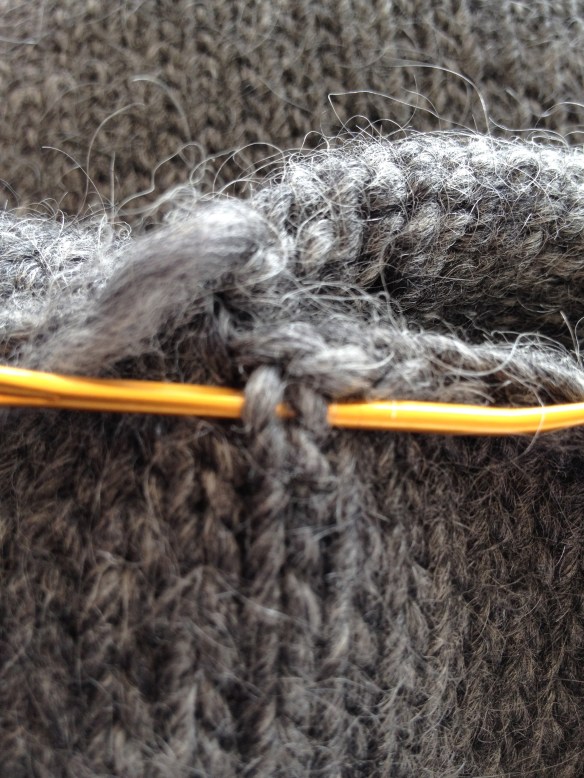
On the bottom strip, seam as normal

On the bottom strip, seam as normal, using the inverted “v” of the first row of stitches.

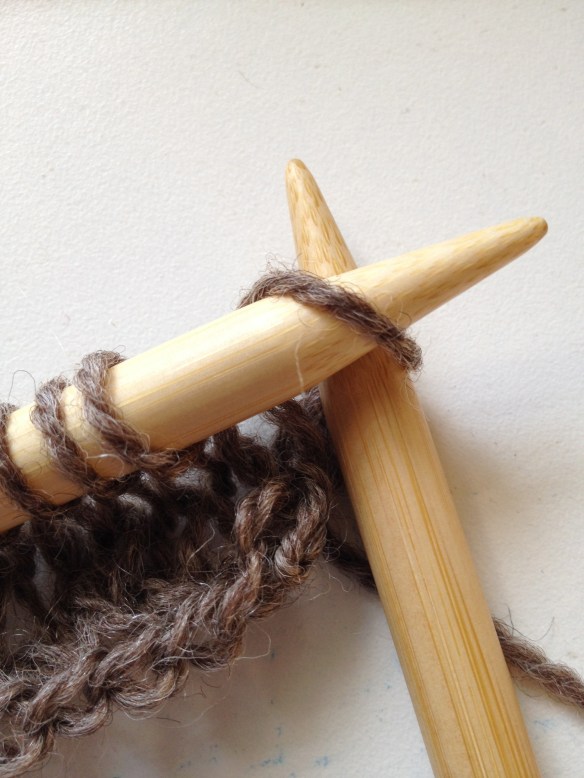
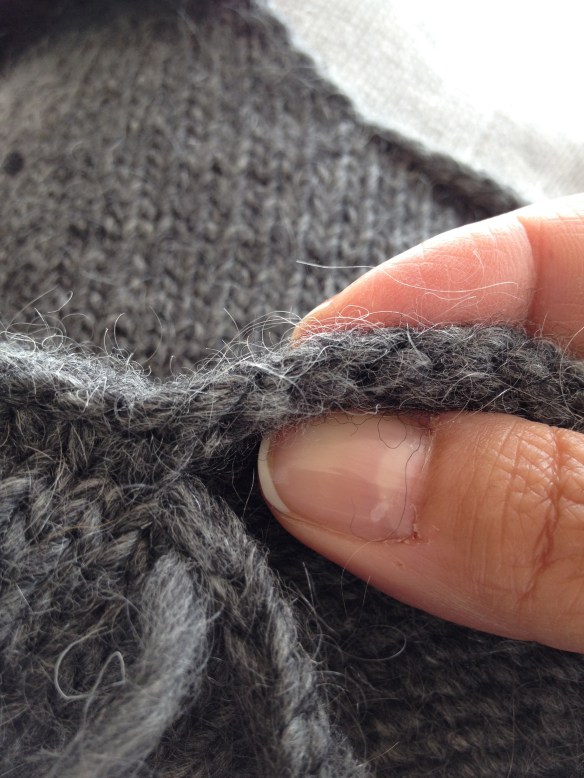
The “side” piece is where we’re going to drift away from “normal” seaming in order to get the little “piping” effect like on a sewn cushion. You are going to turn sew into the wrong side of the fabric. Inserting your needle into the left side of the first row of purl bumps.


One of the two side pieces. See the row of purl bumps just under the cast-on edge?

One of the two side pieces. See the row of purl bumps just under the cast-on edge?

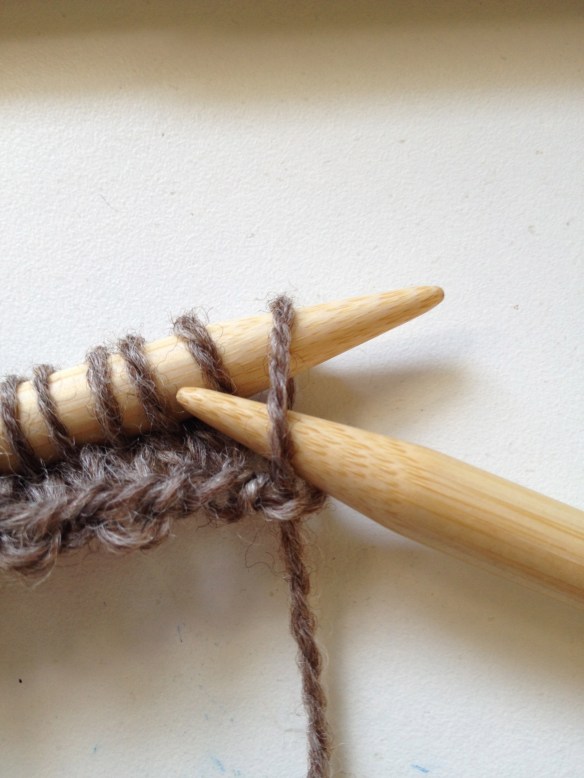
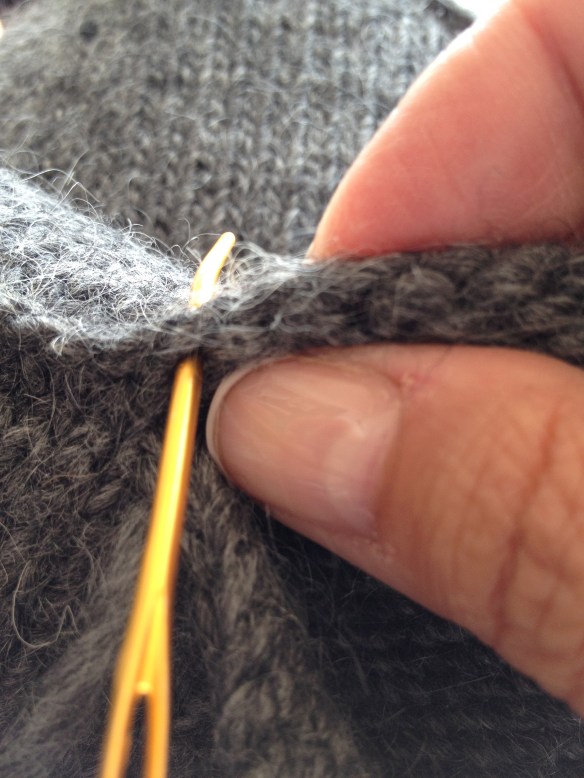
You’re going to sew up on the left side like this.

Sew up on the left side of the purl bump.

Sew up on the left side of the purl bump.

And then just come down on the right side of the purl bump and then you’ll grab the “v” in the next stitch of the bottom strip. Repeat this process all the way across the bottom edge of your bag. (And then you have one more seam to sew on the other side… practice!)

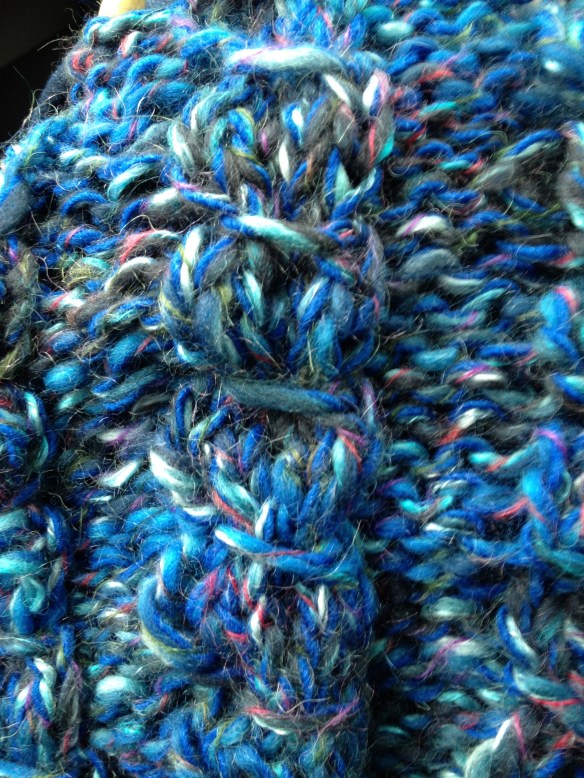
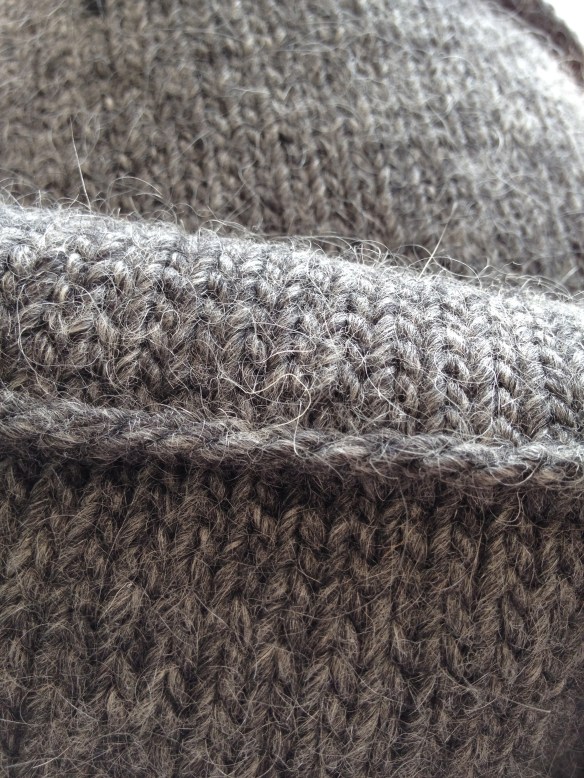
Here’s what my bottom edge looks like. I am quite pleased with it!

Pretty "piping"!

Pretty “piping”!

Gone knitting.

I Hate it When This Happens

Happily knitting along on my Wonderful Wallaby and my right hand feels a lump.

I hate it when this happens!

I hate it when this happens!

Thankfully, I’m knitting with wool and since it’s a natural fiber, I can do a “spit join” and it will be a seamless (and end-less … read this as no ends to weave in) way to keep on knitting.

To do this, all you have to do is:

1) cut out the knot with your handy dandy scissors

2) separate the plies from each end of the yarn

3) mine was 4-ply. I cut out two plies from each end of the yarn

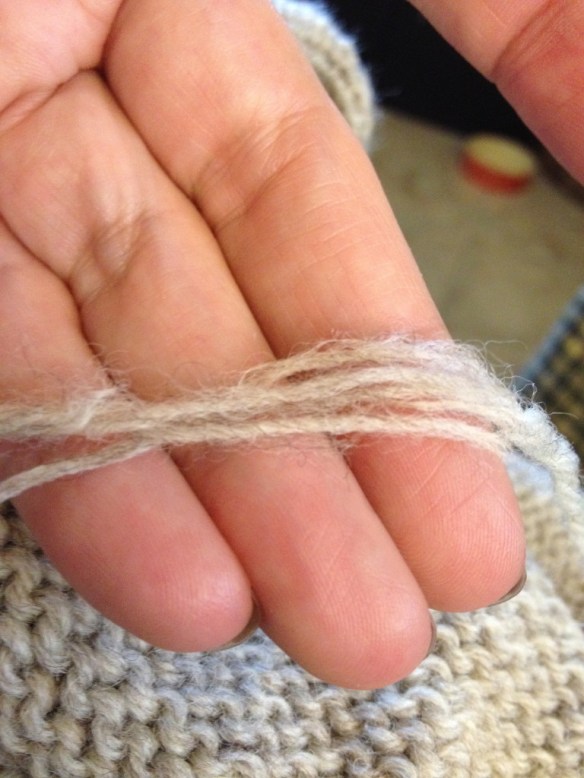
After separating the plies, cut out half of them & wet both ends and lay them together again

After separating the plies, cut out half of them & wet both ends and lay them together again

4) “spit” on the yarn (or dip it into some water) and hold the two ends together and rub them between your two hands. The heat and agitation will bind the fibers … like magic!

Magic! Ready to knit on!

Magic! Ready to knit on!

5) knit on!

Gone knitting!

Throw Out the Lifeline!

There is an old hymn that shares the title for my post. I guess I’m older than I think I am because I remember singing it at a hymn sing as a young girl in Tenants Harbor, Maine. As soon as I typed my title, I had to search for the song (to make sure I wasn’t remembering “wrong”!) There it was. What a wonderful memory! (Click here for the link to YouTube.)

In knitting, a life line can be a project saver. I used one just this weekend when I was finishing my Jimmy Beans Wool Downton Abbey Mystery KAL … a lovely shawlette. I was really happy with the project and had a bit of yarn left over that I thought MIGHT be enough to have a third repeat of the lace edge. On Thursday night I expressed my concern to my knitting friends and Kelly suggested that I give it a try but use a life line (just in case)! What a wonderful suggestion.

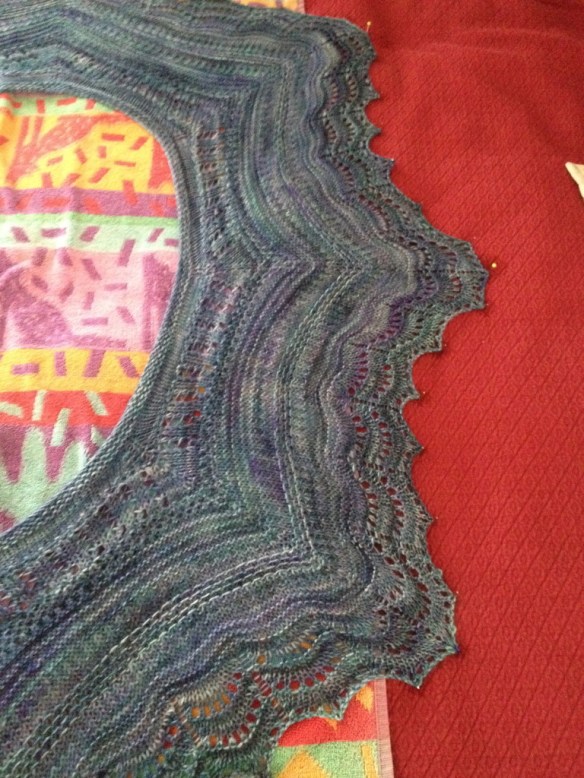
Here’s what mine looked like when it was being blocked …

My Shawlette in Malabrigo Silky Merino color 856 Azules

My Shawlette in Malabrigo Silky Merino color 856 Azules

Never used a life line? Really!? Well, I have to confess that I hadn’t used one before. But it’s really quite simple. This is all it takes …

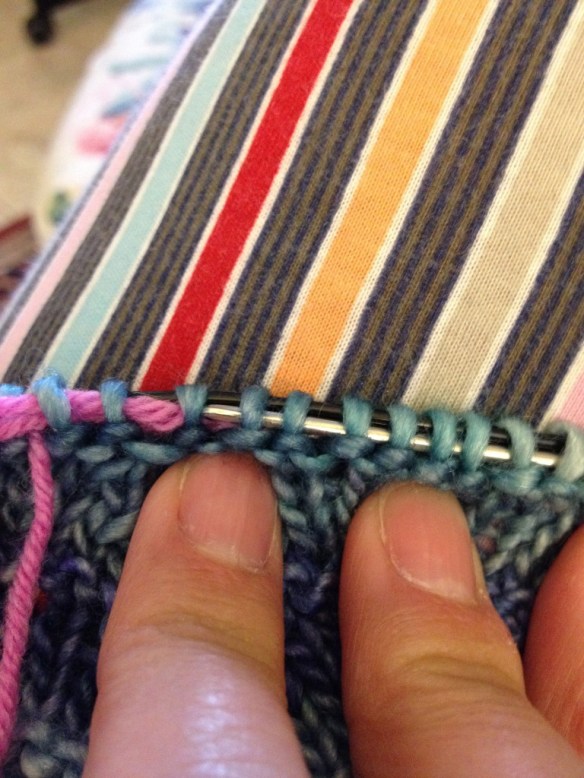
Life Line (pink) …

Life Line (pink) … Wow! I need a manicure! 🙂

All you have to do is get a different color bit of yarn. Since I was knitting a lace piece with several hundred stitches, I kept it really long so I didn’t drop stitches off the life line. That would be disastrous!

With your tapestry needle, thread the life line (pink) through every stitch.

With your tapestry needle, thread the life line (pink) through every stitch.

Thread your tapestry needle and  starting on one end of your work, run the life line through every stitch. (Note: do not run the life line through your markers as this will cause trouble when you go to knit! Run the life line under the markers.)

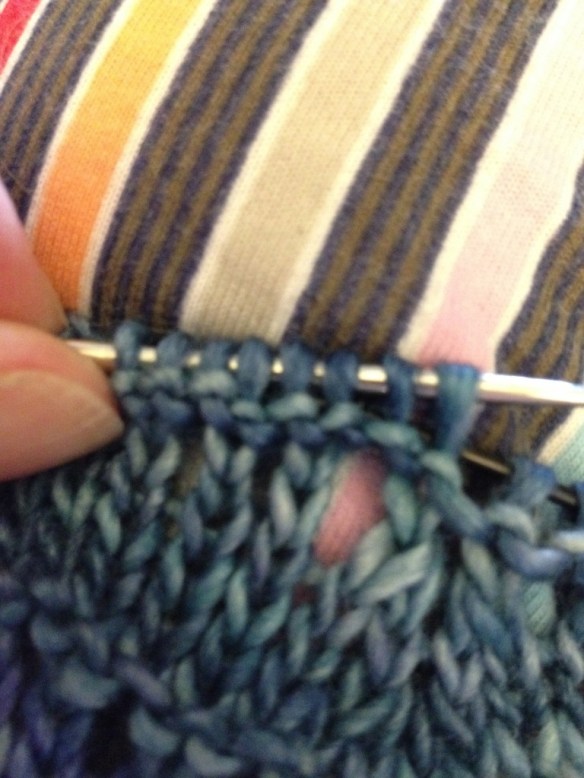
What you need to do before you start knitting again is make sure that the life line is “in the same place” and no wound around the needle. I made sure that my life line was beneath the needle sitting on the bottom of my last row of stitches. Once you start knitting, just make sure that you don’t knit your life line in with your stitches.

I was super lucky this time and I did have enough yarn. I may have been able to knit ONE more row … but I was concerned that I wasn’t going to have enough for the one knit row and then a bind off row. So, my last row was a knit and bind off at the same time.

I’m really pleased with the end result … I can’t wait to wear it!

Gone knitting!

How to Knit i-cord

I-cord is not a difficult thing to knit and it can be used for so many projects.

Recently, I knitted i-cord ears for a Tiny Baby Bunnies pattern and you can see pictures of my projects on my blog, here, or on my Ravelry page, here.

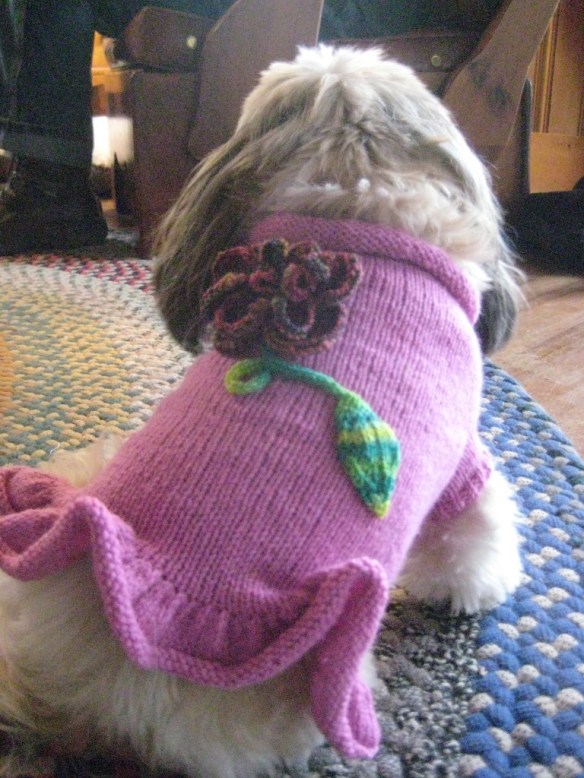
I’ve also used them for embellishing knitted garments like my Senorita Lolita dress and on an original cowl that I knitted and is for sale in my 3 B Street shop.

Senorita Lolita (Copyright 2011 Prima Dogma by Queen Bee Knits

Senorita Lolita (Copyright 2011 Prima Dogma by Queen Bee Knits)


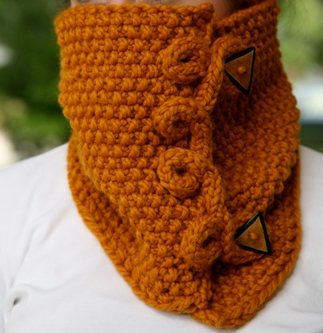
Butterscotch Cowl Copyright 2013 Queen Bee Knits Original

Butterscotch Cowl
Copyright 2013
Queen Bee Knits Original


I-cord is a spiral “tube” of knitting that is constructed by sliding the working piece from one side to the other side of your DPN.

It’s a great handle for knitted (and felted totes), it’s a great embellishment for knitted garments (and can be formed into flowers or stems or just about anything you can imagine!

It’s also very simple to knit!


Here is what you need to know to be successful when knitting i-cord!

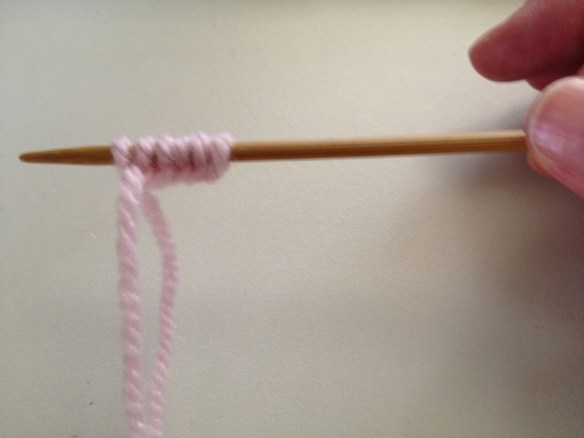
Cast on the required number of stitches to be used for the i-cord (in this case, I used 6 stitches.)

Cast on # of Stitches

Cast on # of Stitches

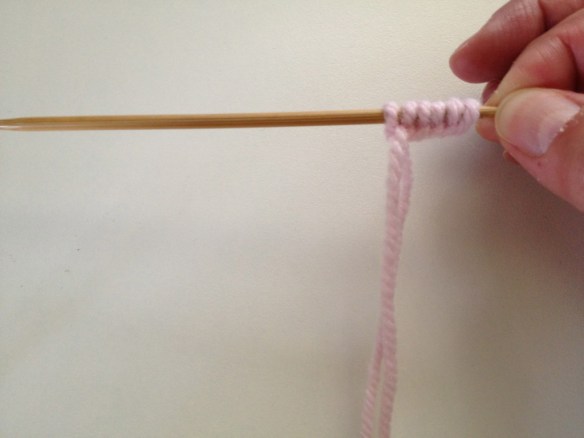
Slide your stitches to the right side of the DPN (do NOT turn your needle!)

Slide stitches from cast on position at the left of the needle to the right side

Slide stitches from cast on position at the left of the needle to the right side

Knit all stitches (to knit the first stitch, you’ll bring the working yarn around the back of your needle and give the first stitch or two or three a good tug to pull the yarn so there won’t be a huge gap but don’t worry too much as the next few rounds will help even it out!)

Note that the stitches will be on the left side of the DPN. Do NOT turn your needle.

Knit all stitches

Knit all stitches (sorry, it’s a little blurry, but you get the idea!)

Slide the stitches to the right side of the needle and knit all stitches again.

Repeat sliding the stitches from the right to left of the DPN and knitting all stitches until i-cord is the right length for your project. It is also helpful to give the “tail” a tug or two to get the i-cord to stretch out & down.

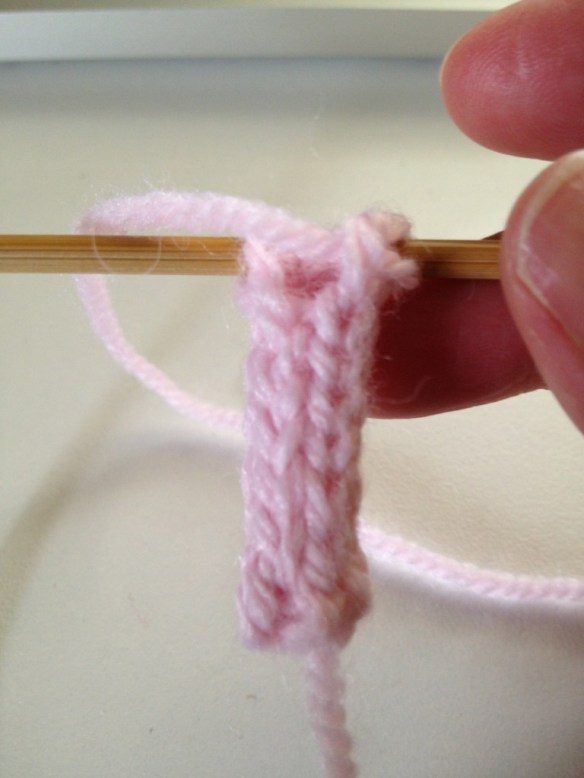
After a few rows, you’ll start to see the tube starting to take form.

After a few rows of knitting (9 here)

After a few rows of knitting (9 here)


Queen Bee Knitting Tip

Queen Bee
Knitting Tip


Knitting Tip – When you’re knitting circularly (in the round) on double-pointed or circular needles, in order to keep your knitting from getting “ladders” where the needles meet, remember to give an extra tug (gently, don’t break your yarn!) on the first and second stitches as you start working on a new needle. This will lessen the chance of ladders happening which are unsightly in your knitted garments. Trust me, I’ve got plenty of experience! 🙂

So, there you go! Practice this a few times and you’ll have a great new trick in your knitting arsenal!

Gone knitting!