The Anatomy of a Sock

Circle of Life Socks

Circle of Life Socks for baby – pattern by Cat Bordhi

As I was sitting here in my atelier last night, I started thinking about how much people know about socks. I’ve knitted quite a few socks; baby socks, short socks, bed socks, yoga socks, cabled socks, patterned socks … toe up socks, cuff down socks, socks on DPNs, socks on two circs, magic loop socks … you get the general idea. Right?

Turkish Bed Sock

Turkish Bed Sock by Queen Bee Knits – pattern by Churchmouse Yarns

Well, what are the parts of a sock? Do you know what they’re all called? If you’re a knitter like me, you may … or may not! So, let’s do a post about the anatomy of a sock.

Whenever I’m preparing to write a post on knitting, I go out to the internet to search the topic. I searched the internet “Anatomy of a Sock” and this is what I found. A wonderful article, entitled Sock 101, already written beautifully by Knitty – a great resource and some fun free patterns – so I don’t have to write it myself. I can merely comment and compliment the Knitty article. Because there’s no use recreating the wheel, right?
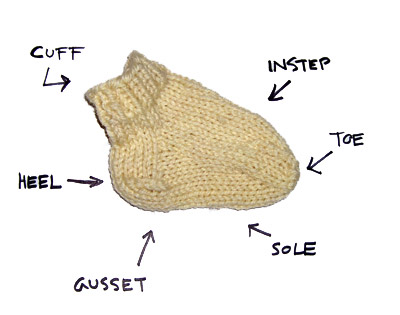
Knitty's Picture of the Anatomy of a Sock

Knitty’s Picture of the Anatomy of a Sock

There it is. The perfect picture of the anatomy of a sock! Perfect!

Depending on the pattern that you’re using, you may start at the toe or the cuff. Everyone stresses (at least when you’re a new sock knitter) about turning the heel. The beauty of it, however, is that all socks have all the same parts. Once you know the anatomy of ONE sock, you know it all! It’s beautiful, isn’t it?

Birthday Party Socks - by Queen Bee Knits

Birthday Party Socks – by Queen Bee Knits

If you haven’t knitted socks yet, you really should give it a shot – they’re so satisfying to knit and when they are finished and you put them on your feet or give them to someone as a gift, it’s amazing. They fit so well, they feel so good. And as a gift, they’re not soon forgotten – a true labor of love.

A personal sock story and then I’m going to end – I bought a ball of sock yarn with the idea that I’d make them for my son (then a freshman in college) because the colorway was similar to tiger stripes and he’s a Cincinnati Bengals fan – hey, no comments necessary, we lived his entire lifetime in Cincinnati! When I told him I was making him socks, he sweetly(-ish) told me he didn’t want hand-knit socks. Because I had the yarn, though, I didn’t pay attention and knitted the socks and gave them to him for Christmas one year.
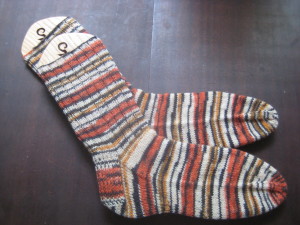
Who Dey!

Who Dey! Socks by Queen Bee Knits

He graciously put them on his feet on Christmas day. Then, awhile later, I got a call from him,

“Mom, about the socks you knitted for me …?”

“Yes?”

“I love them. Will you make me some more?”

Like a good custom shirt or suit or whatever else is made specifically for you, hand made socks are super special. My brothers, boyfriend, niece and at least one daughter have pairs of their own. My goal is to knit some for all of my family. My son has three pairs that I’ve made to his request … including a brown pair that have a short cuff, a black pair and the Who Dey! socks that were his first. We all know that our first is something special!

The anatomy of a sock. There you have it. Now go get your yarn and needles and start knitting a pair! A good place to start is with Knitty’s Fuzzy Feet … worsted weight yarn and on a large scale. One step at a time. You can do it!

Gone knitting!

Wet Blocking vs. Steam Blocking vs. Spritz Blocking

Some tools you'll need: Eucalan (or Soak) wash and stainless steel t-pins

Some tools you’ll need: Eucalan (or Soak) wash and stainless steel t-pins

It took me awhile, when I started knitting, to figure out just what blocking means. There are a few (maybe several) terms that knitters use regularly that are not really clear to those who are new to the craft. So, I’m going to try to give a general description of two often-used blocking techniques – wet blocking and steam blocking.

112312_8423

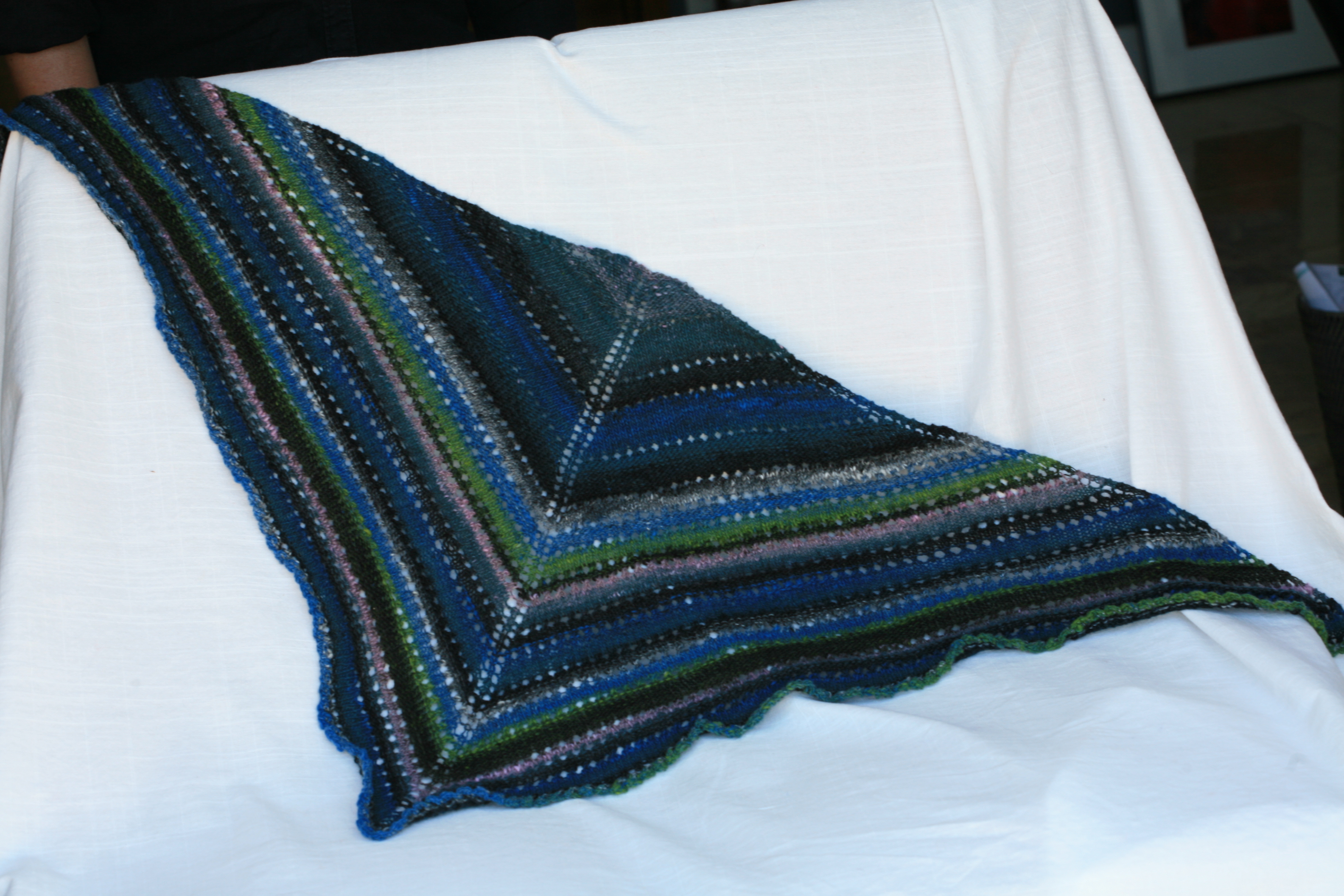
Blocked Shawl – wool. Wet blocked.

112312_8422

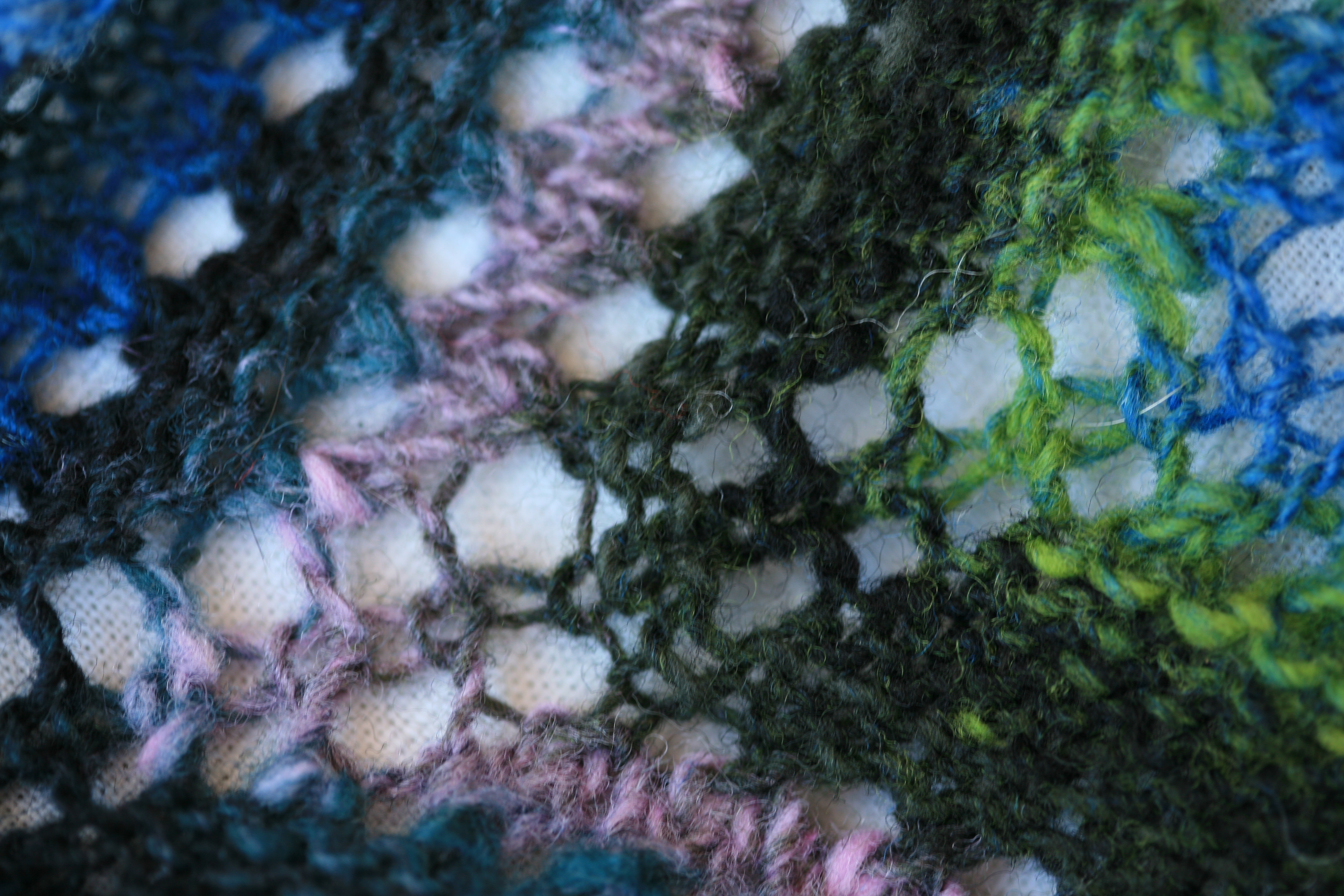
Close up of what happens to garments when blocked – the lacy details just come alive!

For most sturdy fibers, I like to wet block. Wool is a sturdy fiber (and if it has a little bit of man-made fiber blended in, it’s still sturdy enough). I would also suggest wet blocking linen garments. I’ve read that some people “whap” their linen once soaked … sounds violent to me but I know it does get “softer” when washed a couple of times.

To wet block a garment, you want to immerse the garment completely in cool water mixed with a little bit of wool wash like Eucalan or Soak. Gently lift your garment out of the water and gently squeeze the extra water out. Never (NEVER) wring hand-knit garments. I usually put the garment on a clean bath towel, roll it up and then press gently to get even more water out of the garment. Then lay it flat on a blocking board or a new clean towel on your guest room bed. Or on an infrequently traveled area of wall-to-wall carpet. Gently pull the garment to the right shape and measurements and let it dry. It may take a couple of days.

An alternate method is to steam block. I set my garment on a clean bath towel and with my steam iron set to the steam setting, Pin the garment into the shape/size that you want it to be. I hold the iron over (without touching) the garment and give it a jolt of steam or two or three. The heat and moisture will relax the fibers enough to make it possible to give it a little bit of adjustment. Let it dry completely. (Another way I’ve heard some people steam block is by using a wet (clean) pillow case on top of the garment and putting the iron onto the pillow, pushing the steam button, until the pillow case is dry. This is a gentler method than wet blocking and you should get the same result.

Note: If your garment is made of hand-dyed wool, and the color isn’t “fixed” and you see dye in the water when wet blocking, you can also add a little bit of white vinegar (a cap-full or two) which should help “fix” the dye. If color is bleeding, keep rinsing with cool water until the water runs mostly clear.

Lacy edge of a mink & cashmere blend shawlette

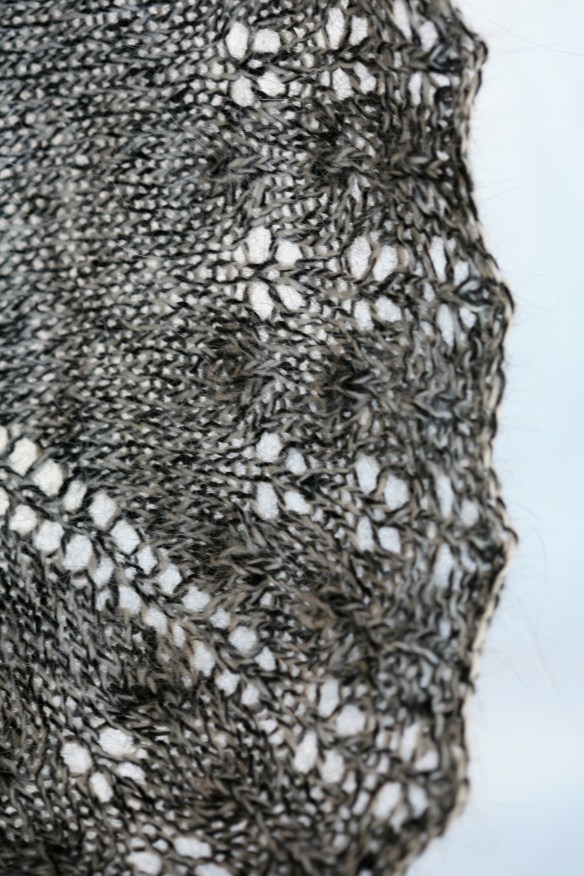
Lacy edge of a mink & cashmere blend shawlette (it’s for sale, if you’re interested)

The last method that I want to discuss is spritz blocking. If using this method (which is good for any fibers you have doubts about soaking in water or steaming with an iron … in my house that’s alpaca, silk, mohair, cashmere and anything I’m not sure of … I pin it into shape and then spritz it with a plant sprayer. Make sure the sprayer is clean (hasn’t been used for cleaning chemicals or anything) and filled with water and just spritz the garment until it’s moderately damp. Leave it there until it’s dry.

There you have it. A primer, if you will, on blocking. I hope this helps!

Gone knitting!

Keep Calm & Cast On

keepcalmI always knew that the meditative aspects of knitting were good for my soul. It appears that there is scientific proof that the repetitive nature of knitting is a health benefit. There’s an article on facebook today that I think is very interesting and you can read it by clicking HERE!

While I can’t say that knitting has been good “exercise” and there is no proof that I have lost weight or become more physically fit by knitting, I do believe my mind and soul is healthier (and maybe it’s helped my blood pressure, too). I have had some experience over the years with SAD (seasonal affective disorder) and depression. When my son became school aged, I had a really intense bout with depression and really thought that I was going to die. Thanks to my friends and family who stepped in to help me with my children when I was immobilized, some wonderful doctors who were willing to listen to me – beyond the physical symptoms, medication and a great therapist who invited me to look at myself, I recovered and resumed being a mom. I’ve had a few little struggles along the way but nothing like the big “wake up call” back then.

I thought I could attribute my mental health to therapy and self-awareness. Now, I think I have to give, at least partial credit, to my knitting needles and yarn. It does feel good to relax deeply and watch the fabric grow with time and attention. It feels good to finish a project and sense the accomplishment of having created something beautiful; often to keep someone I love warm or to give as a gift to someone that I love or admire.

We’ve all seen the pictures on Pinterest and Facebook that say that knitting is cheaper than therapy – and while I’m not certain where I’ve spent more money, I do know that I feel healthier today and, according to science, I can thank my knitting for part of that!

Gone knitting!
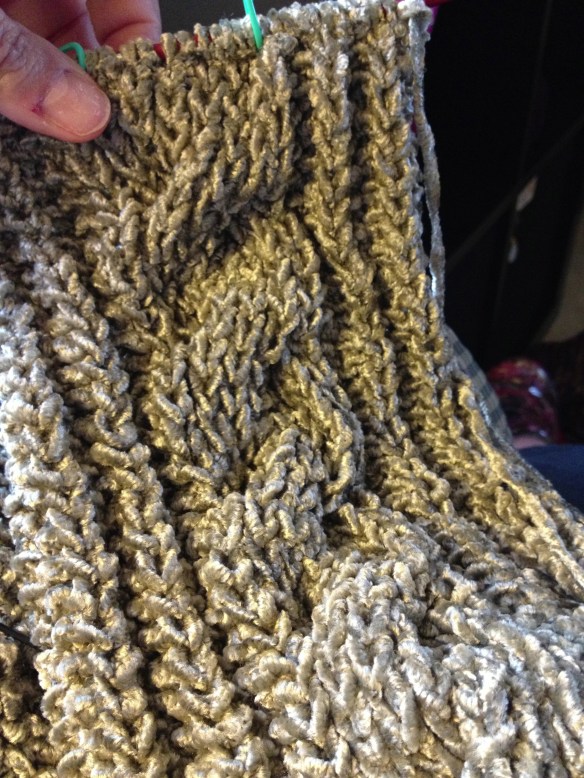
I Hate it When This Happens!

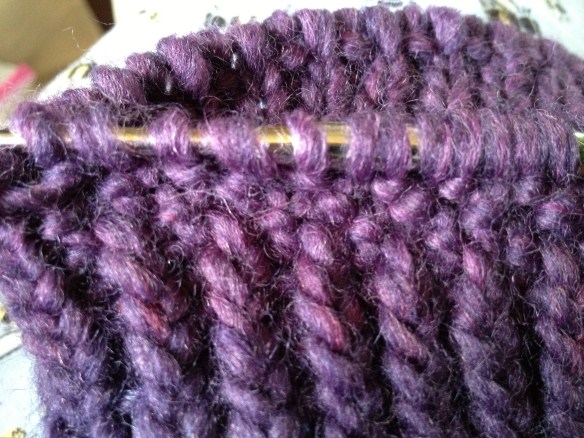
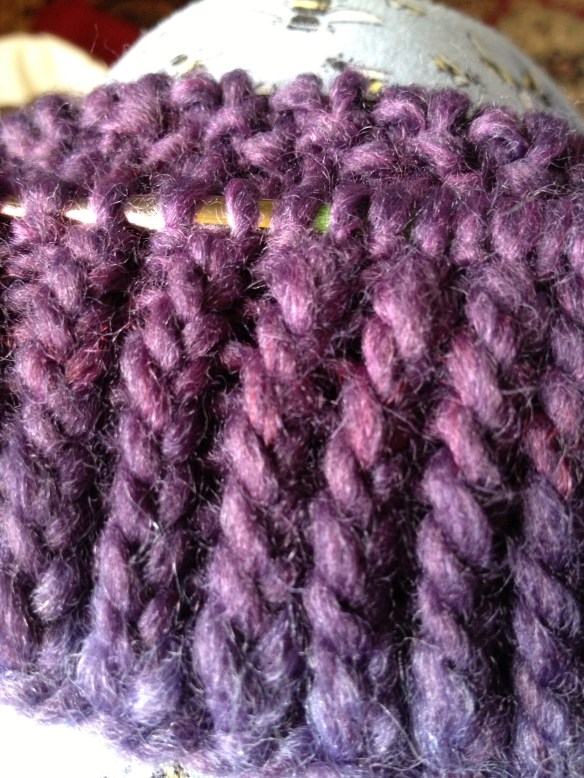
I was happily knitting along on my Twisted Rib Hat when all of a sudden I noticed this …

I Hate it When This Happens!

I Hate it When This Happens!

Can you see how I’ve goofed up the pattern?

Simple as it is, I have knitted when I should have purled and purled when I should have knitted. And it’s actually not the top most row that I’ve just finished either! So, in this case, what does one do?

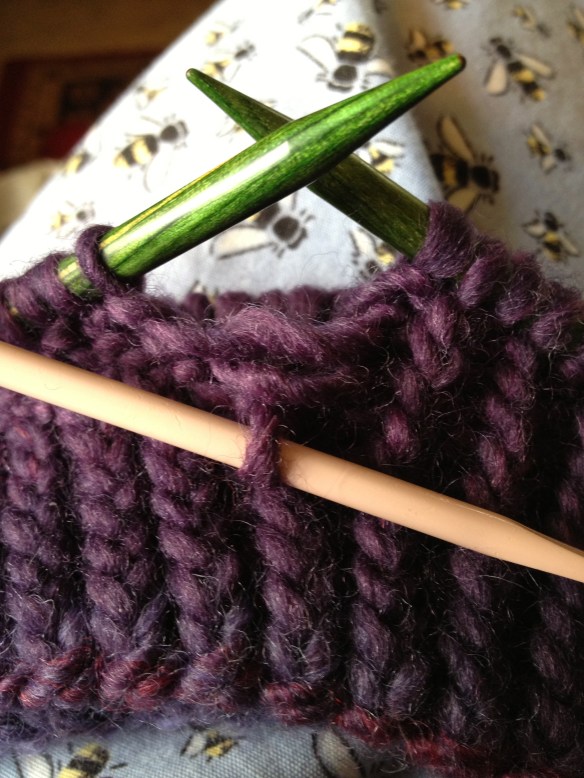
I thought briefly about pulling out my needles and ripping back a couple of rows. But with the twisted rib, and only about ten or maybe a few more stitches in the mix, I figured it may just be easier to fix it stitch by stitch. So, I un-knitted back to the stitch where I first got off course and dropped the first stitch.

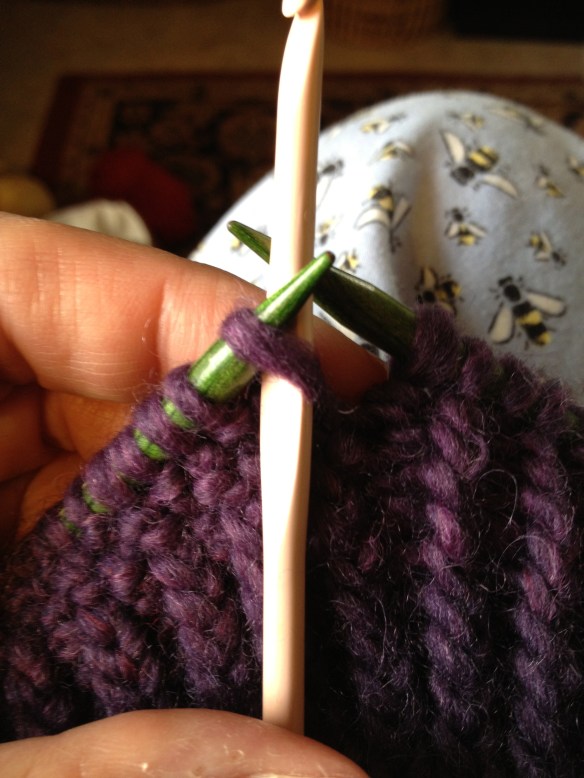
The stitch on the pink crochet hook is the dropped stitch.

The stitch on the pink crochet hook is the dropped stitch.

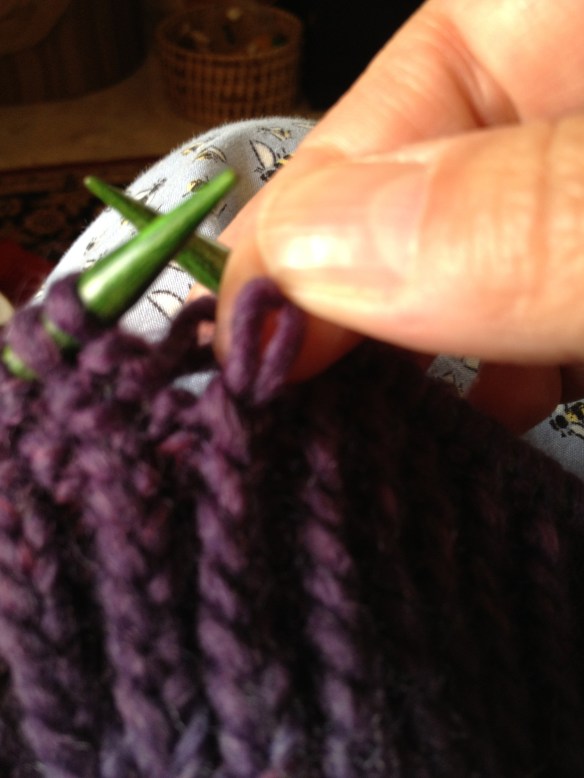
Now, I have to fix it. Remembering that it’s a twisted rib, each stitch has to be twisted before pulling through the next yarn “bar” with the crochet hook.


Twist the knitted stitch(es) one half twist to the back or to the right before inserting the crochet hook

Twist the knitted stitch(es) one half twist to the back or to the right before inserting the crochet hook

And then you insert the crochet hook and pull the dropped stitch above it through from the back to the front (this is what you do when you’re picking up a dropped stitch, too.)

Pull the next stitch through from the back to the front. (You've inserted the crochet hook in from the front, too)

Pull the next stitch through from the back to the front. (You’ve inserted the crochet hook in from the front, too)

Now you take the new stitch just pulled through off the crochet hook and give it a twist just like the last time. Insert your crochet hook from the front of the stitch and pull through the next dropped stitch. You’re working from the bottom to the top, picking up a stitch for each row that you’ve dropped.

Put the new/fixed stitch back on the left-hand needleThen put the stitch on your left-hand needle (when there are no more to be picked up) and knit it – in this case, you’ll be knitting into the back of the stitch to give it that twist!

Since this is a 1 x 1 rib, the next stitch to be dropped and picked up is a purl stitch. You drop the stitch – you may have to give it a tug to get it to drop down below your mistake – and then I work the purl stitches from the wrong side of the garment. I turn the garment to the wrong side and insert the crochet hook from front to back just like I did on the knit stitch on the right side of the garment and pull through each dropped row of stitches (no twist on this one!). When you’ve picked up all the dropped rows, turn the garment to the right side and place the new stitch on the left-hand needle and purl it.

Next! Repeat this process for each of the “mistakes” …

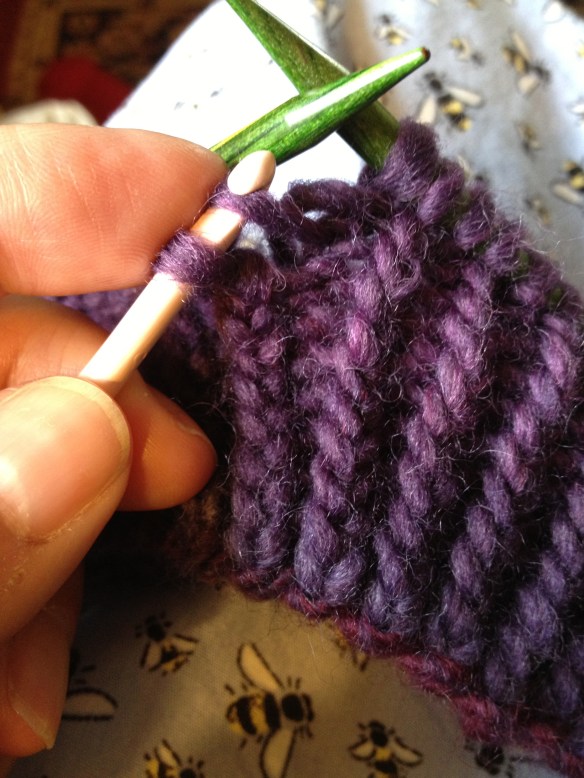
All Fixed!

All Fixed!

There you have it! I had to fix about ten stitches – I probably looked away for a few seconds … it may be my little dogs’ fault! They can be so distracting! 🙂

Gone knitting!


Casting On!

I’m casting on another new project. I probably shouldn’t be doing it, but I am. So there! 🙂

I saw a wonderful cowl pattern on the internet and just HAD to know what it was. Wouldn’t you know it was a Purl Soho/Purl Bee pattern (I’ve never seen a project that I didn’t like from that site!) called the Fluted Cowl (FREE pattern! Click here.)

It calls for 300 yards of a bulky weight wool. So, into my (beautifully organized) stash I went to see if I had what I needed and, sure enough, there it was. Sitting there looking back at me. Begging me to take it out of the bin and knit with it after all these years. Well, not really, but it sounds good doesn’t it?

Years and years ago I bought Some Jo Sharp Silkroad Ultra in a colorway called “Seafoam”. Five skeins of it. Why five? Because there were only five left and I really liked the color and the hand of the yarn. It was also at least 50% off because the shop was closing.

I’ve made an executive decision to use a US #13 needle because I don’t have the size that the pattern asks for. And since it’s a cowl not a sweater, the gauge isn’t as much a strict rule as a guideline. The cowl will be a bit smaller than the one in the pattern but that’s ok.

First cast on effort (yes, first means that I have had more than one!) was using a long tail cast on. I usually use this method and generally it works if I plan for approximately an inch of yarn per stitch. So, since the pattern asks for 196 stitches, I gave it three generous “wing spans” and then some figuring that my wing span is about 5.5 feet (I counted 60 stitches). Wrong. I got 169 stitches on my needles.

So, on round two, I decided to do a more “sure thing” cast on and used the knitted cast on. If you’ve never done it, it’s really simple.

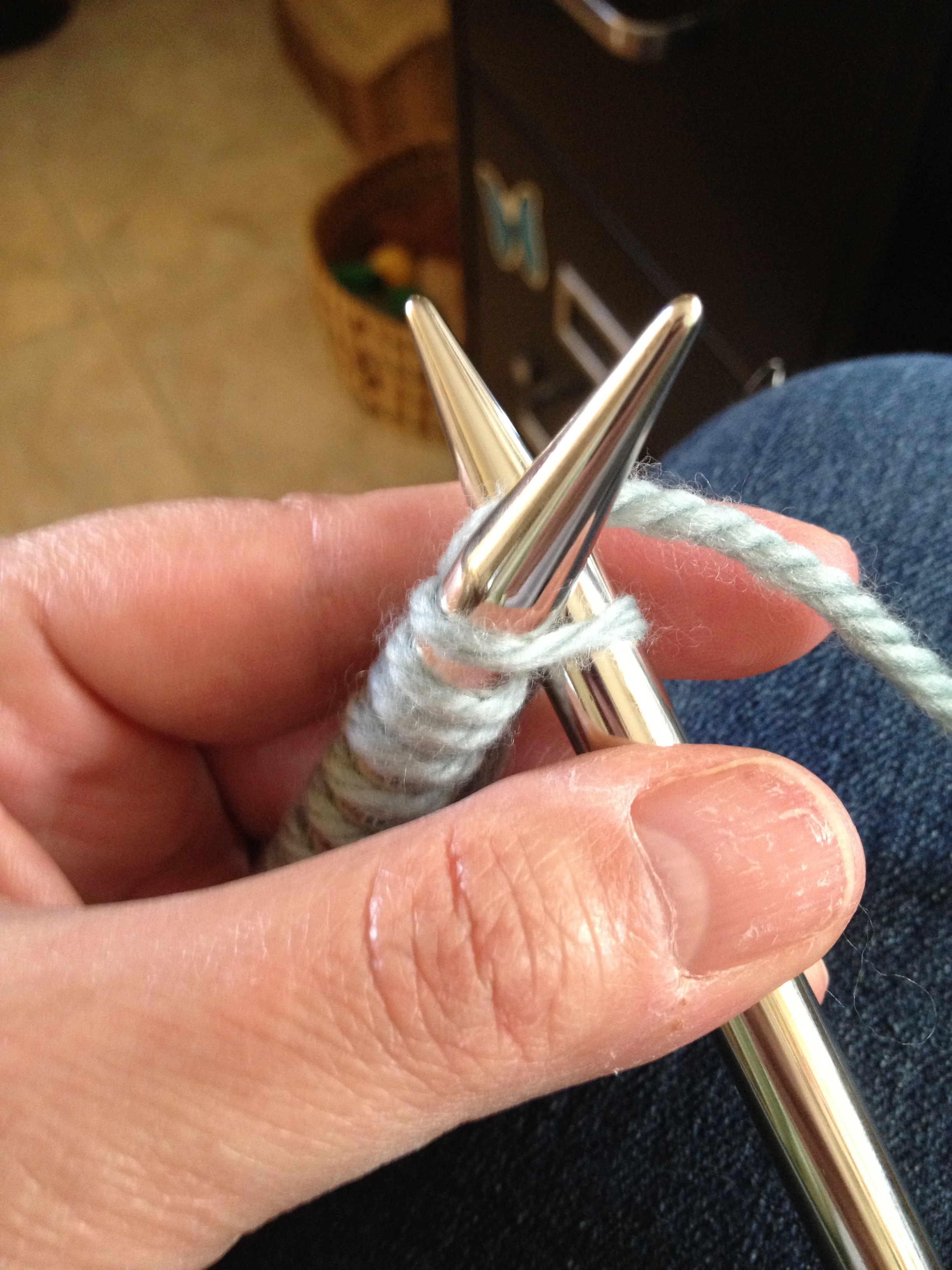
Start with a slip knot on your left hand needle. Knit into the stitch (just like normal knitting) on the left-hand needle knit-wise.

IMG_0946

Insert the right-hand needle knit-wise

Now you can go ahead and wrap the yarn around the back needle and pull it through the “old” stitch. (Good grief, my hands and fingernails look awful! That’s what I get for trying a gel manicure with no intentions to continue to have them done!)

IMG_0949

Wrap the yarn around the needle and pull through to create the new stitch

Pull the stitch through the old stitch and you have one new stitch on your right-hand needle.

IMG_0952

Here’s your new stitch! You’re almost there!

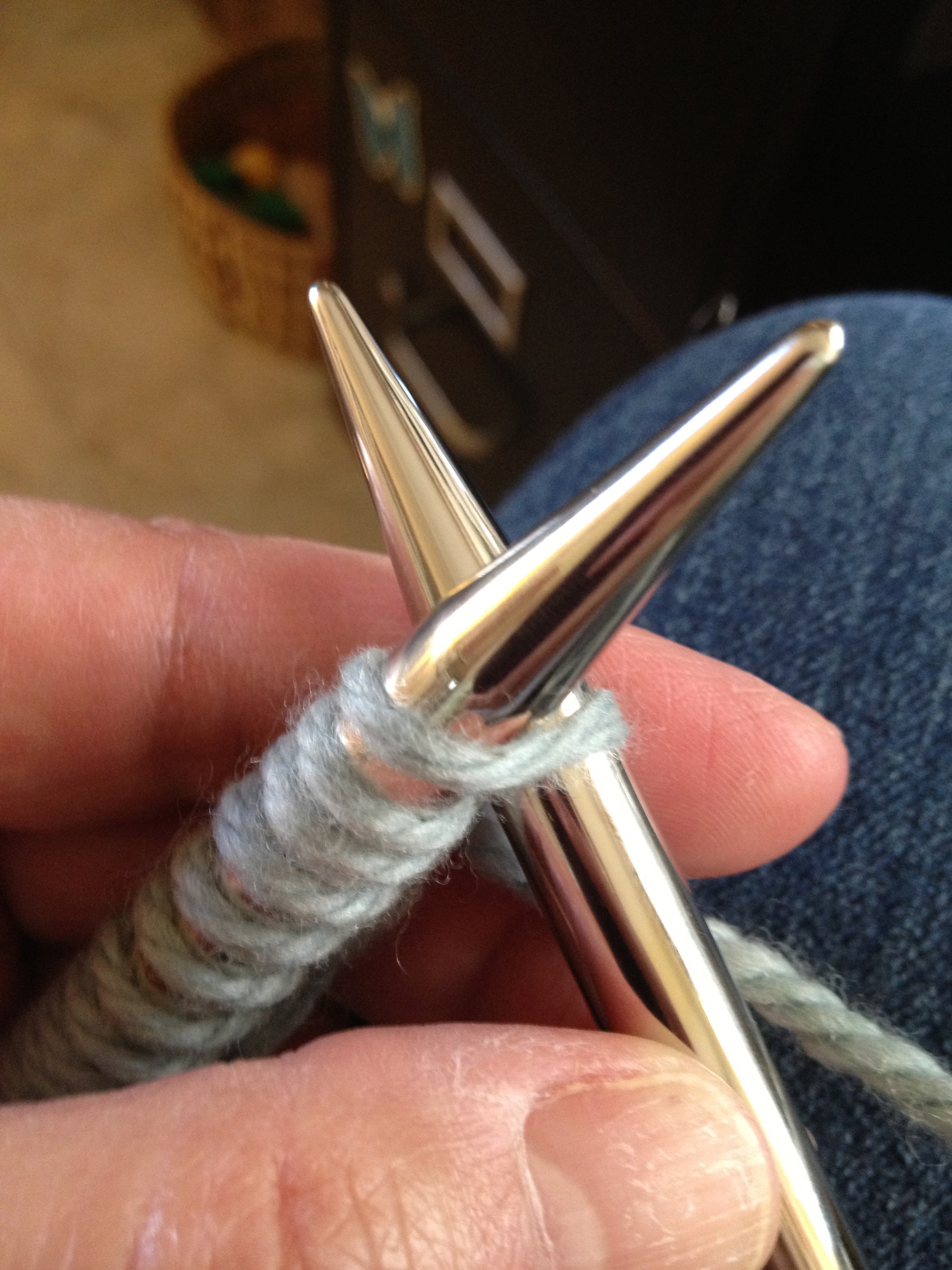
Now, slip the new stitch from the right- to the left-hand needle and tighten the stitch down. Important note: when you’re slipping the stitch to the left-hand needle, twist your right-hand needle a quarter turn clockwise … make sure your two needle points are facing the same direction and then you’ll be passing the stitch the right way. Don’t just pass the stitch from right to left with the needles pointing opposite ways. I know it’s a bit confusing, but if you try it, you’ll see what I mean!

IMG_0953

Now just slip the new stitch back onto the left-hand needle and tighten it up.

Knitted Cast On

Voila! You’ve added one stitch. Now insert your right-hand needle into the new stitch on the left-hand needle knit-wise … and off you go!

You’ve cast on one new stitch. Now just start over again from the first step and repeat for as many stitches as you need for your project.

This way, you’re adding stitches with your working yarn rather than using the tail for your new stitches. This way you won’t get to 169 stitches and have three inches of yarn left for a tail (and nearly 30 stitches short of what is required!)

A new cast on method for you. I now need to go cast on another 190 stitches!

Gone knitting!

Putting it “Out There”

Last year, for the first time, I joined my knitting guild group and entered a couple of items in our Central Florida Fair. I was (super) nervous about putting my work “out there”! But the rewards were great – not only did my work receive recognition, but I felt so good doing it.

This year, I’ve decided to enter a few items again. I can always change my mind but I think it’s healthy to submit my work asking for criticism and showing people the work that I am so proud to do. So, what did I submit?

The rules state that all items have to be completed during the calendar year between fairs. I have chosen the “mini-me” leg warmers that I knitted copying the adult-size ones that I made for my daughter for Christmas. My first efforts at Fair Isle knitting (and I, honestly, forgot to watch the joins which are not joggless so we’ll see how that goes.) I may even re-knit them. Time permitting.

"mini me" infant leg warmers - original Fair Isle pattern

“mini me” infant leg warmers – original Fair Isle pattern

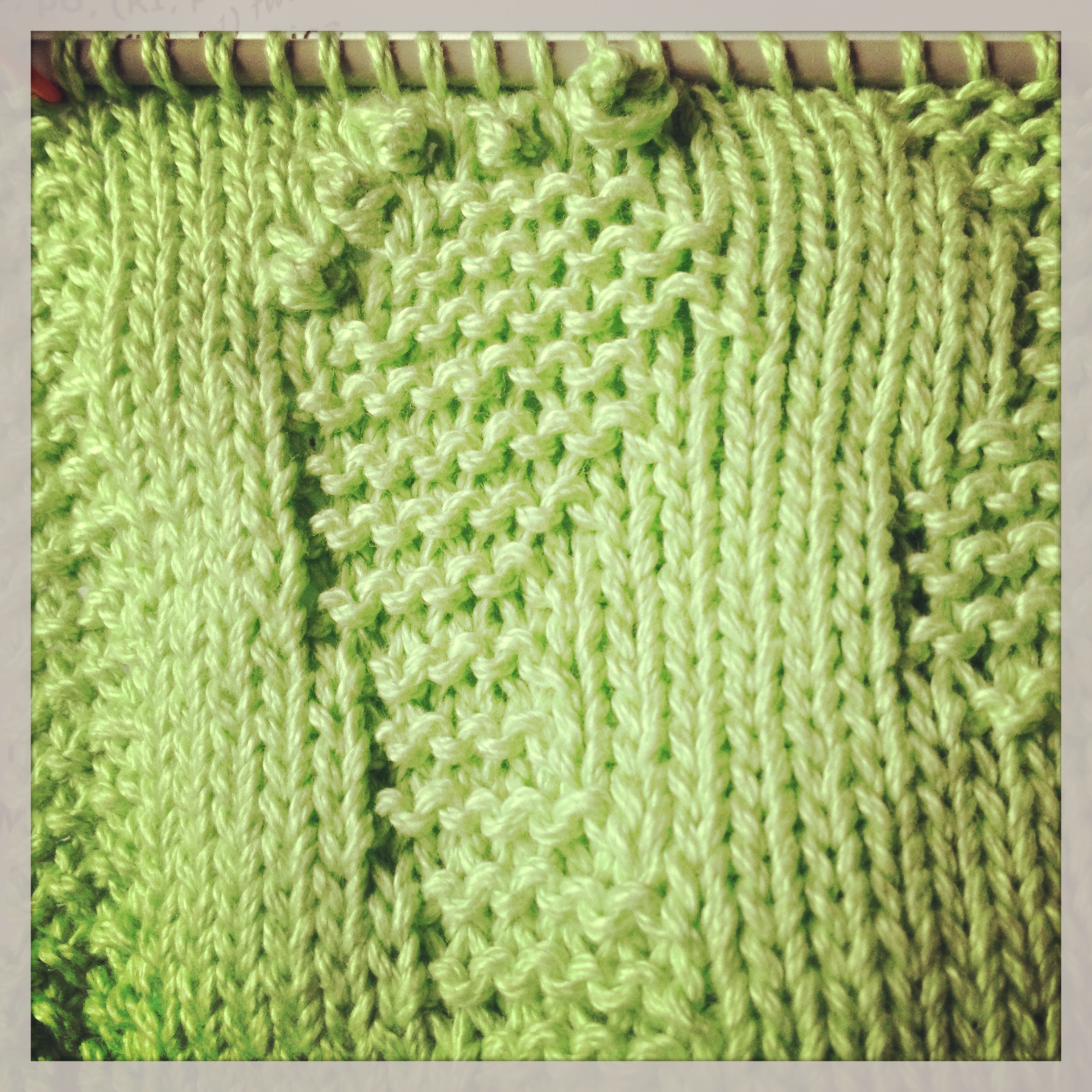
I also entered a little light green seed stitch dog coat that I designed for my little dogs. Last year I submitted my first original dog design for my Prima Dogma line. This is number two. I like the color and the edge which is a simple single crochet in a black & white wool which contrasts really nicely with the light green. It was a quick knit … I really need to write down the pattern and post it! I need to find a way to display it … stuffed dog or something!

The last three items are still on my needles.

My Vintage Velvet scarf with its wonderful reversible cables is one. Second is the little hat that I started knitting yesterday and will finish today, Downton. It’s a free pattern on Ravelry. Check it out! Third is the fingerless mitts that I will finish (I hope) in time to submit that I am knitting along with the Jimmy Beans Wool Downton Abbey KAL “Lady Violet’s Dinner Gauntlets”. Despite the fact that I am not totally in love with the colorway, I like the project. (And it’s my first ever KAL!) Both the scarf and gauntlets can be seen in my previous post, Queen Bee WIP here.

I will report on the final decisions of what I will submit (the deadline is still distant enough to add a project or two if I decide to do so) or that I may decide to withdraw. It’s a woman’s perrogative to change her mind, after all!

Gone knitting!

Queen Bee WIPs

IMG_0908

Downton Abbey KAL with Jimmy Beans Wool – Lady Violet’s Dinner Gauntlets

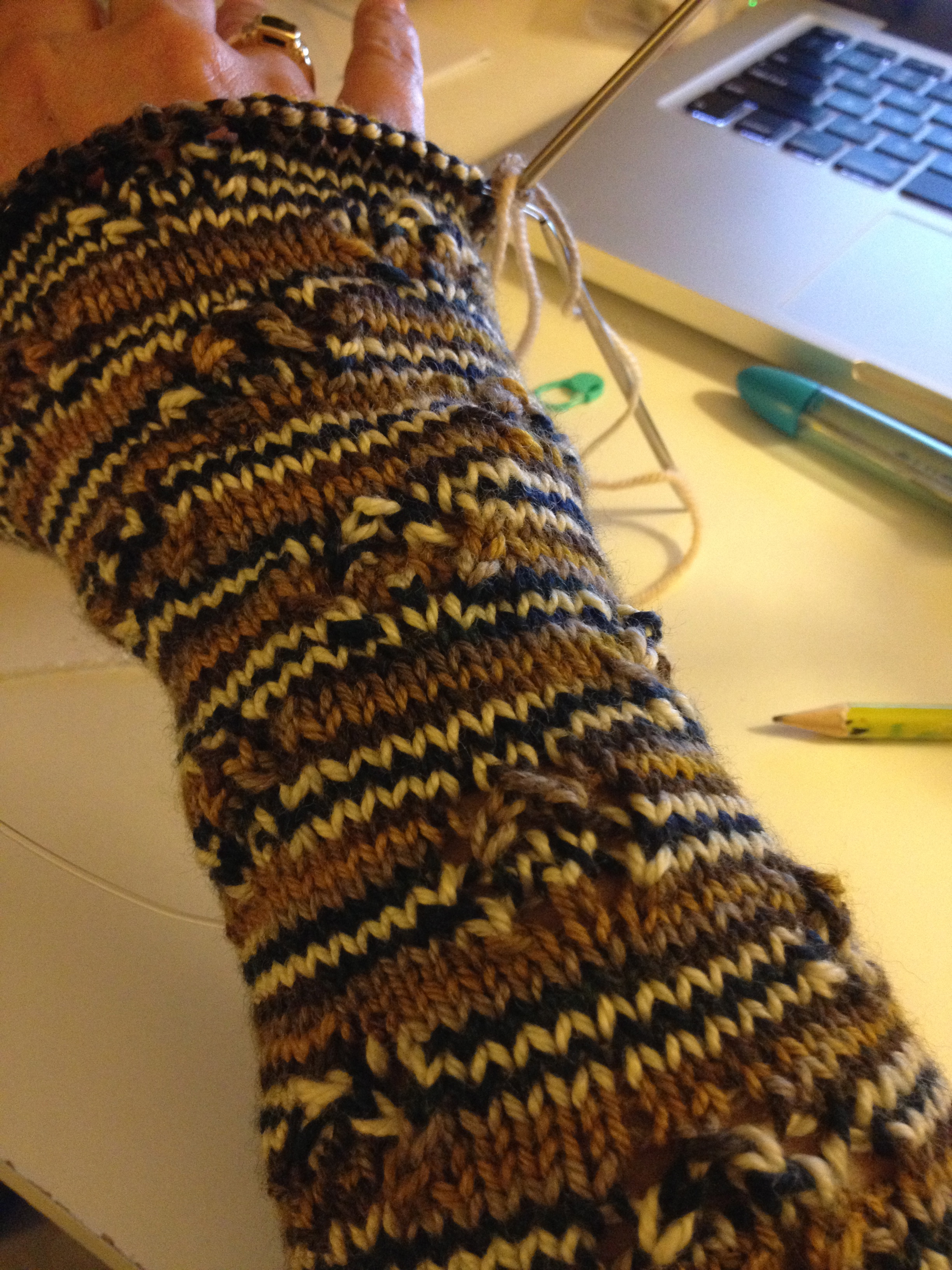
This KAL is my first and I am really enjoying it. We’re knitting “Lady Violet’s Dinner Gauntlets” with Lorna’s Laces Sportmate yarn. I love the yarn, although, because we were away for Christmas, I decided to postpone buying the Christmas at Downton colorway and I don’t like my substitute (Spats) as well. I fixed that last week, though, by ordering a new skein of the Downton color way and it should be arriving soon. When the first gauntlets are done, I will happily knit up a second pair! The gauntlets (as you may or may not be able to see) have a violet pattern made up of little yarn overs and they have a pair of eyelets up the inside of the arm. I’m guessing that they’ll be laced at the end. We shall see. Today’s clue will finish the hand and thumb and next week’s clue will tell us why we cast on with a provisional cast on. I must be a real knitting geek/nerd!

IMG_0912

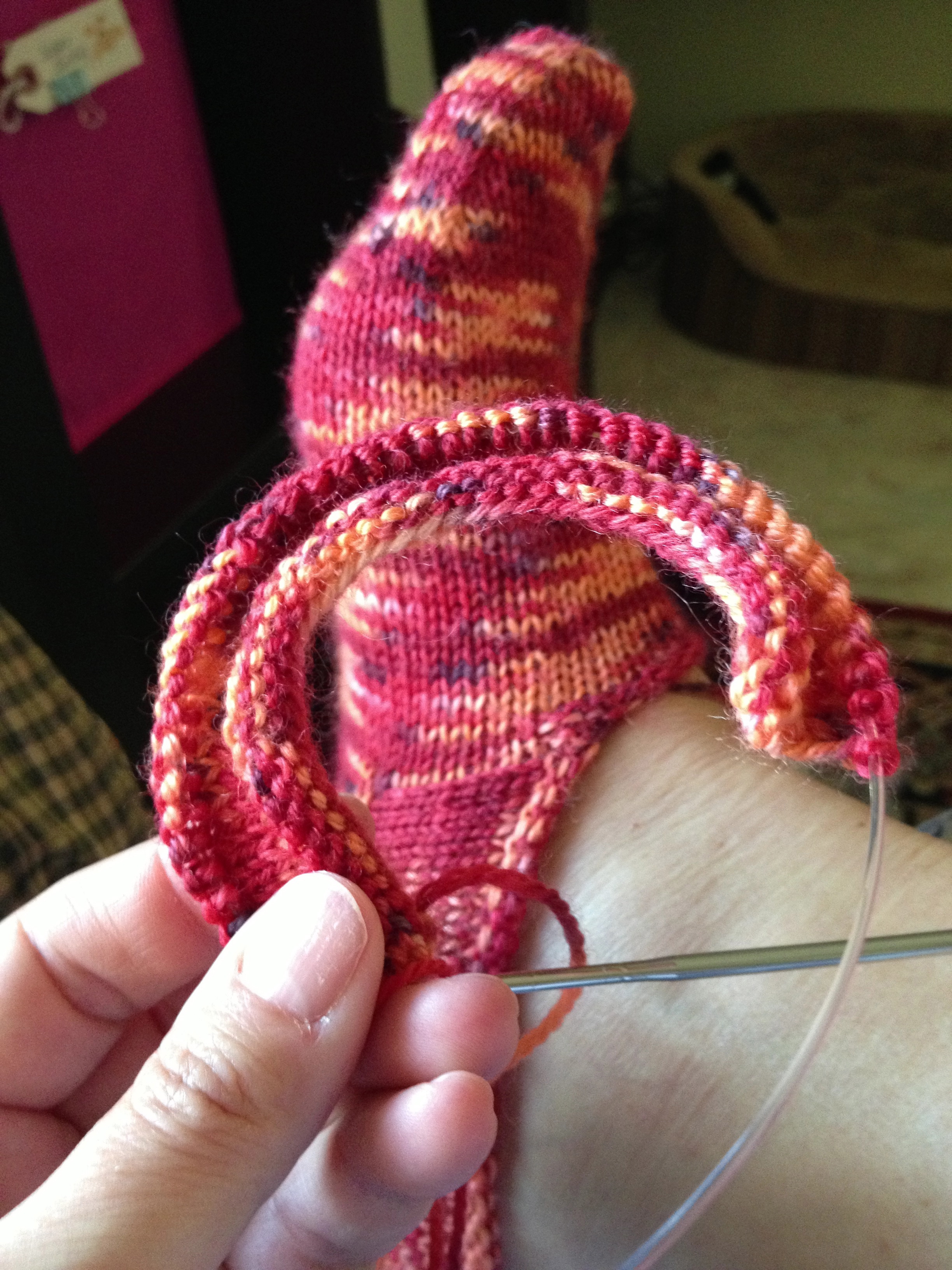
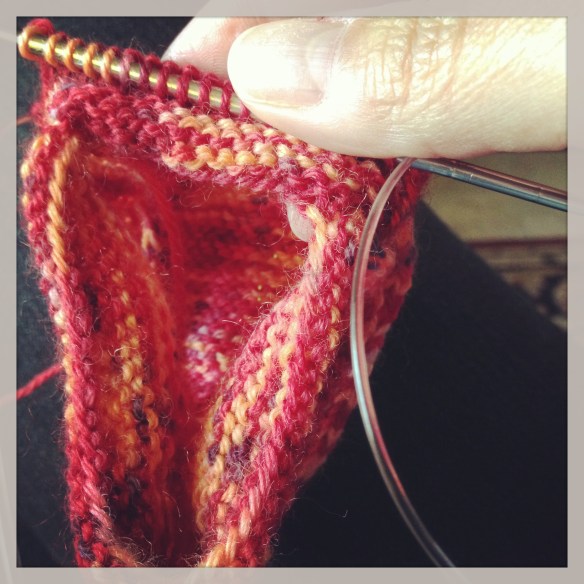
Churchmouse Yarns & Teas – Turkish Bed Socks

These adorable bed socks are the third pair I’ve knitted. The first pair were too big (and I’ve tried to felt them (sort of) to make them fit better. They still fall off my heels but I wear them anyway. They’re wonderful with my clogs!

Pair #2 was frogged. Totally too small because I didn’t swatch with a different sock yarn which turned out to be significantly “thinner” than the Koigu KPPPM that the pattern was written for. That won’t discourage me from trying again because my bee stripe yarn really wants to be a pair of bed socks!

This, obviously is pair #3. The yarn is a hand-dyed colorway that I bought in Maine last summer called “Maine Lobstah” (if my memory serves.) I love it. I did have to go up a needle size to get gauge!

IMG_0926This pattern is a different way to construct socks and it’s fun to do something different for a change. I’ve just completed the heel and joined the flat first part to knit the foot in the round. I should be able to complete this pair with a few hours of knitting time.

IMG_0919

Cantaloupe Baby Feet Wash Cloth

Two Baby Feet wash cloths are finished and off the needles but for weaving in the ends and blocking. I now need to knit a couple of pairs of booties for said baby feet. A sweet friend of mine (a much younger friend) is having twins in February. I thought it appropriate to send her a little something hand knit from me. I really loved knowing her and they’re going to have such an exciting time with two little bundles of joy!

Salmon Baby Feet Wash Cloth

Salmon Baby Feet Wash Cloth

Vintage Velvet scarf

Vintage Velvet scarf from Scarf Style by Pam Allen

And last but certainly not least, my Vintage Velvet scarf. This pattern is from the book Scarf Style by Pam Allen. I’ve had this book for years. Maybe even for a decade. All because I saw this scarf, made by a college friend, way back when and I loved it. When I saw the price of the yarn, however, (Meunch Touch Me), I decided it was too much at that time to “fork over” for a scarf. No matter how much I wanted the scarf. So, I’ve been waiting and watching for an opportunity to buy the yarn on sale. And lo and behold, I got my chance at a yarn shop that was closing (sadly) where the yarn was 50% off! So, for half price, I got my yarn and I’m knitting the scarf.

I wish there were “feel-a-vision” … like smell-a-vision only for those of us who like to feel stuff instead of smell or watch! It is the softest yarn I’ve ever knitted with. And it will be interesting to see how it changes when it’s felted. Yes, you heard me right, I’m going to have to felt it – chenille. Felted. Doesn’t seem right, does it?

So, there you have it. The Queen Bee’s WIPs! Now that I’ve told you all about them, I’m signing off and …

Gone knitting!
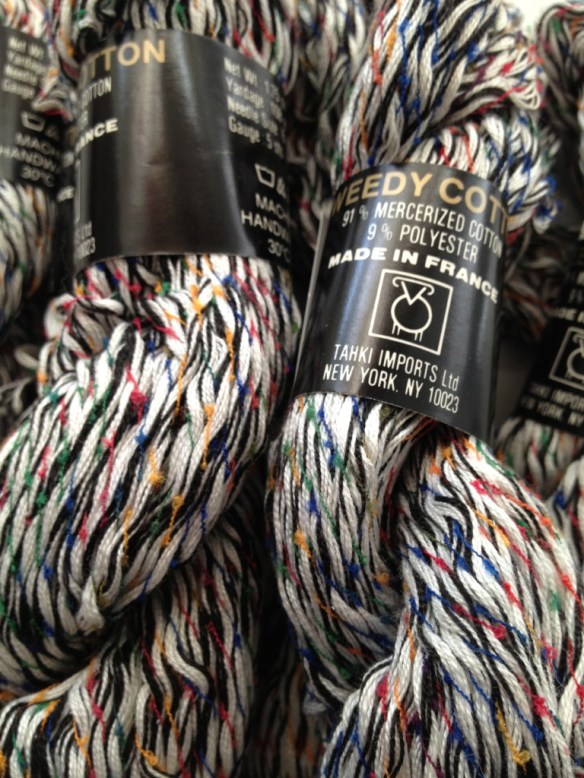
Why Swatch?

Downton Abbey KAL swatch

Downton Abbey KAL swatch

I never used to swatch. But after a few knitting disasters, I’ve decided that it’s the new “must happen” in knitting.

My last post was about the trouble I was having with the Turkish Bed Socks pattern. The first time I knit them up, with the suggested yarn and needles, they turned out too large and slip off my heel. (I have to admit to making the foot longer because my feet are not – NOT – eight inches long.) The second time I used a lighter-weight fingering yarn and smaller needles. They looked adorable but they were way (WAY!) too small. I frogged them.

Did I ever tell you about my “boyfriend” sweater? I bought this beautiful bulky tweedy black yarn and knit the sweater. I actually did swatch this one and everything was working up just right – according to the directions. Perfect. Except that I was knitting the wrong size! So, even when you do swatch, you’re not guaranteed perfect fit but it sure will get you close. Next time, measure the boyfriend before knitting an entire sweater! (I’ll be frogging the sweater this summer in Maine. The lake-side frogging will help with my dismay!)

So, back to Turkish Bed socks – version three is on the needles. I’m using the Cooked Lobster colorway handspun that I bought this summer in Maine. I had to go up a needle size to get gauge so I’m knitting on a US #4 using magic loop (I really don’t like knitting with DPNs any more!)

I knitted three swatches for these socks. One on a smaller needle, one on the pattern sized needles and then finally settling on one size up. The only way I’m going to skip the swatch step from this day forward, is if I’m knitting a felted bag! Or something where the size is irrelevant – like …

I just joined to knit in the round … wish me luck!

Gone knitting!
Orlando Distaff Day 2013

IMG_0830 I took one picture today at Orlando’s Distaff Day! One! (And it was as I was leaving to head to my car and home.) But who wouldn’t wonder & follow a sign like this?

The whole day was fun. Not a minute when I thought, “It’s time to go home” or “Ugh, why’d I offer to demo” or anything like that. I had so much fun mingling with knitters and spinners and weavers and felters of all ages! It was also fun to catch up with some of my “old” knitting friends and meet some new ones.

I arrived at 10am thinking I’d like to catch some great bargains at the “Garage Sale” or find something wonderful that I just can’t live without on the “free table”. While I did see things I liked, I reminded myself of the shopping binge in Mississippi and suppressed the urge! Next on the list was a chat with James the needle felter. This guy is super talented and fun to chat with … loved his sample of felted camel hair – who has a camel?!

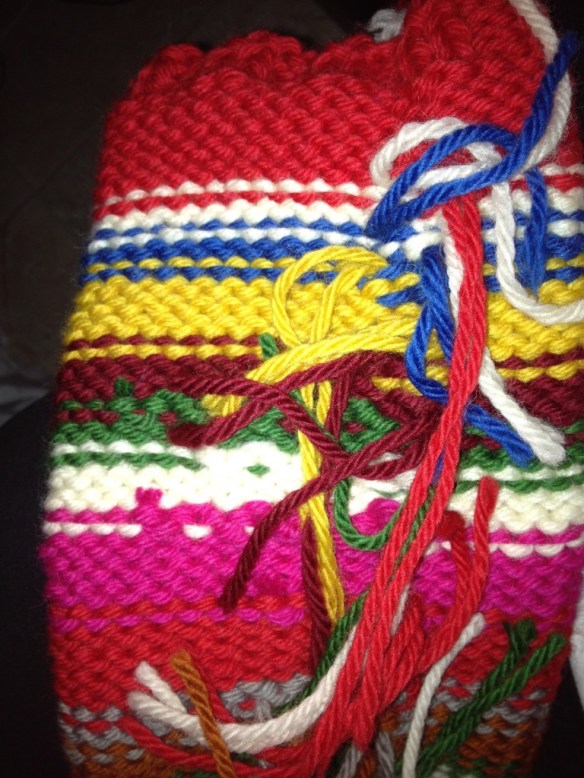
IMG_0833I got some fun yarn from the gift swap! I was asked to be the “carrier” of the traditional gag gift (a horribly bright crocheted purse and bikini bottom that has been added on to over the years and now contains a bikini top and some fuzzy flip-flops!) and was glad to present my gift to a (horrified?) recipient of the gag. She was a super good sport! Lots of laughs during the game which was new this year and a lot of fun! (I hope she liked my gift!)

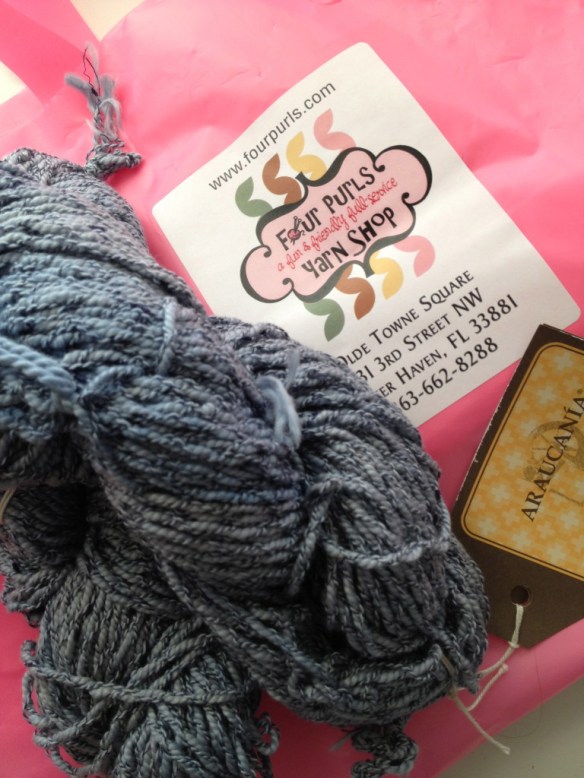
IMG_0832I won a door prize – some yarn from Four Purls Yarn Shop! (And I never win prizes, it was  a happy moment!) The demos were super! Needle Felting, Kumihimo braiding, and my weaving in ends as you go, weaving and more. You can always learn something at Distaff Day! You can also see what everyone’s knitting at the fashion show. This year’s “biggest hit” was a woman who had knit socks to her panties! Yes, I mean it! She started to knit a pair of socks with her left-over bits and pieces of sock yarn and ended with a pair of hand-knit pantyhose … attached ever so carefully to a pair of panties! She was showing them off in their best light, of course, by wearing flip-flops and shorts. Knitters have such great senses of humor!

I loved the “make ‘n’ take” this year, too – a pair of earrings or stitch markers made of tiny fabric squares and beads. Thanks to a really great manicure and gel nail polish, my fingernails are so long that I struggled with tying the last knots but managed after a couple of attempts!

A fun fiber-y day with friends old and new. If you missed it, you’re no doubt sorry today but  don’t worry, there’s always next year!

Gone knitting!
 

How to Weave in Ends as you Knit!

I just completed a pair of wonderful striped Christmas stockings. They are beautiful – but they had a bazillion ends that needed to be woven in at the end of the project

At least a bazillion loose ends!

… unless you knew this trick!

You can weave in the ends as you go and avoid the drudgery at the end! (It’s a bit like avoiding seaming by learning to knit in the round!)

So, “how do you do it?” you ask? Here’s how.

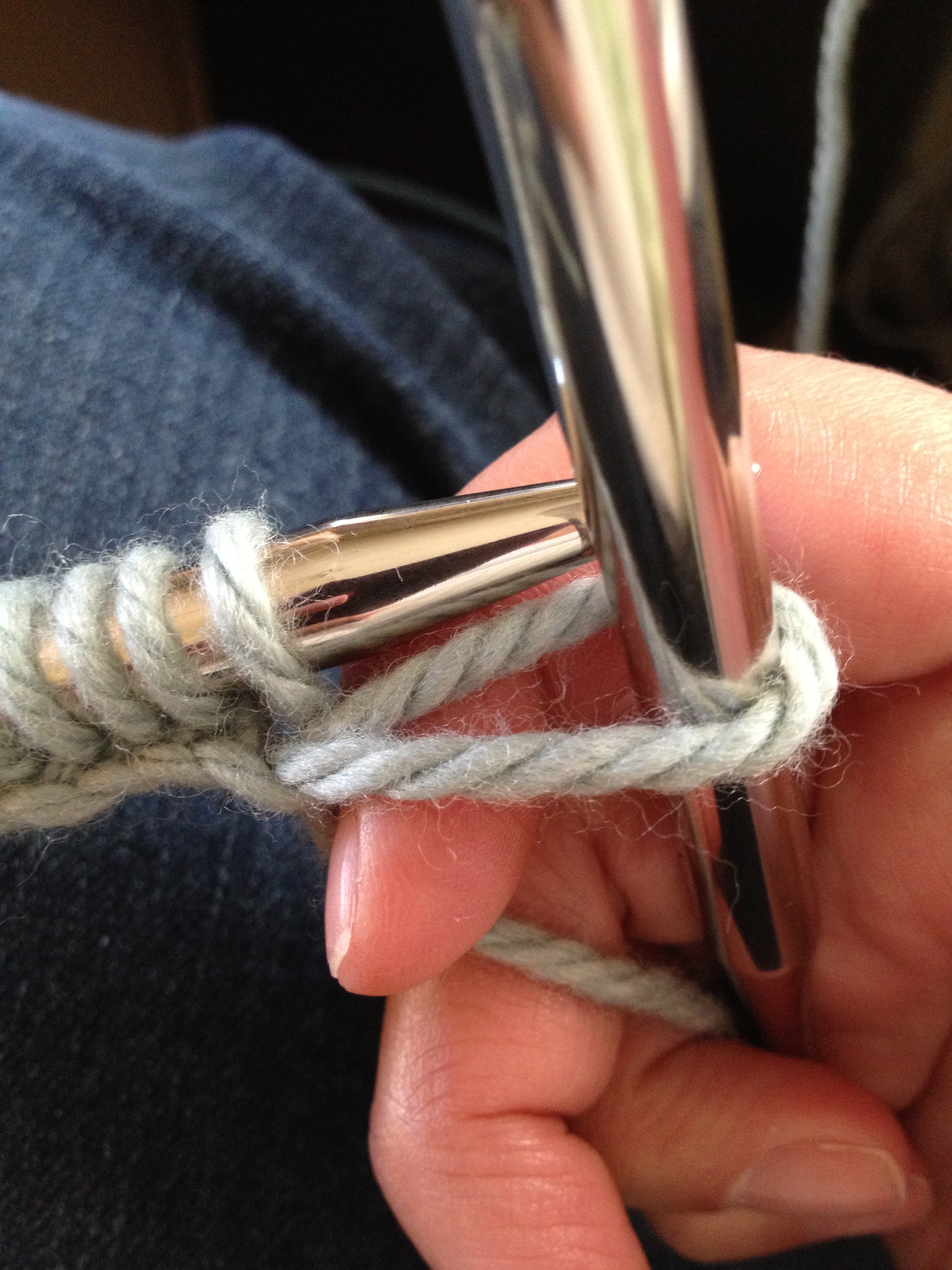
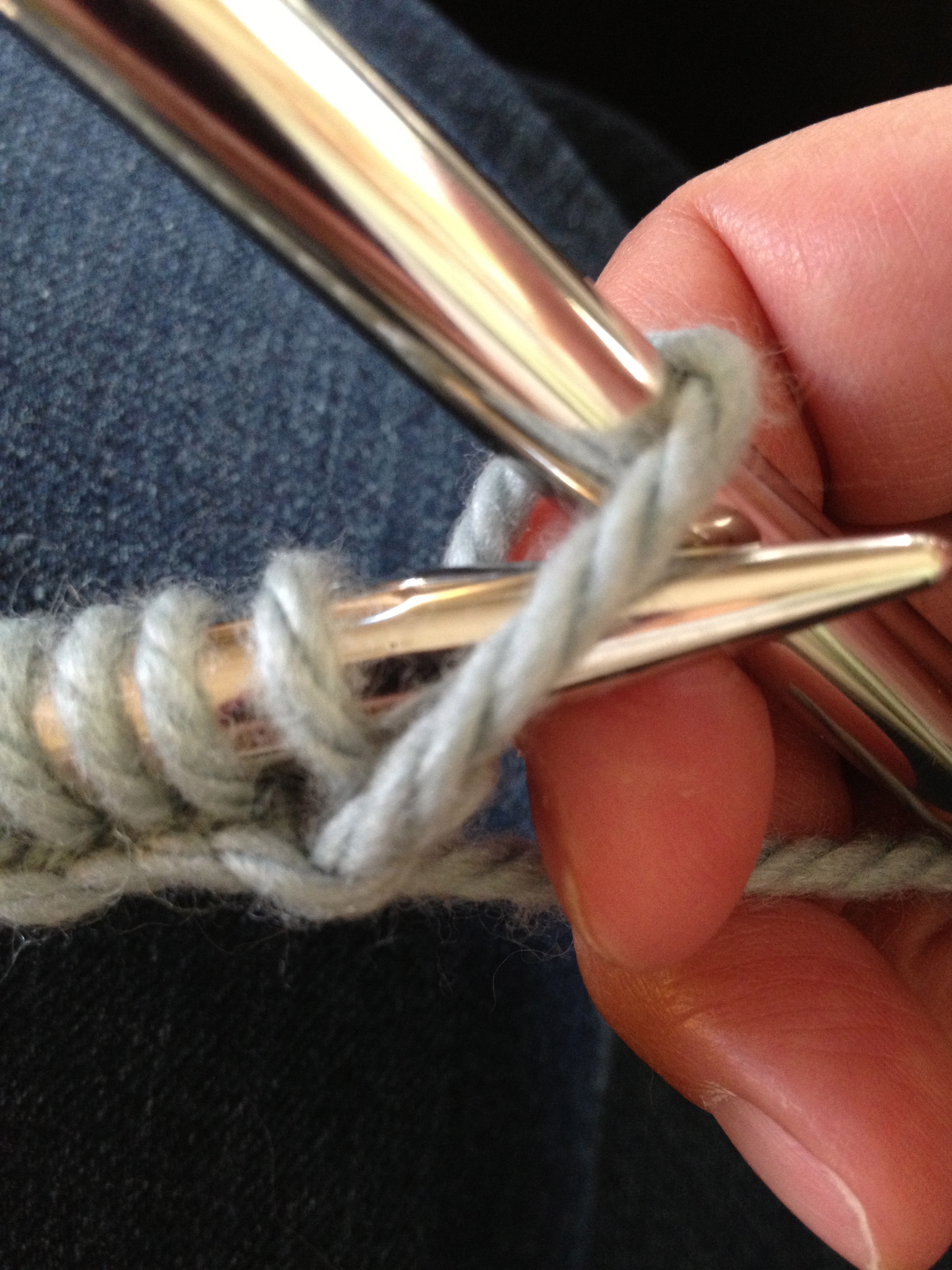
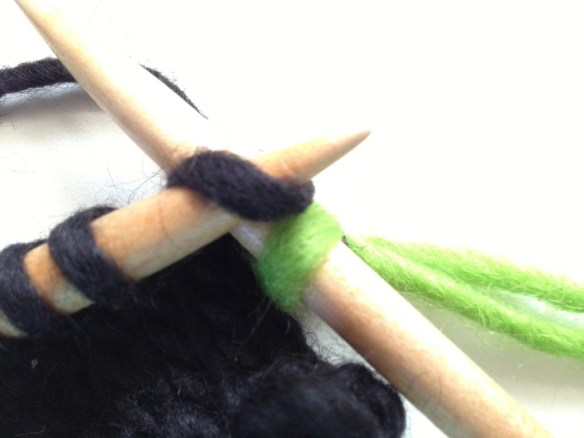
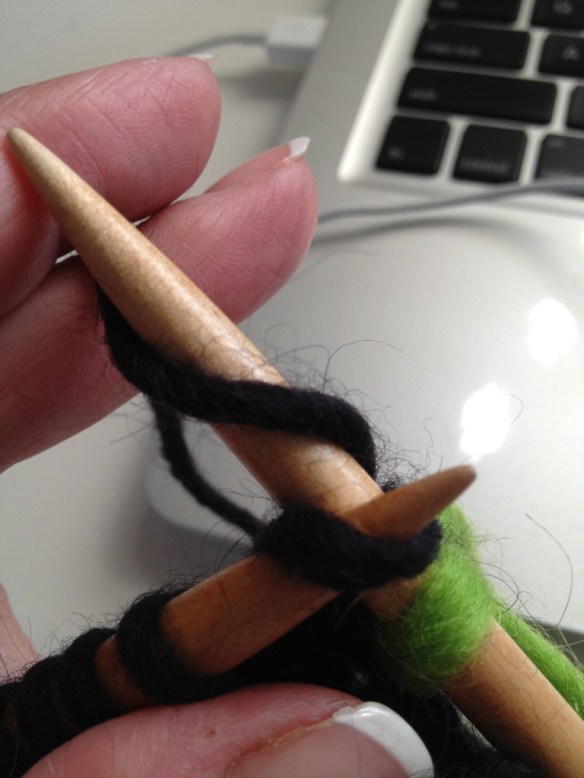
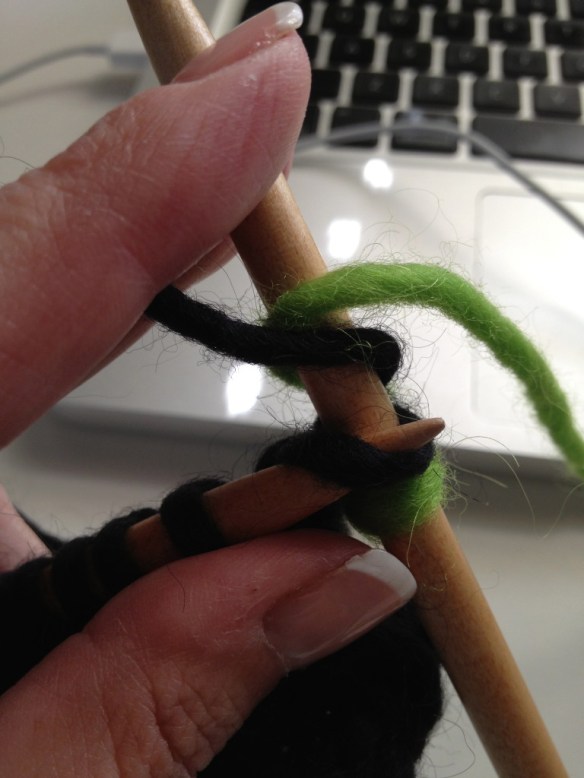
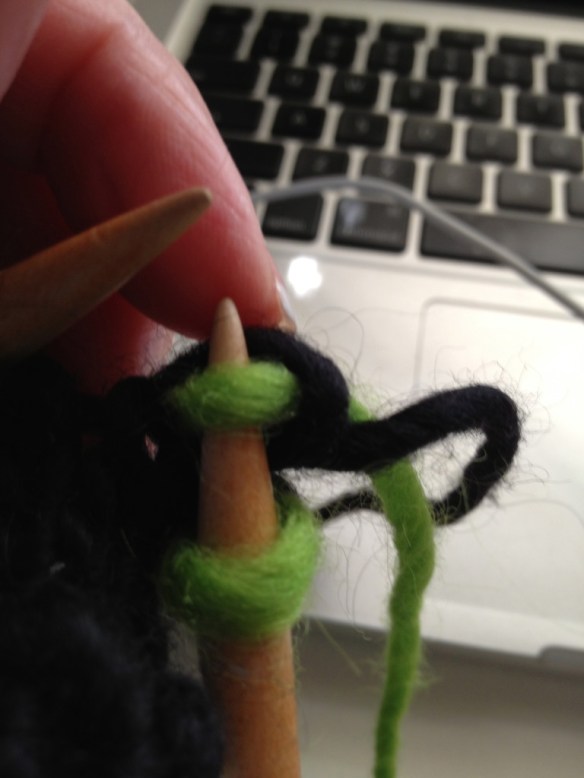
When you’ve knit to the place where you need to change colors or yarns, you can make your first stitch with the new yarn. And what you’re going to do is ” carry” the yarn to be woven in (the old color of yarn) across the next row of stitches by alternatively bringing the old yarn tail up and over your needle and knitting a stitch and then bringing the tail down and knitting a stitch.

Here are a couple of illustrations:

IMG_0815

On right is first green stitch. Making stitch #2

Making the second stitch of the first green row of stitches by inserting right hand needle into the second stitch knit-wise.

IMG_0817

Carry the yarn tail

Bring the yarn tail to be woven in (the black yarn) across the stitches. First bring the tail up over the needle and then wrap your new yarn around the stitch to be made.

IMG_0818

With tail over the needle, wrap your new yarn around the needle to make the next stitch (green)

Bring the tail back down and then finish your stitch.

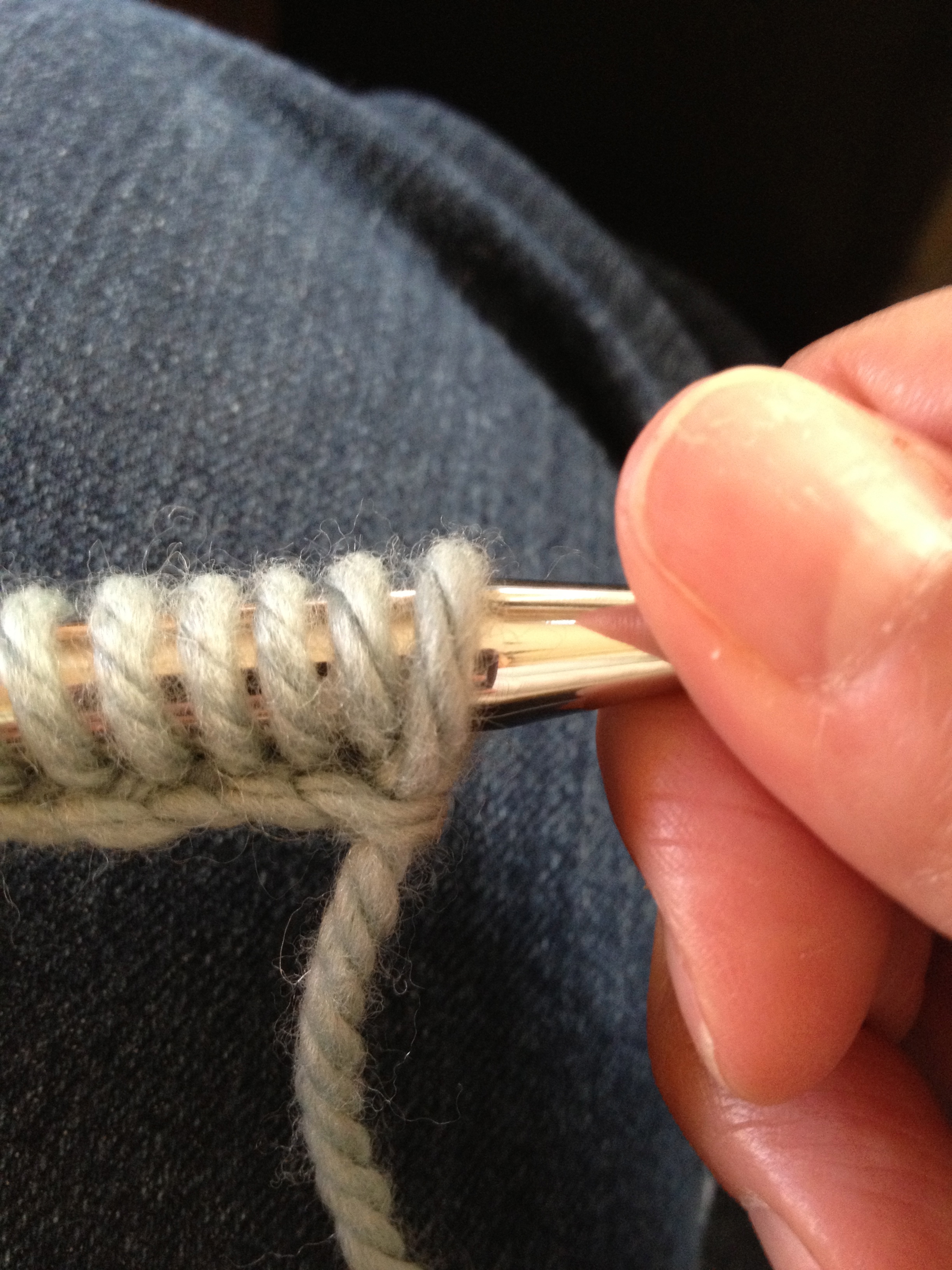
IMG_0820Make the next stitch “normally” with the tail being held down so that your yarn is carried over the tail yarn (black) when you make the stitch.

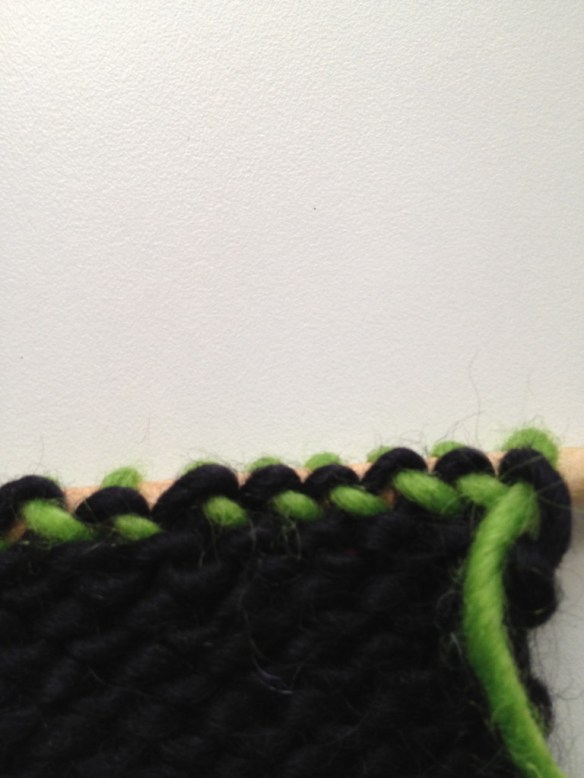
Alternate bringing the tail yarn over the needles and holding the tail yarn down while you make the next four or five stitches. That should be enough to hold the tail. You can finish your row and cut the tails close to your stitches.

IMG_0822

The tail is woven in and doesn’t even show – unfortunately, I chose black yarn so you really can’t see the tail!

I hope this helps!

Gone knitting!